





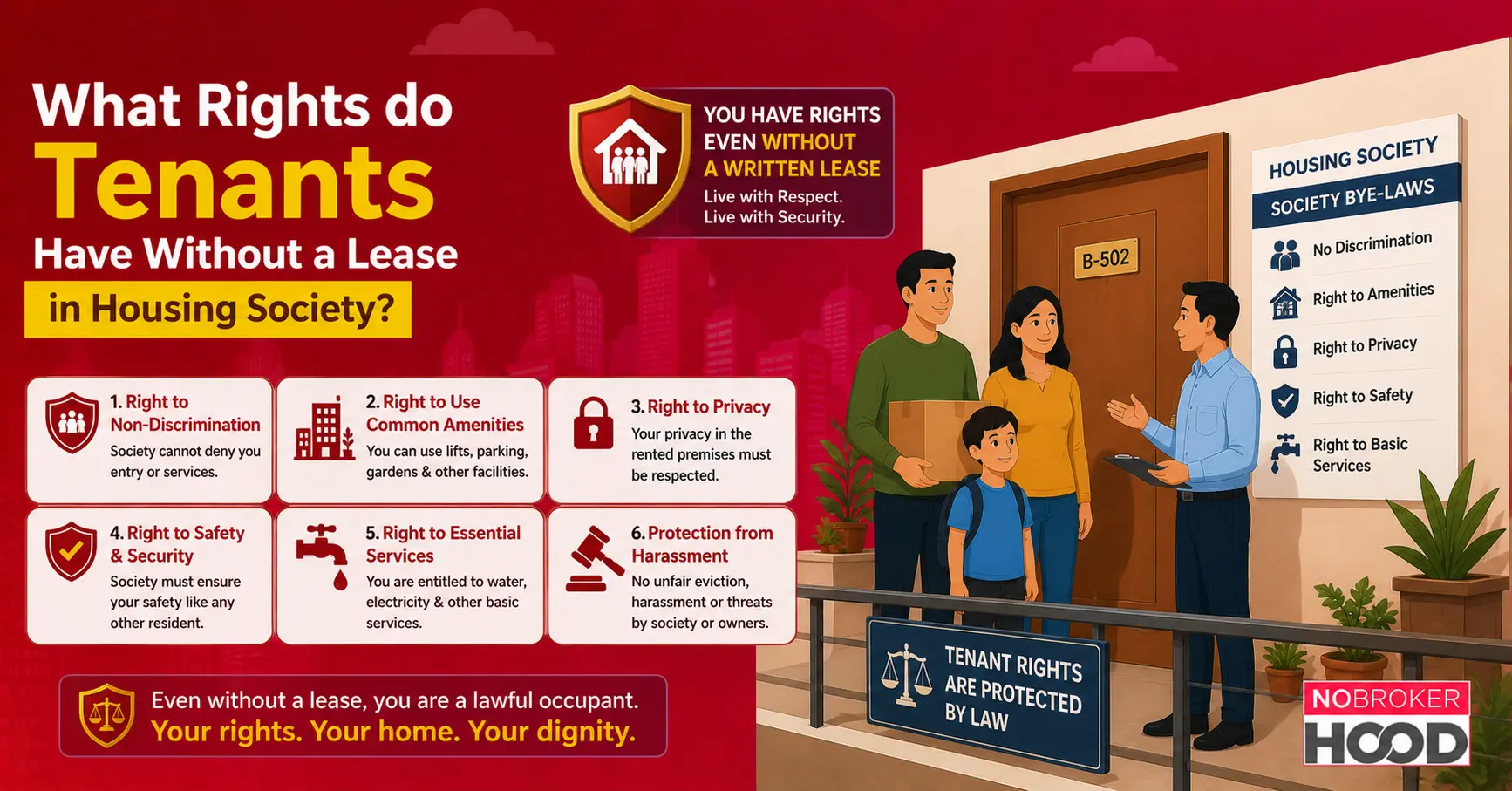


Many rentals operate without a written lease, relying instead on verbal agreements or month-to-month terms. Even in these cases, tenants remain protected under housing laws. Tenants frequently ask what are my rights as a tenant without a lease? The law ensures secure housing, fair eviction procedures, and protection against discrimination. Understanding these rights ensures you can meet obligations and handle issues with confidence.

Overview of Tenancy Without a Lease Agreement
Where no lease contract exists, the rental is typically considered a month-to-month rental agreement or a tenancy at will, and either party may discontinue it with due notice. These agreements may be verbal or managed informally, such as through rent collection apps.
Although verbal agreements hold legal validity, enforcing them is often challenging because no written record exists. For this reason, tenants must be fully aware of their rights and obligations to avoid disputes and safeguard their housing stability.
Importance of Tenants Rights Without Lease in Housing Society
Landlord-tenant rules protect tenants even when there is no written lease; therefore, tenants should be aware of their rights. Such awareness fosters a fair and safe rental environment, equipping tenants to guard against potential issues.
- Protection from exploitation: When tenants are informed about their legal rights, landlords are less likely to engage in exploitative actions such as illegal evictions or excessive rent charges.
- Ensuring safety and habitability: Tenants are legally entitled to housing that meets health, safety, and structural standards.
- Clarity in communication: Understanding obligations and rights reduces disputes and promotes smoother tenant-landlord relationships.
- Legal protection: Familiarity with housing laws equips tenants to defend themselves effectively in conflicts or violations.
What Rights do Tenants have Without a Lease in Housing Society?
Even without a formal lease, renters continue to have important protections under state rent control legislation and national housing standards.
- Right to Habitability: Housing must be safe, sanitary, and meet basic health and safety standards.
- Right to Privacy: Landlords are required to give a twenty-four or forty-eight-hour notice before entry.
- Protection Against Discrimination: Tenants are generally safeguarded from unfair treatment or bias, though the exact protections depend on local housing laws.
- Security Deposit: Tenants are entitled to timely returns, limited deductions for damages, and a clear expense report.
- Fair Eviction Process: Landlords must deliver proper notice, specify legal grounds, and follow court procedures. Retaliatory evictions are unlawful.
- Withholding Rent: In some states, tenants may withhold rent if landlords fail to make necessary repairs, as long as legal procedures are followed.
- Repair and Deduct: Where permitted, tenants may handle essential repairs, subtract expenses from rent, and must inform landlords beforehand.
Read Also: Housing Society Rules and Regulations for Tenants
Responsibilities of Tenants Without Lease- Tenants’ Obligations
Even absent of a written lease, tenants must observe duties to maintain fairness and avoid disputes.
- Rent Payment: Rent must be paid in full and on time, as agreed upon verbally or through practice.
- Maintain the Property: Properly dispose of refuse, maintain the property, and prevent any damage that exceeds the expected wear and tear.
- Lawful Use: Conduct legally permitted activities on the premises; unlawful activities may result in legal action or eviction.
- Follow Occupancy Limits: Avoid overcrowding, as it impacts the property's condition and the occupants' protection.
- Report Repairs: Failing to promptly notify landlords of safety issues, damages, or leakage may create further problems.
- Give Notice Before Moving: In month-to-month tenancies, it is customary to provide a written notice of 30 days.
- Return in Good Condition: Please maintain the original property, except for typical wear and tear.
How to Protect Yourself as a Tenant Without a Lease Agreement
Without a lease, tenants must manage their own tenancy. Verbal agreements can be misleading, so keep documents as proof. Written communication, receipts, and other records can help you safeguard your rights during a dispute.
Document All Communications
Whenever possible, tenants should keep all communications with landlords in writing, whether through email, text messages, or written letters. Written records create a clear trail of requests, complaints, agreements, and responses, which can be vital in legal proceedings.
Maintain Records of Rental Payments
Payment records serve as evidence of fulfilling financial responsibilities. Tenants are expected to:
- Use checks, money orders, or bank transfers whenever possible.
- Always request written proof for all cash settlements made.
- Consider using online payment applications that automatically generate transaction logs.
Preserving these records serves as proof and prevents false claims of unpaid balances.
Take Photos of the Rental Unit
Before moving in, tenants should document the rental unit's condition with photos or videos. The same should be done upon moving out. These images serve as evidence if the landlord attempts to charge for pre-existing damages.
Research Local Laws
The rights of tenants are determined by state and local regulations, which may vary by jurisdiction. A careful review of local housing codes and landlord-tenant statutes provides valuable insight into:
- Minimum housing standards landlords must meet.
- Eviction procedures landlords are required to follow.
- The legal limits of rent increases and security deposit deductions.
A clear understanding of local laws empowers tenants to uphold their rights more effectively.
Stay Proactive in Problem-Solving
Tenants should address issues quickly and professionally. Early intervention, be it in addressing repairs, questioning charges, or clarifying obligations, can stop minor conflicts from escalating into significant disagreements.
Legal Options for Tenants Without a Lease Agreement
If conflicts arise, tenants have legal recourse even without a formal lease.
- Filing complaints with housing authorities: If landlords violate housing regulations, municipal agencies are authorized to step in and address the matter.
- Pursuing legal action: Tenants have the legal right to pursue compensation, demand necessary repairs, or challenge unlawful eviction through the courts.
- Seeking help from tenant advocacy groups: Low-income tenants benefit from nonprofit groups that offer legal assistance, conflict resolution, and other resources.
- Mediation services: In certain jurisdictions, impartial mediators are made available to assist parties in resolving conflicts outside of court.
Read Also about: Tenant Police Verification in Apartments
What Are My Rights as a Tenant Without a Lease?
Even without a lease, tenants are legally protected. Key rights include my rights as a tenant without a lease:
- Safe Housing: Landlords must provide a safe, livable property.
- Eviction Laws: Legal procedures must be properly followed for eviction.
- Privacy: Tenants are entitled to reasonable privacy and notice before entry.
- Fair Housing: Protection against discrimination applies at all times.
- Security Deposits: Under state law, tenants are entitled to specific protections concerning their security deposits.
- Repairs: In some states, tenants may repair and deduct or withhold rent.
Limitations Faced by Tenants Without a Lease
No Voting Rights in Society Meetings
Tenants without a lease typically do not have voting rights in housing society meetings. Voting privileges are usually reserved for property owners or registered society members. As a result, tenants even if they stay long-term cannot participate in elections or decision-making processes that shape society policies and management.
- Voting rights are linked to ownership status.
- Tenants are usually classified as occupants, not members.
- This limits tenants’ ability to influence housing society decisions.
Risk of Sudden Eviction
Without a written lease, tenants face a higher risk of sudden eviction. Such tenancies are often considered month-to-month or at will, meaning landlords can terminate the agreement with reasonable notice, often between 15 to 30 days depending on local laws. This offers less security compared to formal leases, and tenants may need to vacate on short notice.
- No formal lease means tenancy can end with short notice.
- Eviction follows a “reasonable notice” period based on local rules.
- Tenants have fewer protections and legal remedies against eviction.
Read Also: To-do list for Renting out a Flat
NoBrokerHood for Tenants and Residents
NoBrokerHood’s society management app is a platform that helps tenants and residents understand and manage their rights within housing societies.
- It provides resources and guidance about housing society rules.
- Tenants can stay connected with the community and navigate society regulations easily.
- The platform empowers tenants, including those without written leases, to protect their rights and fulfill responsibilities smoothly.
- Simplify Online Rent Payment with NoBrokerHood
- Using NoBrokerHood fosters a safer, fairer, and more organized living environment for tenants and owners alike.
All Solutions by NoBrokerHood:
Check Tenant Verification Related Pages:
