





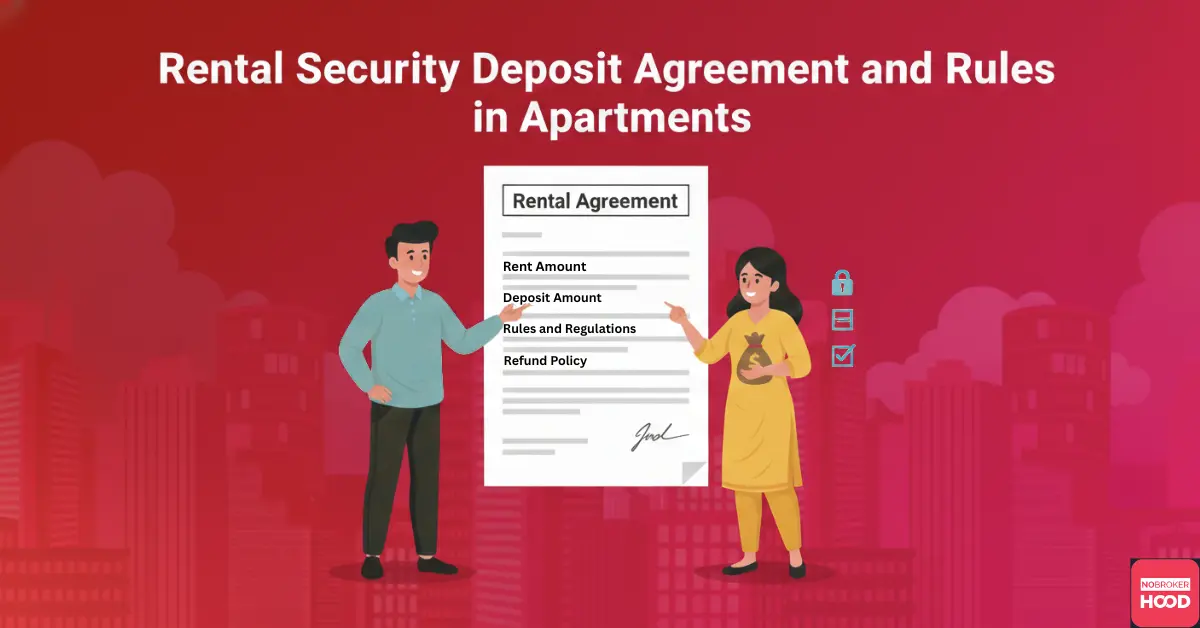


A rental security deposit is a refundable amount paid by a tenant at the start of a lease to protect the landlord against damage, unpaid rent, or contract breach. It is not rent and must be returned after valid deductions, if any, when the tenant vacates. Clear agreements and inspections help avoid disputes.

What Is a Security Deposit and Why Does It Matter?
A rental security deposit is an upfront, refundable payment given by a tenant to a landlord before moving into a property. It acts as financial protection if there is property damage, unpaid rent, or pending utility bills.
It is important because it:
- Protects the landlords from financial loss if the tenant exits without notice
- Encourages tenants to maintain the property
- Covers unpaid rent, maintenance dues or bills if needed
- Adjusts damages beyond normal wear and tear
- Creates accountability through written terms
- Supports fair closure of tenancy
This amount is separate from the monthly rent and must be clearly recorded in the rental deposit agreement and receipt.
Rental Security Deposit Rules and Limits in India
In India, rental security deposit rules are guided by state laws and the Model Tenancy Act, 2021. Local practices may differ, but formal guidance is now clearer than before.
Key rules and limits:
- Residential properties are generally capped at two months’ rent under the Model Tenancy Act
- Commercial properties can go up to six months’ rent
- Older city practices were higher
- Bangalore earlier saw deposits up to 10 months
- Mumbai commonly had 3 to 6 months
- The deposit is usually interest-free for residential leases
- It is usually exempt from TDS if not treated as rent
- It must be mentioned in the written rental agreement
Always check state-specific tenancy rules before finalising the rental security deposit because the rules vary across India.
Read also: Step-by-Step Guide to Rental Agreement
Key Details a Security Deposit Agreement Should Include
A security deposit agreement is the written section of the lease that explains how the deposit is handled. Every tenant and landlord should read this part carefully.
A proper agreement for security deposit should clearly state:
- Exact deposit amount paid
- Mode of payment and date
- Purpose of holding the deposit
- Conditions where deductions are allowed
- Refund timeline after vacating
- Inspection process at exit
- Dispute resolution method
- Rules if the tenant exits early
- A clause for topping up the deposit if used during the tenancy
Without a written rental deposit agreement, refund disputes become harder to resolve because verbal promises are difficult to prove later. A well-written security deposit agreement protects both tenant and landlord, reduces misunderstandings, and ensures there is clear proof of the terms that are agreed upon.
Read also: Renting out a flat? Here is your to-do list
What Should Be Written in an Agreement for Security Deposit?
A strong agreement for security deposit reduces confusion and protects both sides. It should be simple and specific.
Essential clauses to include:
- Deposit amount and acknowledgement receipt
- Statement that it is refundable
- Difference between deposit and advance rent
- Deduction rules beyond normal wear and tear
- List of items in furnished homes
- Inspection clause for move out
- Refund period is 15 to 30 days
- Early exit and lease break rules
- Deposit top-up rule if used during tenancy
A clear security deposit agreement also mentions whether any part can be adjusted against last month’s rent or not.
Read also: Pay Property Rent Online
What Can Be Deducted from a Rental Security Deposit?
Not every repair can be deducted from a rental security deposit. Indian tenancy guidance separates valid and invalid deductions.
Deductions that are Allowed
- Unpaid rent
- Pending electricity or water bills
- Major damage beyond normal use
- Broken fixtures or fittings
- Missing items in furnished units
- Heavy cleaning due to neglect
Deductions that are Not Allowed
- Normal wear and tear, such as faded paint
- Minor scuff marks
- Routine maintenance work
- Society-level repairs
- Owner’s renovation plans
- Upgrades chosen by the landlord
Normal wear and tear means natural ageing from regular living, not misuse.
Refund Process and Timelines for Rental Security Deposit
The rental security deposit should be refunded after the tenant vacates and hands over possession. The process should follow the written agreement.
Typical Refund Steps
- Conduct move out inspection jointly
- Compare with move-in photos and checklist
- Calculate valid deductions
- Share deduction details in writing
- Refund balance through bank transfer
Common Timelines in India
- Usually refunded within 15 to 30 days after vacating
- Some agreements allow up to 30 to 90 days
- The timeline must be stated in the agreement.
Always collect a written settlement note when the rental security deposit is returned.
Read also: What to Do If Your Landlord Is Not Returning the Security Deposit
Common Disputes and How Tenants Can Protect Their Deposit
Many conflicts around rental security deposits happen due to poor documentation. A few simple actions can prevent major issues.
Reasons for Frequent Disputes
- No move-in inspection record
- No written security deposit agreement
- Verbal promises are not documented
- Unclear damage definitions
- Missing payment receipts
Practical Protection Tips to Avoid these Disputes
- Take date-stamped photos at move-in and move-out
- Record meter readings at entry and exit
- Keep payment proof and receipt of the rent and deposits
- Get the security deposit agreement signed
- Use written communication for repairs
- Attend the final inspection in person
- Get society dues clearance before vacating
- Ask for a written deduction sheet
If a landlord refuses a refund without reason, tenants can send a legal notice or approach the Rent Authority or civil court.
Secure Your Rental Deposit with Digital Documentation - NoBrokerHood Makes the Process Transparent
Security deposit disputes are one of the most common housing conflicts in India. Whether you're a resident worried about getting your deposit back or a society managing multiple rental units, documentation gaps lead to costly misunderstandings. NoBrokerHood's digital rental management platform eliminates this friction by keeping all deposit-related records in one secure place accessible to both tenants and property owners the moment a dispute arises.
Here's how NoBrokerHood protects your rental security deposit:
- E-Stamped Rental Agreements with Deposit Clauses - Create legally valid agreements with clear security deposit terms, deduction rules, and refund timelines all digitally stored and searchable
- Digital Rent Payment Records - Every rent payment is logged with automatic receipts, making it easy to prove timely payments during deposit settlement
- Maintenance Dues Dashboard - Tenants see pending society charges before moving out; property owners have proof of cleared dues, avoiding false deduction claims
- Move-Out Inspection Logs - Document condition changes with date-stamped records and complaint tickets, replacing he-said-she-said disputes with written proof
- Automated Deduction Tracking - Record all valid deductions (unpaid bills, damage repairs) with supporting documents, making refund settlements transparent and fair
- Instant Deposit Settlement Reports - Generate final settlement statements that show exact deductions and refund amounts, reducing back-and-forth communication
All Solutions by NoBrokerHood:
