






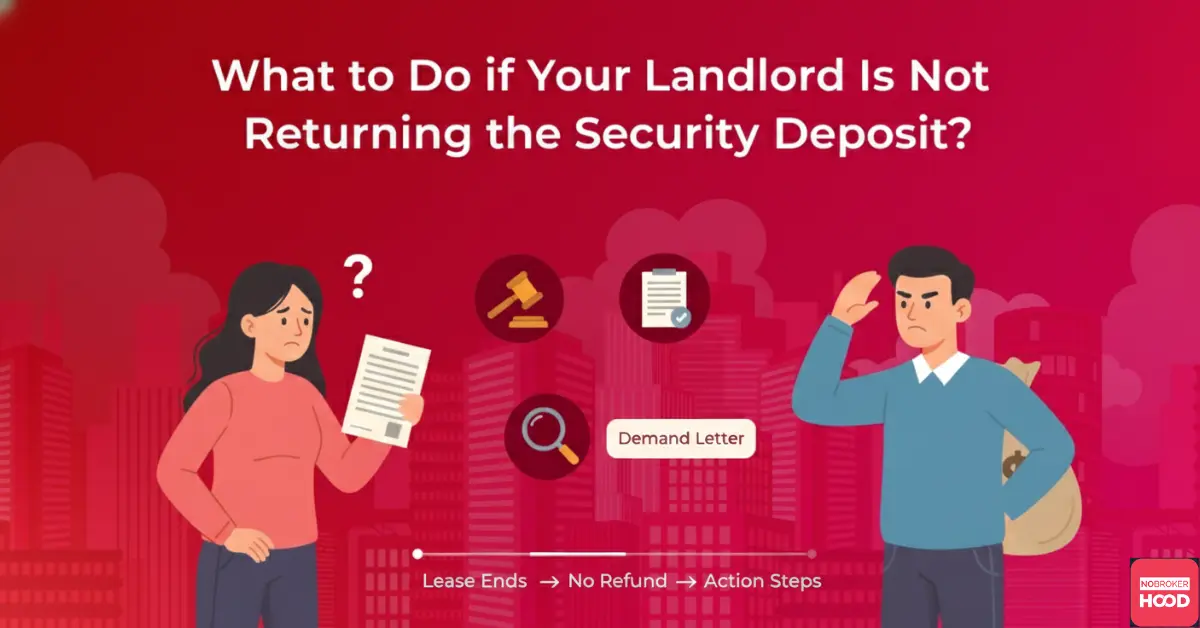


Getting your security deposit back should be simple when moving out of a rental property. The biggest problem comes when landlords refuse to return your money. This happens to thousands of tenants each year. If your landlord hasn’t returned your deposit after moving out, you’re not alone. Many Renters deal with property owners who hold on to deposits even after tenants keep the property in good condition and adhere to their lease agreements. Know your legal rights and the best ways to get your deposit back. You’ll discover what to do when landlords don’t cooperate. The piece covers everything from legal deadlines to required paperwork and options that protect your interests.

What is a Security Deposit or Rental Deposit?
Landlords typically request a security deposit, an extra charge collected with your rent before moving in. This amount acts as a financial safeguard against potential property damage or unpaid dues during your stay.
Your security deposit is a safety net that protects you and your landlord. The upfront cost might seem like a burden, but this is a standard practice in the rental market to build trust between both parties.
The security deposit amount varies by location and property type. Here’s what you can expect:
| Property Type | Typical Deposit Amount |
| Residential | 1-2 months’ rent |
| Commercial | Up to 6 months’ rent |
Your security deposit is different from advance rent. Advance rent covers your first few months as a non-refundable payment. The security deposit comes back to you after moving out if you have:
- Managed to keep the property in good condition
- Paid all your rent and utility bills
- Followed your rental agreement’s terms
Your landlord can withhold your deposit only for specific reasons, such as fixing damage beyond normal wear and tear. The landlord must cover regular maintenance costs like whitewashing or general wear and tear; these cannot come from your security deposit.
The security deposit clause in your rental agreement needs careful review before signing. This document spells out all terms about your deposit, including the refund process and possible deductions.
Also Check: Apartment Resident Rights in India
Understanding the Security Deposit Laws in India
The Model Tenancy Act 2021 has significantly changed India’s security deposit rules. These new rules protect both landlords and tenants, and with good reason. They also standardize how deposits work across the country.
Current laws put a cap on how much security deposit you can be asked to pay. Landlords can’t require more than two months’ rent as a security deposit for homes. Commercial properties have a higher limit at six months’ rent.
The actual practice looks different in major Indian cities:
| City | Typical Security Deposit |
| Bangalore | 6-10 months’ rent |
| Mumbai | 5-6 months’ rent |
| Delhi/Gurgaon | 2-3 months’ rent |
| Noida | 1-2 months’ rent |
Your rental agreement plays a vital part and must spell out:
- The exact security deposit amount
- Conditions for deductions
- Refund timeline and process
- Any applicable interest on delayed refunds
The Model Tenancy Act provides these guidelines, but only four states have made them official: Tamil Nadu, Uttar Pradesh, Andhra Pradesh, and Assam. If your landlord is not returning the security deposit, your legal rights and options may depend on your state’s rental laws.
Landlords must give valid reasons for keeping any part of your deposit. They can hold back money only for specific issues, like unpaid rent or damage that goes beyond normal wear and tear.
Security Deposit Refund Rules
Security deposit refunds are governed by rules that protect both landlords and tenants, though specifics vary depending on your state or country. Here's a general overview of how these rules typically work:
Timeframe for Return
Most jurisdictions require landlords to return the deposit or an itemized list of deductions within a set period after the tenant moves out, commonly ranging from 14 to 30 days. Some states allow longer windows (up to 45-60 days) if deductions are involved.
Permissible Deductions
Landlords can generally withhold funds for:
- Unpaid rent or utility bills
- Damage beyond normal wear and tear (holes in walls, broken fixtures, stains)
- Cleaning costs if the unit is left significantly dirtier than move-in condition
- Unreturned keys or remotes (in some cases)
What Landlords Cannot Deduct For
- Normal wear and tear (faded paint, minor carpet wear, small nail holes)
- Pre-existing damage noted at move-in
- Cosmetic updates or general renovations
Itemized Statements
Many jurisdictions legally require landlords to provide a written, itemized statement explaining any deductions, often accompanied by receipts or repair estimates. Failing to provide this documentation can forfeit the landlord's right to withhold funds.
Move-In/Move-Out Inspections
A documented move-in checklist (with photos, if possible) helps establish the unit's original condition, making disputes over damage easier to resolve fairly for both parties.
Interest on Deposits
Some states or municipalities require landlords to pay interest on held deposits, particularly for long-term tenancies or when funds are held in specific escrow accounts.
Penalties for Non-Compliance
If a landlord fails to return the deposit or provide required documentation within the legal timeframe, tenants may be entitled to recover the full deposit, and in some jurisdictions, additional penalties (sometimes double or triple the deposit amount).
Landlord Not Returning Security Deposit: What You Should Do
A landlord’s refusal to return your security deposit demands quick action. The law offers multiple ways to get your deposit back, from formal letters to legal action.
What to do If Landlord Refuses to Return Deposit India?
The steps can be taken if the landlord refusing to return deposit:
1. Send a Formal Written Request
Start by sending a formal written communication to your landlord. The letter should detail your request for a deposit return and include specific information about your tenancy and move-out date. Make sure to keep copies of everything you send.
2. Gather and Organise Supporting Documents
These documents are vital to build your case:
- Original rental agreement
- Security deposit payment receipts
- Move-in and move-out condition photos
- All communication records with the landlord
- Utility bill payments proof
3. Send a Legal Notice Through a Lawyer
If the landlord does not respond, issue a legal notice through a lawyer. This document is the first step toward legal action and resolves most disputes without going to court. The notice must specify:
| Component | Details to Include |
| Timeline | Specific deadline for deposit return |
| Amount | Full deposit sum with any applicable interest |
| Consequences | Potential legal actions if not resolved |
4. Approach the Civil Court or Consumer Forum
If the issue remains unresolved, you can file a case in civil court or approach the consumer forum. Civil courts follow a more structured process but take longer, while consumer forums typically resolve cases faster.
5. Deposit Rent in Court if Required
If your landlord refuses to accept rent, you may deposit your rent in court. This protects you from defaulter status and demonstrates your commitment to fulfilling rental obligations while protecting your legal rights.
What happens if landlord does not return deposit within 21 days?
If a landlord fails to return a tenant's security deposit or provide an itemized statement of deductions within the legally required 21 days, they may face real consequences. Here's what typically happens:
The tenant can send a formal demand letter
This is usually the first step, a written notice reminding the landlord of the deadline and requesting immediate return of the deposit, often citing the specific state statute.
The landlord may forfeit the right to make deductions
In many states, if a landlord misses the deadline or fails to provide an itemized list of damages, they lose the ability to withhold any portion of the deposit even if there was legitimate damage.
The tenant can sue in small claims court
If the landlord still doesn't respond, tenants can file a small claims lawsuit to recover the deposit. This process is designed to be simple and doesn't usually require a lawyer.
The landlord may owe penalty damages
Many states impose a penalty for bad-faith withholding, allowing tenants to recover up to two or three times the deposit amount, in addition to the original sum.
Interest may accrue
Some jurisdictions require landlords to pay interest on the withheld deposit for each day it's late.
Tips to Get Your Security Deposit Back from the Landlord
Your journey to get your security deposit back starts well before you pack your boxes. Smart moves throughout your stay can substantially boost your chances of getting all your money back. Let me show you how to make sure you get your deposit returned.
1. Maintain a Positive Relationship with Your Landlord
A solid relationship with your landlord based on trust and open communication makes a real difference. Timely rent payments and professional communication about property issues go a long way. Landlords are more flexible about minor issues and work things out more easily when you have a good rapport.
2. Document Everything Before Moving In and During the Tenure
You need a detailed record of how the property looks:
| Documentation Type | When to Collect |
| Photos/Videos | Move-in & Move-out |
| Condition Report | First & Last Day |
| Repair Requests | Throughout Tenancy |
| Maintenance Records | Ongoing |
3. Provide Adequate Notice Before Moving Out
Put your move-out notice in writing at least 30 days before you plan to leave. Skip text messages or social media – you legally need formal written notice in most places.
4. Address Repairs
Fix minor issues like dripping faucets or broken fixtures before you leave. This responsible approach reduces possible deductions from your deposit. Note that normal wear and tear can’t be deducted from your security deposit.
5. Request a Final Inspection with the Landlord
Set up a walk-through with your landlord before moving out. You can tackle any issues right away and document the property’s condition together.
6. Understand Your Rights as a Tenant
Learn your state’s security deposit laws and deadlines. Your landlord must give you an itemized list for any deductions. You can challenge unfair deductions if you have proper documentation.
7. Take Action Where Needed
If your landlord is not returning the security deposit, start with a formal written request. Keep all your correspondence and think about legal steps only after trying to work things out peacefully.
Also Check: What Rights do Tenants have Without Lease
Situations When a Landlord Can Withhold Your Security Deposit
You need to know your rights about security deposit deductions. Let’s look at the valid reasons your landlord might not return your deposit.
1. Failure to Pay Rent
Your landlord can deduct unpaid rent from your security deposit. This covers missed monthly payments and late fees listed in your lease agreement. Your landlord must give you an itemised statement showing all deducted amounts.
2. Property Damage Beyond Normal Wear and Tear
A clear difference exists between normal wear and property damage. These examples show what counts as damage that your landlord can deduct from your deposit:
| Normal Wear | Deductible Damage |
| Small nail holes | Large wall holes |
| Faded paint | Broken windows |
| Worn carpets | Carpet stains/burns |
| Loose handles | Missing fixtures |
| Tarnished fixtures | Broken appliances |
3. Outstanding Utility Bills
Your landlord can use your deposit to pay any utility bills you leave behind. This happens when:
- Utilities are in the landlord’s name
- Bills transfer back to the landlord
- Charges are clearly documented
4. Early Lease Termination or Breaking the Lease
Your deposit might face deductions if you break your lease early and your rental agreement allows it. Your landlord can keep the money to cover:
- Remaining rent until new tenant occupancy
- Advertising costs for new tenants
- Early termination fees as per the agreement
Also Check: Rental Security Deposit Agreement
What Can I Do If Landlord Refuses to Return Deposit? Take Strategic Legal Action
Legal action might be your next step if friendly attempts to get your deposit back haven’t worked. The way you handle your case and where you file it will affect your chances of success a lot.
Choosing between the civil court and the consumer forum
You have two main legal paths to take when your landlord refusing to return deposit. Here’s what you should know about each option:
| Aspect | Civil Court | Consumer Forum |
| Timeline | Longer process | Faster resolution |
| Cost | Higher court fees | Lower filing fees |
| Legal representation | Mandatory | Optional |
| Jurisdiction | All rental disputes | Limited to service issues |
Calculating compensation claims
Your case can ask for more than just the deposit money. You can include these items in your compensation claim:
- The original security deposit amount
- Interest from the date you asked for the money
- Legal costs and court fees
- Money for harassment
- Extra damages if your agreement mentions them
Working with tenant rights attorneys
A lawyer can strengthen your case, even though consumer forums don’t require one. The best lawyers will:
- Have a track record with landlord-tenant cases
- Help you negotiate before going to court
- Know your area’s rental laws inside out
- Put together solid paperwork
Many disputes end with a lawyer’s formal letter before reaching court. Most attorneys will review your case and suggest affordable ways to get your deposit back in an initial meeting.
How to Send Legal Notice to the Landlord for Security Deposit?
If your landlord hasn't returned your security deposit within the legally required timeframe, sending a formal legal notice is often the next step before heading to court. Here's how to do it right:
1. Review your state's deposit laws first
Check the deadline (often 14–30 days depending on the state), any required itemized deduction statement, and the maximum penalty you may be entitled to if the landlord is non-compliant.
2. Gather your documentation
Collect your lease agreement, move-in/move-out inspection reports, photos of the property's condition, receipts for cleaning or repairs, and any prior communication with the landlord about the deposit.
3. Draft the notice in writing
Your letter should include:
- Your name, forwarding address, and the rental property address
- The date you moved out
- The amount of the security deposit paid
- A clear statement that the legal deadline has passed
- The specific state statute being cited
- A firm deadline (typically 7–10 days) for the landlord to respond
- A statement that you intend to pursue legal action, including any statutory penalties, if the deposit isn't returned
4. Keep the tone professional and factual
Avoid emotional language stick to dates, amounts, and legal citations. This makes the letter more credible if it's later used as evidence in court.
5. Send it via certified mail with return receipt requested
This creates a paper trail proving the landlord received the notice, which is critical if you need to escalate to small claims court.
6. Keep a copy for your records
Save the letter, the mailing receipt, and any tracking information along with your other documentation.
7. Wait for the response deadline, then escalate if needed
If the landlord doesn't respond or refuses to pay, you can proceed to file a claim in small claims court, referencing the notice as proof you attempted resolution first.
Penalty for Not Returning Security Deposit
When a landlord fails to return a security deposit within the legal deadline or withholds it without proper justification they can face financial penalties that go well beyond simply repaying the original amount. Here's what's typically at stake:
Statutory (punitive) damages
Most states allow tenants to sue for damages beyond the deposit itself if the landlord acted in "bad faith" (i.e., withheld the deposit without a valid reason or failed to provide an itemized statement). These penalties commonly range from 1x to 3x the original deposit amount, depending on the state.
Full forfeiture of the right to deduct
In several states, missing the deadline or skipping the itemized deduction statement means the landlord automatically loses the right to keep any portion of the deposit—regardless of actual damage to the property.
Court costs and attorney's fees
Many state laws require landlords who lose a deposit dispute in court to reimburse the tenant's legal fees and filing costs, on top of the deposit and any penalty damages.
Interest on the withheld amount
Some states mandate that landlords pay interest accrued on the deposit for the period it was wrongfully withheld.
Damage to landlord's reputation/record
A court judgment against a landlord can become part of the public record, potentially affecting their ability to secure loans, insurance, or credibility in future tenant disputes
Simplify Security Deposit Management with NoBrokerHood
Security deposit disputes usually happen because there's no clear record of payments, agreements, or the property's condition. NoBrokerHood’s society management app removes this uncertainty by keeping every tenancy detail agreements, payments, and complaints digitally recorded, so residents and MC members have proof, not just promises, when it's time to settle the deposit.
- Digital Rental Agreement Storage - Store the signed agreement and deposit terms securely for easy access anytime.
- Payment & Receipt Trail - Rent and deposit payments made through the app are logged automatically with receipts.
- Move-In/Move-Out Records - Society gate logs help confirm exact tenancy dates if timelines are disputed.
- Complaint Tracking - Repair requests raised during the tenancy are time-stamped, supporting the tenant's case against unfair deductions.
- MC Visibility - Management committees can view tenant records and help mediate disputes quickly, without escalation.
All Solutions By NoBrokerHood:
