





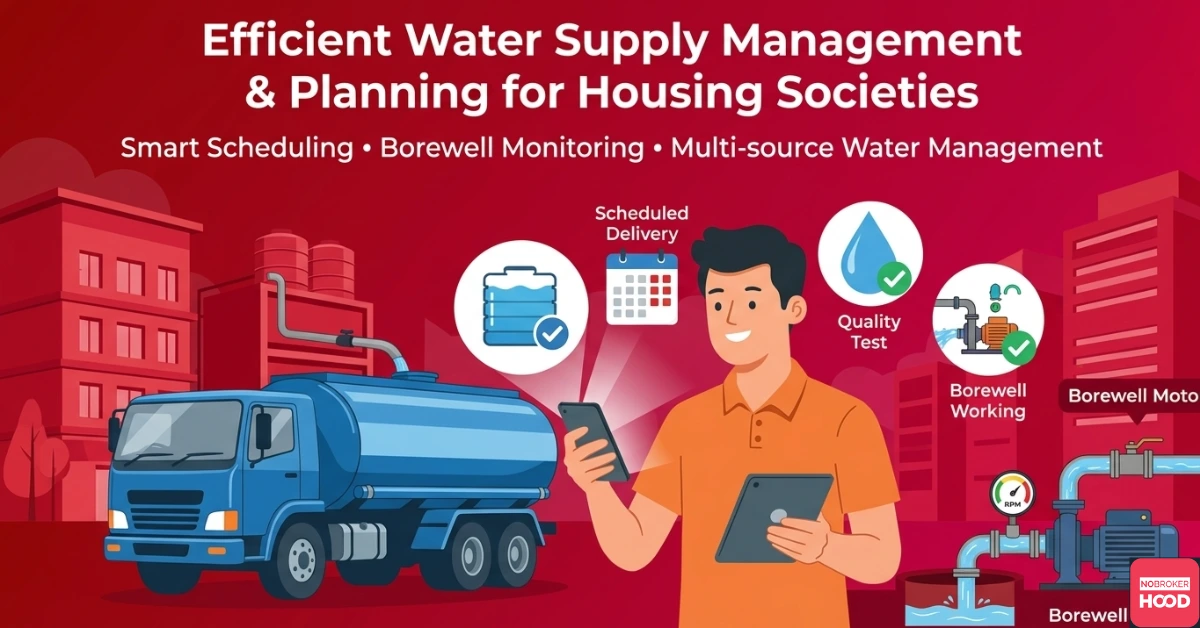


Water supply in housing societies is a daily concern for many residents in India. Irregular supply, tanker dependence, and rising costs make it stressful to manage. Managing water supply in housing societies is not just about availability but also about efficiency and fairness. The solution lies in better planning, smart monitoring, and simple conservation steps. With the right water management system for society, communities can reduce waste, improve availability, and ensure fair distribution for everyone while reducing waste and costs. This guide explains how it all works and what practical steps can help.

Why Water Supply in Housing Societies Becomes a Challenge and What It Means?
Water supply in housing societies depends on limited sources but serves many households. It involves how water is sourced, stored, and distributed to meet the daily needs of all residents. Most societies depend on a combination of municipal supply and borewells, supported by underground and overhead tanks to handle irregular availability. The challenge arises because these limited sources must serve a growing number of households.
Factors like population increase, seasonal shortages, and inconsistent supply timings make management difficult. Without proper monitoring, uneven distribution and wastage can occur, turning a basic necessity into a recurring issue that affects both daily living and long-term sustainability.
How the Water Supply in Housing Societies Works?
Understanding how the water supply in housing societies functions can help residents make better decisions. The system usually includes storage and distribution steps.
The process behind water supply in housing societies usually follows a simple flow:
- Collection: Water comes from the municipal supply or borewells
- Storage: It is stored in Underground Tanks (UGT)
- Pumping: Pumps move water to Overhead Tanks (OHT)
- Distribution: Water flows to the flats using gravity
Many societies also depend on tankers when supply is low. Without proper monitoring, this system can lead to waste and higher costs. A well-managed water management system for society ensures that every step is controlled and efficient.
Common Problems in Water Supply in Housing Societies
Many residents face similar issues when it comes to water supply in housing societies. These problems often go unnoticed until they become serious.
Overflowing Tanks
Staff may forget to switch off pumps, leading to water loss and higher electricity bills.
Leakages
Hidden pipe leaks or dripping taps can waste thousands of litres without notice.
Hard Water Issues
Borewell water often has high mineral content, affecting appliances and plumbing.
Uneven Distribution
Upper floors may face low pressure while lower floors get excess supply.
Tanker Dependency
It may increase the costs of monthly maintenance.
These issues highlight the need for a structured water management system for society.
Read also: How to Solve the Problem of Hard Water in Housing Societies
Practical Ways to Improve Water Supply in Housing Societies
Improving water supply in housing societies does not always require big changes. Small steps can make a big difference when followed consistently.
Simple and effective actions:
Fix leaks quickly
Even a small leak can waste litres of water every day
Install water meters
Helps residents track usage and become more responsible
Use low-flow fixtures
Aerators and dual flush systems reduce consumption
Automate tank monitoring
Sensors can prevent overflow and save water
Adopt rainwater harvesting
Collect rainwater to recharge groundwater and reduce shortage
Reuse treated water
Use STP-treated water for gardening and flushing
Educate residents
Simple habits like turning off taps properly can reduce waste
These steps create a strong foundation for a reliable water management system for society.
Smart Solutions for Better Water Supply in Housing Societies
A water management system for society is a structured approach to monitor, control, and reduce water usage. It combines technology with everyday practices.
Key features include:
- Smart meters: Track individual consumption and encourage responsible usage
- IoT-based monitoring: Real-time updates on tank levels
- Automatic controllers: Prevent overflow by switching pumps on and off automatically
- Leak detection systems: Use sensors for the early identification of hidden pipeline issues to avoid water loss
- Monitor Usage Through Apps: Digital dashboards help committees track daily consumption
A modern water management system enables efficient, planned usage while reducing wastage. It ensures a more reliable water supply and lowers dependence on external sources.
Read Also: Wastewater Treatment Plant
Sustainable Water Management Practices Every Society Should Follow
Sustainability plays a key role in long-term water supply in housing societies.
Rainwater Harvesting
Collect rainwater to recharge groundwater and reduce dependency
Sewage Treatment Plants (STP)
- Reuse treated water for flushing and gardening
- Can reduce fresh water demand by over 50%
Water-Saving Fixtures
Install aerators, low-flow showers, and dual-flush systems
Smart Landscaping
Use drought-resistant plants and drip irrigation
Resident Awareness
Encourage simple habits like turning off taps and fixing leaks quickly
These steps make a water management system for society more effective and future-ready.
Read also: Rooftop Rainwater Harvesting
Benefits of a Well-Managed Water System
When water supply in housing societies is managed effectively, it leads to clear and practical improvements in both cost and convenience. Better planning and monitoring ensure that available resources are used wisely without unnecessary loss.
Key benefits include:
- Lower costs: Reduced spending on water tankers and electricity
- Less wastage: Controlled usage and timely leak detection
- Consistent supply: Reliable water availability across all flats
- Better infrastructure lifespan: Reduced strain on pumps, pipes, and storage systems
- Improved community living: Smoother daily routines and higher resident satisfaction
Read also: How to Save Water
Why Efficient Water Management Matters?
Efficient water management is essential to ensure fair access and long-term sustainability in housing societies. Without proper systems in place, water supply can quickly become uneven, expensive, and difficult to manage.
It helps ensure:
- Fair distribution: Equal access to water for all residents
- Lower dependency on tankers: Reduced reliance on external water sources
- Cost control: More predictable and manageable monthly expenses
- Sustainability: Less pressure on groundwater and better conservation practices
Even small improvements in water management can make a noticeable difference in maintaining a stable and efficient supply system.
Read Also: Housing Society Waste Management
Smarter Water Management with NoBrokerHood
Managing water supply in housing societies requires continuous monitoring, cost control, and resident coordination. NoBrokerHood is a society management app that acts as a centralised water management support system, helping committees track usage, reduce wastage, and improve overall efficiency.
| NoBrokerHood Feature | How It Helps with Water Management |
| Utility Tracking | Monitor water consumption patterns and identify excessive usage across the society. |
| Vendor Management | Track water tanker usage, costs, and frequency to control expenses. |
| Expense & Budget Tracking | Analyse water-related expenses and plan budgets to reduce unnecessary spending. |
| Maintenance & Helpdesk | Raise and resolve complaints related to leaks, pump failures, or low pressure quickly. |
| Communication Tools | Inform residents about water schedules, shortages, or conservation guidelines. |
| Asset Management | Maintain records of pumps, tanks, pipelines, and schedule regular servicing. |
| Reports & Insights | Access data-driven reports to improve decision-making and optimise water usage. |
| Resident Engagement | Encourage responsible water usage through notices, updates, and awareness campaigns. |
By combining monitoring, communication, and expense tracking, NoBrokerHood helps housing societies move towards a more efficient, cost-effective, and sustainable water management system.
All Solutions by NoBrokerHood:
