



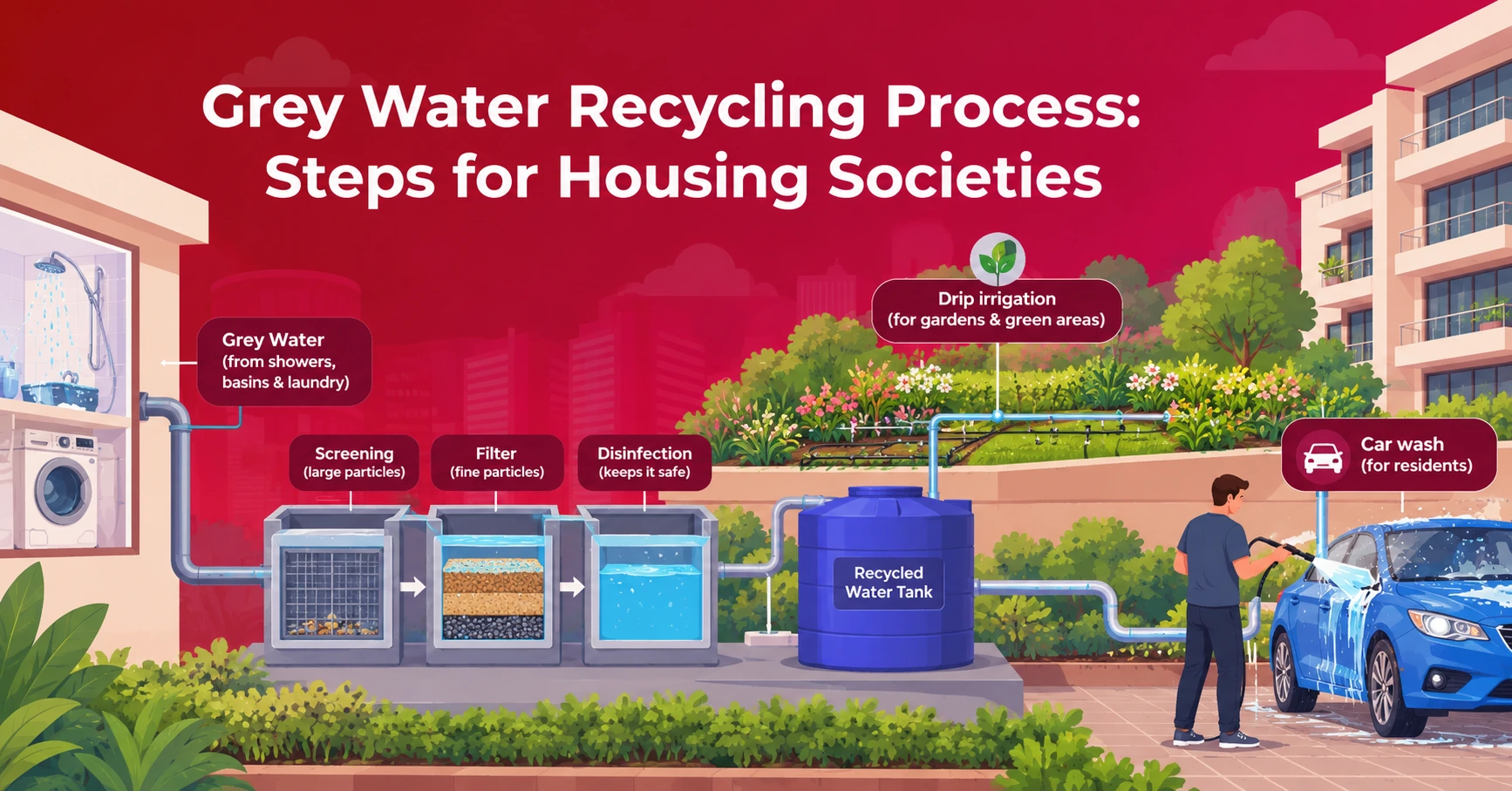


With increasing water charges and scarcity of tankers, housing societies require an appropriate method of utilising water. The grey water recycling process is one way of doing it, where water from bathrooms and washing machines is treated so that it can be reused. This article will describe the grey water treatment process and the various stages through which grey water gets recycled. It also looks at the potential savings, system costs, common mistakes to avoid, and steps committees can follow to introduce grey water recycling in their communities.

What Is Grey Water Recycling in a Housing Society?
Grey water is the lightly used water that leaves bathroom basins, showers, baths and washing machines. Blackwater is toilet waste. Kitchen sink water is usually kept out too, because of grease and food particles.
Recycling means treating that grey water on site and using it again for jobs that do not need drinking quality, like flushing toilets and watering plants.
India produces about 31 billion litres of grey water a day. In Indian households, more than half of the water used turns into grey water, and only about 5% of it gets recycled.
Why Should Housing Societies Recycle Grey Water?
Most societies run on a mix of municipal supply, borewells and tankers. When supply drops, tanker bills go up, and the maintenance charge follows. The grey water recycling process gives a society a second source that comes from its own flats.
Committees usually take it up for these reasons:
- Fewer tanker orders in summer
- Less water sent into an overloaded sewer line
- Less pressure on borewells and groundwater
- A steady supply for gardens and flushing
An example of a building that has been practising greywater recycling for sixteen years is a small apartment building with eight flats in Saidapet, Chennai. This particular building has drainage pipes that were designed separately for bath and laundry water during its construction. Unlike normal sewage, this water is directed towards a bed of water-loving plants. This is proof that such a simple and plant-based system can work well for years.
Grey Water Recycling Process: 6 Steps from Collection to Reuse
A grey water treatment process in a society has five stages, followed by storage. Plant sizes differ, but the order is almost always the same.
1. Collection and separate plumbing
The water from the shower, basin, and washing machine flows through its own pipelines into a sealed collection tank. The lines for the toilet and the kitchen remain separate. This process cannot be corrected later, so it must be done during construction.
2. Screening and settling
Mesh or bar screens catch hair, lint and large particles. In bigger plants, the water then rests in a primary tank so grit and heavy solids sink. An equalisation tank evens out the morning and evening rush of flow.
3. Biological treatment
Microorganisms do the decomposition of the soap residue and organic matter. Some of the ways that the greywater may be treated at this level include the use of aerated tanks, membrane bioreactors, or constructed wetlands with canna or umbrella palm plants.
An IISc review of grey water options for India found that wetlands and biofilm reactors suit current Indian conditions best.
4. Filtration and membranes
Sand or multi-layer media filters come next, followed by ultrafiltration membranes. They remove fine particles and most bacteria. The water should now look clear.
5. Disinfection
Ultraviolet light, ozone or controlled chlorine dosing neutralises the pathogens that remain. UV and ozone add no chemicals to the water. This is the last stage of the grey water treatment process.
6. Storage and redistribution
Treated water goes to a separate, covered tank built to limit odour. Use it within 24 to 48 hours, because bacteria can grow back in stored water. Pumps then send it through dedicated pipes to toilet cisterns, garden drip lines and outdoor washing. Here the grey water recycling process ends, and the reuse begins.
How a Greywater Recycling System Works in a Housing Society
The greywater recycling system in a residential building can be found either in the basement of the building or within the utility area. Gravity or small pumps transfer water from each block to the underground tank. A second set of pipes carries treated water back up.
Many complexes already have a sewage treatment plant (STP) whose output feeds flushing lines. That is recycling at building scale, and adding a grey water stream to it can be simpler than building from nothing.
A private system inside one flat usually needs the committee’s clearance. Drainage separation and backflow protection fall under the National Building Code 2016, Part 9. Whichever greywater recycling system a society picks, the grey water recycling process follows the same order.
Where Can Recycled Grey Water Be Used in a Society?
Treated grey water is for non-drinking jobs only. Common uses in a society:
- Toilet flushing in all flats
- Drip irrigation for common gardens and lawns
- Washing cars and floors in common areas
- Cleaning outdoor spaces and corridors
- Cooling towers and groundwater recharge, where local rules allow
Greywater Recycling System Cost and Savings for Housing Societies
The numbers change from one society to the next. Three things decide what you will save and spend:
- Savings: the number of flats, the size of your gardens and how much flushing you do
- Cost: the size of the plant and the grey water treatment process you pick
- Payback: your water tariff and what you spend on tankers today
A society with big lawns and heavy tanker bills will see the gain sooner than one with a small garden and steady municipal supply. Before you commit, ask each vendor to work out the payback using your last twelve months of water bills.
Common Mistakes to Avoid While Grey Water Recycling
- Sending the kitchen sink water into the line. Grease clogs filters and upsets the biological stage.
- Holding treated water for days.
- Skipping servicing of filters, membranes and UV lamps.
- Leaving recycled water pipes and taps unlabelled.
- Treating it as an afterthought. Retrofitting costs more than planning at construction.
- Running the grey water recycling process without a maintenance schedule.
How to Start Grey Water Recycling in Your Housing Society
If a resident asks what grey water recycling is going to change for them, the honest answer is lower tanker spend and greener gardens. Here is a simple path to get there:
- Pull twelve months of water bills and tanker invoices.
- Check whether your wastewater treatment plant already sends treated water to the flushing lines. Most societies call this the STP.
- Ask for two or three quotes, with the treatment method named.
- Take the proposal to the general body with a savings estimate.
- Sign a service contract that covers filters, membranes and UV lamps.
Manage Complaints with the NoBrokerHood Complaint Management System
A grey water recycling system includes a number of components such as collection tanks, filters, pumps and separate water supply lines. If any of these fail, the community may have to depend more on fresh water until repairs can be made. Committees can deal with these problems by keeping track of maintenance requests and following up on outstanding issues.
NoBrokerHood’s complaint management system allows residents to raise any maintenance issues and helps the committee to keep all the requests in one place. This allows for better coordination of repairs and a better overview of recurring problems within the community.
Key features include:
- Easy Complaint Reporting: Residents can raise complaints about leaking pipes, drainage problems or other maintenance issues through the app.
- Complaint Status Updates: Track the progress of reported issues and identify requests that still need attention.
- Maintenance Records: Keep a record of reported problems for future reference and follow-up.
- Team Coordination: Help committee members coordinate with maintenance staff to address reported issues.
By keeping maintenance requests organised, housing societies can improve follow-up on water-related problems and support the routine upkeep of their recycling systems.
