





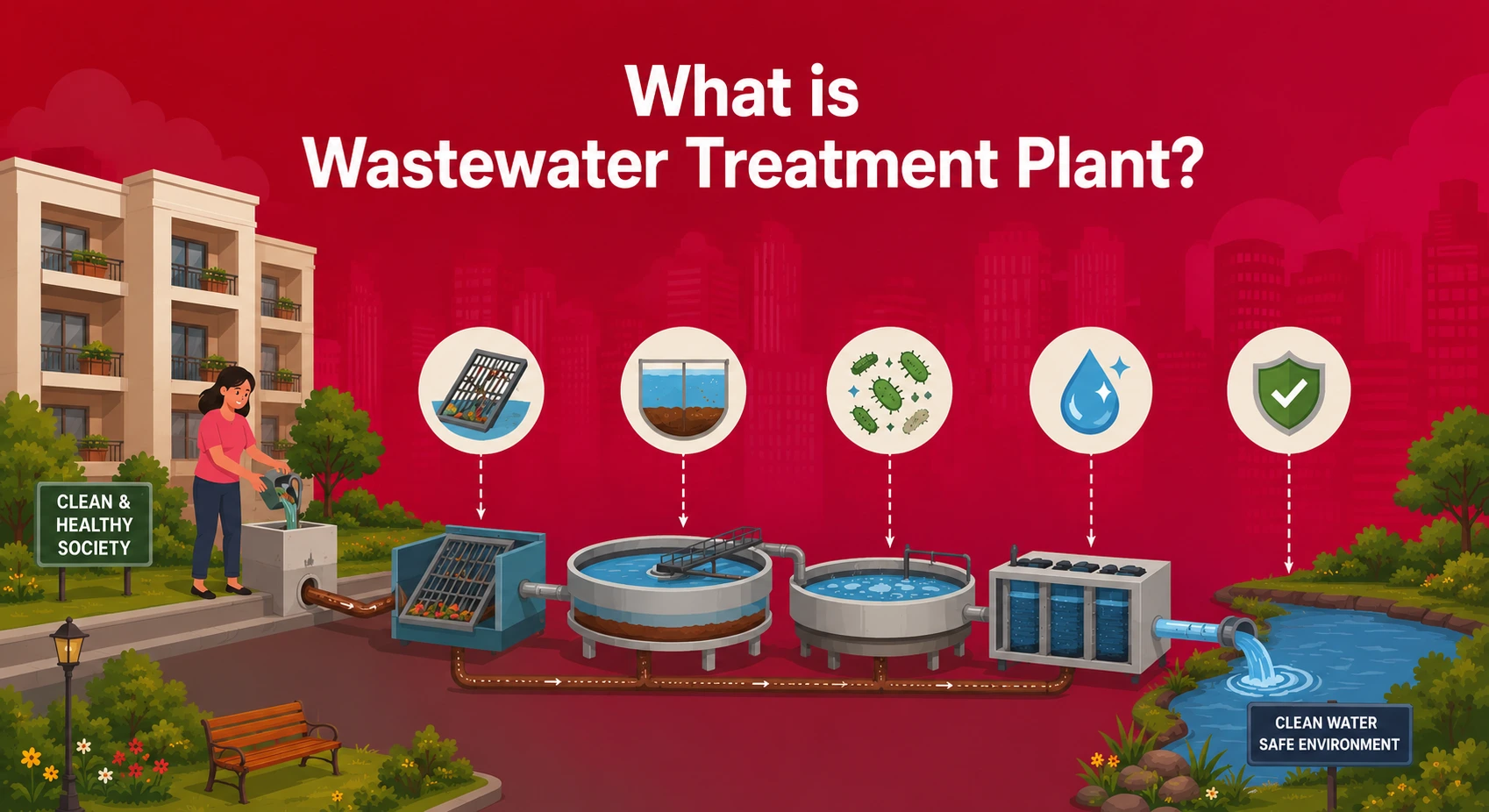


India ranks 13th on the worldwide Water Stress Index, highlighting why a wastewater treatment plant plays a crucial role in every housing society's eco-friendly future. Urban India's domestic usage accounts for more than 15% of all water consumption, making quick action essential for cities like Bangalore, Delhi, and Mumbai that have already grown beyond their local water resources.

A housing society's wastewater management system can create a real difference by treating wastewater for non-drinking purposes like irrigation, toilet flushing, and cleaning. This reduces freshwater usage, stops diseases from spreading, and removes harmful pollutants, organic matter, and pathogens that damage soil and water bodies.
Waste water treatment Plant Explanation
WWTP stands for Wastewater Treatment Plant - a facility that removes or eliminates contaminants from wastewater before it reaches natural bodies, making it clean and safe for the environment. The WWTP meaning covers more than just cleaning water - treated water can be reused to water plants, wash cars, and more. It is also a major element of water pollution control.
Your society’s wastewater treatment plant saves money and protects the environment effectively. The treated water serves multiple purposes:
| Purpose | Water Savings |
|---|---|
| Garden Maintenance | 30-40% |
| Car Washing | 15-20% |
| Common Area Cleaning | 20-25% |
Difference between a Wastewater Treatment Plant and Sewage Treatment Plant?
Even though many people believe they are the same, they are not. Sewage is a part or subgroup of wastewater, and they both have a specific role to play in the process and are the major components of the waste systems.
| Wastewater Treatment System | Sewage Treatment System |
|---|---|
| It is the water produced by humans and disposed of through a drainage system. | It is the wastewater that comes from laundry and toilets and it contains urine and laundry waste. |
| Treats all types of wastewater including greywater, blackwater, and industrial effluents. | Treats only sewage - domestic waste from toilets, sinks, and laundry. |
| Broader in scope and handles a wider range of contaminants and water sources. | Narrower in scope and focuses specifically on biological and organic waste treatment. |
| Commonly used in large-scale municipal and industrial water management systems. | Commonly installed in residential housing societies and smaller urban communities. |
Types of wastewater
- Greywater
- Blackwater
- Sewage
Wastewater needs to be treated to ensure it’s safe to release in the environment.
Also Read: Sewage Treatment Plant (STP): Process, Working & Installation
Understanding Modern Wastewater Treatment Systems
Modern wastewater treatment systems have evolved substantially to handle growing environmental challenges. As urban populations grow and freshwater resources shrink, housing societies need to understand and adopt these systems to implement water management solutions that truly work. Today's treatment plants go beyond basic filtration - they integrate advanced biological, chemical, and physical processes to ensure treated water meets safety standards and can be safely reused or released into the environment.
Waste water management System
Your housing society’s waste water management system protects the environment. The system collects, treats, and safely disposes of or reuses wastewater from residential sources. This process reduces pollution, prevents water body contamination, and helps reclaim water for irrigation and groundwater recharge.
The Filtration
Your wastewater treatment plant’s filtration process works through three main stages:
| Treatment Stage | Purpose | Process |
|---|---|---|
| Primary | Remove large particles | Physical separation, sedimentation |
| Secondary | Break down organic matter | Biological treatment, activated sludge |
| Tertiary | Final purification | Advanced filtration, nutrient removal |
Corporation Water
Your treatment facility can use these filtration methods to ensure water quality:
- Physical filtration: Uses membranes, activated carbon, and sand to trap impurities
- Chemical treatment: Implements chlorination and ozonation for disinfection
Solid Waste Management
Solid waste management forms an integral part of your wastewater treatment plant system. Poor disposal can result in:
- Unsanitary conditions affecting public health
- Environmental pollution risks
- Vector-borne disease outbreaks
Your housing society should follow regular maintenance schedules and check the treatment system’s effectiveness periodically to keep it running smoothly.
Also Read: A Guide to Waste Management in Indian Societies
Importance of Wastewater Treatment Plant in Housing Societies
A wastewater treatment plant in your housing society isn’t just good for the environment - it’s a smart investment that will pay off. Your society can save money and resources through proper waste water management both now and in the future.
Here’s why your housing society needs a wastewater treatment plant:
- Reduces dependency on municipal water supply
- Cuts down monthly water expenses
- Helps maintain property value
- Ensures compliance with environmental regulations
- Creates a green living environment
On top of that, your society’s wastewater treatment system protects against water shortage problems. A residential wastewater treatment system gives you control over water security while safeguarding the environment.
In spite of that, your residential wastewater treatment system needs proper maintenance and regular monitoring to succeed. Quality system investment goes beyond meeting regulations - it builds a sustainable future for your community.
Read Also: Noise Pollution Rules in Residential Areas
How NoBrokerHood Helps Housing Societies Manage Wastewater Treatment
NoBrokerHood provides a comprehensive society management platform that helps housing societies implement and manage effective wastewater treatment systems. It supports societies in monitoring utility usage, managing maintenance requests, tracking water-related complaints, and ensuring compliance with environmental regulations - making sustainable water management seamless and efficient for both residents and managing committee members.
| Feature | What NoBrokerHood Offers |
|---|---|
| Complaint Management | Raise and resolve water-related complaints efficiently |
| Utility Bill Payments | Track and manage water utility bills seamlessly |
| Communication Management | Notify residents about wastewater management updates |
| Maintenance Tracking | Schedule and monitor WWTP maintenance requests |
| Accounting & Billing | Transparent financial management for water expenses |
| Visitor Management | Manage vendor and technician entries for WWTP servicing |
| Staff & Vendor Management | Coordinate with water treatment service vendors |
| Society Management | End-to-end residential society administration |
All Solutions by NoBrokerHood:
