Difference Between Apartment and Housing Society
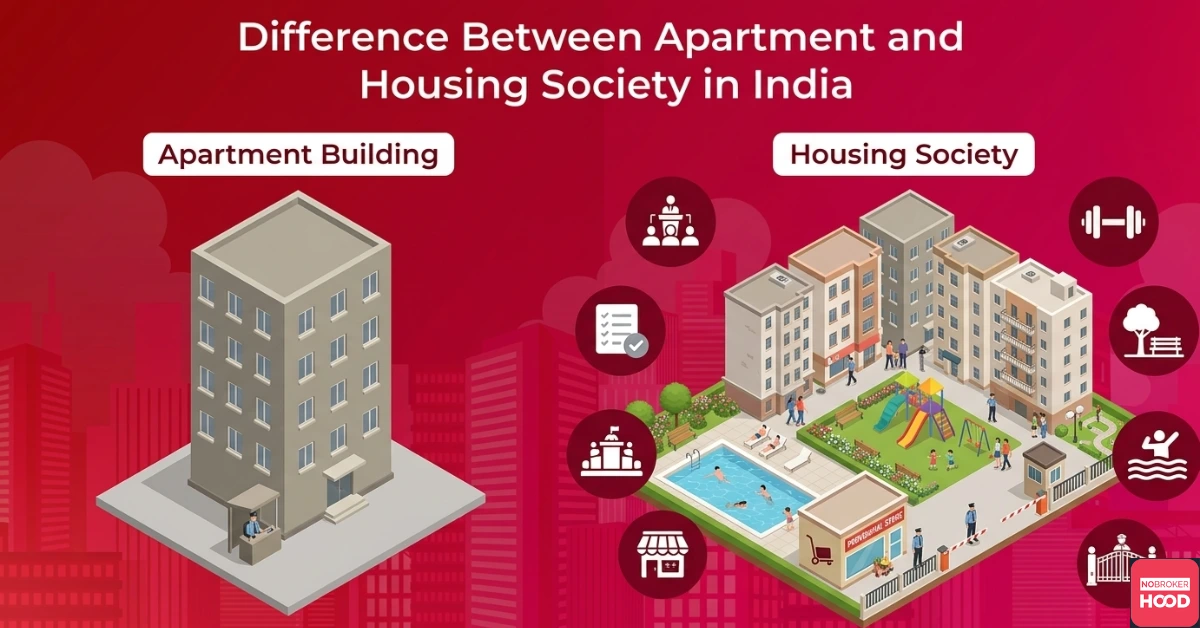
In India’s real estate market, the difference between an apartment and a society goes beyond terminology. Cooperative housing societies, especially in Mumbai, follow the Maharashtra Co-operative Societies Act, 1960, making them highly structured communities. In societies, members jointly own the land and buildings, while apartment buyers typically hold individual unit ownership. A society usually requires at least 10 families to form, whereas one person can own 5 apartments in a condominium setup. Societies often provide better shared amenities and stronger community engagement. However, apartments are generally more affordable, making them a practical choice for first-time homebuyers seeking lower upfront costs.
Housing Society vs Apartment: Living Situation in Day-to-Day Life
Your everyday experiences are shaped differently in housing societies than in independent apartments due to these significant differences. You can make better housing decisions that fit your lifestyle priorities by knowing the difference between housing society and apartment
Social Environment and Community Interaction
Through clubs, events, and common facilities that naturally unite people, housing societies foster closer ties within the community. Residents celebrate festivals as a group and take part in activities that showcase unity in diversity.
Apartments provide some community interaction through common areas like lobbies and swimming pools, though community gatherings happen less often. The shared environment still helps people connect, but not as much as they would in societies.
Personal Space and Privacy
- When examining the difference between apartment and society, privacy is a crucial consideration. Unlike apartments, housing societies offer their residents more personal space and larger units, which improves privacy.
- Apartments that share walls, floors, or ceilings with their neighbors are less private and have more noise problems.
- Society units come designed to give each home complete privacy, while security systems keep unwanted visitors away.
Difference Between Apartment and Society: Rules, Regulations and Governance
The difference between cooperative society and apartment governance models significantly affects daily life:
| Aspect | Cooperative Society | Apartment |
| Rules of Governance | Comprehensive guidelines pertaining to management, community behaviour, and building appearance | Fundamental guidelines for shared areas, pets, and noise |
| Enforcement Organization | Official managing committee or resident association | An unofficial resident group or building management |
| Co-operative Societies Act’s bylaws | Govern the legal framework | Governed by general property ownership laws. |
| Change Adaptability | Less flexibility because modifications must abide by social norms and approvals | Less restrictions on changing individual apartments and more flexibility |
| Responsibilities of Residents | Clearly stated obligations and rights in accordance with the bylaws | Less formally defined, founded on management policies and mutual understanding |
Also Check: CCTV Rules for Society
Security Protocols and Their Efficiency
With the help of CCTV cameras, security personnel, and gated entrances, societies provide total security, resulting in a safer atmosphere with fewer security problems. Although apartment buildings typically have CCTV and security personnel, they face additional difficulties due to increased resident and visitor traffic.
Comparison of Costs, Amenities, and Maintenance
The decision between apartment living and society is heavily influenced by finances and amenities. The amenities, upkeep plans, and expenses that distinguish housing society from apartments can have a significant impact on your spending plan and standard of living.
Amenities: Luxury vs. Basics
Housing societies give you more detailed amenities than standalone apartments. These societies have swimming pools, gyms, clubhouses, sports courts, and play areas for children. Society management teams also host festivals and cultural events using maintenance charge funds.
Standalone apartment buildings offer limited facilities. They focus on simple services instead of luxury amenities. This Difference Between Society and Apartment amenities affects your lifestyle quality and ongoing costs.
Also Check: Gated Community Amenities for Smart Buyers
Maintenance Responsibilities and Charges
The maintenance calculation methods vary between these living arrangements:
- Society maintenance: Ranges from ₹2 to ₹25 per square foot based on amenities.
- Calculation methods: Equal sharing, per square foot basis, or hybrid models based on society bylaws.
- Implications of GST: If your monthly maintenance costs more than ₹7,500, you must pay 18% GST.
In societies, maintenance is handled by professional management teams. Residents of apartment buildings frequently handle maintenance problems independently or with basic building management.
Also Check: Apartment Maintenance Charges Rules and Regulations
Disparities in Cost Structure
The following are some ways that apartment cost structures and cooperative societies differ:
- Initial expenses: Societies may appreciate better, but their purchase prices are higher.
- Parking regulations: Supreme Court says builders cannot sell parking spaces separately; you get one complimentary parking spot per unit.
- Clubhouse charges: You pay one-time club membership fees in societies that transfer to the society association later.
- Utility expenses: Apartments use individual utility meters while societies might share some utility costs.
It all comes down to striking a balance between one’s initial outlay and continuing expenditures. Better amenities and potential property appreciation are provided by society living, but upkeep is more expensive. Apartment living offers you a more affordable starting point with lower recurring expenses, but it also comes with fewer amenities and potentially less property appreciation.
Which One Should You Choose?
The right choice between a society and apartment depends on your specific situation. India’s housing map has changed. Your decision should match your current needs and what you want in the future.
Lifestyle Factors
You should think over your priorities before making a commitment:
- Family size matters: 2BHK apartments work well for smaller families, couples or singles. Larger families do better with 3BHK options that have extra space for guests or home offices.
- Work situation: The rise of remote work has changed where people want to live. Many now look for homes that let them work comfortably.
- Community engagement: Society living creates stronger social bonds through hosted events and cultural groups. This matters if you enjoy being part of an active community.
Financial Considerations
Money plays a big role in the decision:
- You need to assess all ownership costs. These include parking charges, stamp duty, registration fees, and interior expenses.
- Monthly maintenance costs vary. Society fees run higher because they offer more amenities.
- First-time buyers with tight budgets often find apartments more affordable.
Legal Structure & Future Planning
The society and apartment difference ownership affects your future:
- All but one of these benefits from increased FSI go to the society. In apartments, builders might keep these rights.
- Societies need only majority approval for redevelopment. Apartments require everyone to agree, which can slow things down after 25–30 years.
- Cooperative courts handle society disputes faster than civil courts handle apartment issues.
Future-Proofing Your Investment
Your choice needs to stand the test of time:
- Apartment complexes with reliable infrastructure adapt better to new technology.
- Homes close to important amenities and transportation hubs are more valuable.
- Societies are an excellent way to increase growth potential and resale value.
The society and apartment difference depends on your priorities: greater independence with less complicated management, or living in a community with intricate governance.
Simplify Housing Society Management with a NoBrokerHood
Managing a residential community becomes much easier with a modern society management app like NoBrokerHood. It automates daily operations, improves communication, and enhances security for residents and management committees. Here’s how it simplifies society management:
| Feature | What It Does | Why It Matters |
| Visitor Management | Digital gate passes and real-time entry tracking | Enhances security and removes manual registers |
| Maintenance Billing | Auto-generates invoices and supports online payments | Faster collections and full transparency |
| Communication Hub | Sends notices, polls, and event updates instantly | Keeps all residents informed and engaged |
| Complaint Management | Let’s residents raise and track issues online | Speeds up resolution and improves accountability |
| Accounting & Reports | Creates automatic financial statements | Simplifies audits and financial management |
| Amenity Booking | Enables online booking of the clubhouse, gym, etc. | Prevents double bookings and conflicts |
| Staff Management | Tracks attendance and duties of society staff | Improves monitoring and operational control |
All Solutions by NoBrokerHood:
Summary
The difference between apartment and society living in India offers different advantages for homebuyers. Societies provide stronger communities, extensive amenities, and better investment appreciation despite higher costs and stricter rules. Apartments cost less upfront with simpler management, making them ideal for first-time buyers seeking more freedom with basic comforts. Your choice should align with your family’s needs, work situation, budget constraints, and community preferences. Consider the distinct legal structures of each option and how they match your five-year plan before committing to ensure your home remains both a sanctuary and a sound investment.
FAQs
Society living offers stronger community ties, more amenities, and structured governance, while apartments provide greater independence, easier management, and affordability. This is the key difference between the two.
The key difference between housing societies and apartments is that the society maintenance charges are higher (₹2–₹25/sq. ft.) due to extensive amenities, while apartments have lower maintenance costs but usually offer fewer facilities.
Societies offer larger homes and more privacy, while apartments often have shared walls and higher noise levels, making privacy a key difference between the two.
Due in part to their extensive amenities and more robust community structure, society properties typically have higher resale value and appreciation potential than apartments. This illustrates the distinction between apartments and housing societies.
In housing societies, land and building ownership is held collectively, with access to cooperative courts for faster dispute resolution. Apartments rely on individual ownership and civil courts, marking a key legal difference.