What Is Housing Society Maintenance Receipt?
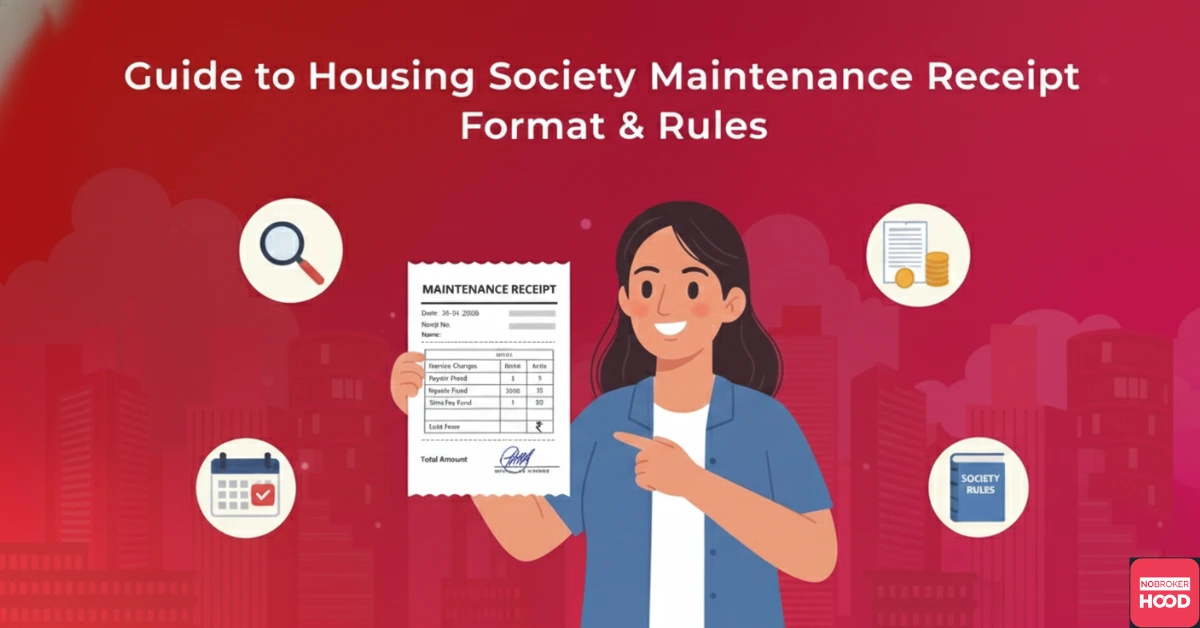
Housing societies require regular maintenance fees for the upkeep of common areas and amenities. These charges are legally payable by all residents and property owners. Maintenance amounts generally total around 0.75% of the flat’s construction cost annually. Payments may be made monthly, quarterly, or yearly. A housing society maintenance receipt serves as proof of payment and ensures transparency in financial transactions. It covers essential services like water, electricity, lifts, and common area maintenance.
Importance of Housing Society Maintenance Receipts
Trust between housing society members and management committees starts with financial transparency. A well-formatted housing society maintenance receipt proves more than just payment; it builds accountability and creates better relationships in the community.
For Residents
Your housing society maintenance receipt is a vital financial document that protects your interests. The receipt should show your housing society’s name, registration number, and address in clear print. This document helps you track your payments to different maintenance funds, like the Society Sinking Fund and major repair reserves.
For the Management Committee
The management committee must keep detailed receipt records and run transparent financial operations. A strong accounting system stops disputes and creates a positive community culture. The committee needs to create maintenance bills for each flat and give proper receipts after payment. Digital payments through NEFT need clear records that connect transactions to specific flats.
The receipt format should match housing society bylaws and separate GST-applicable charges clearly. Housing societies need GST registration if their annual maintenance charges are more than ₹20 lakhs. The committee should keep separate records for charges that don’t need GST, like property tax and electricity charges.
Also Read: GST on Housing Society: Complete Guide
Key Components of a Housing Society Maintenance Receipt
A well-structured housing society maintenance receipt needs everything that helps keep records accurate and compliant with laws. Your housing society’s name, registration number, and complete address must appear in printed format.
The receipt should clearly show the resident’s details and the flat number with the owner’s name. You need to state the billing period that shows if charges are collected monthly, quarterly, or annually.
A detailed breakdown of charges is at the heart of the receipt, which has:
| Component | Description |
| Service Charges | Security, cleaning, elevator maintenance |
| Water Charges | Municipal supply and additional tanker costs |
| Common Area Electricity | Lighting, pumps, generators |
| Repair Fund | Minimum 0.75% of construction cost annually |
| Sinking Fund | Minimum 0.25% of construction cost annually |
Payment details must be clear to avoid confusion. The total amount, payment due date, and acceptable payment methods need to be included. The receipt should mention transaction details for digital payments through NEFT.
The receipt works as a legal document, so it must follow local cooperative society rules. GST charges should appear as separate items when applicable to maintain transparency.
Also Read: Financial Statements of Cooperative Society
Obtaining Your Housing Society Maintenance Receipt
Getting your housing society maintenance charges receipt can be done in several ways. Each method has its own process and benefits. Your housing society’s management system and resident priorities usually determine the best approach.
Traditional Methods
You can collect your maintenance receipt by visiting the housing society office at specific times. Most housing societies started by accepting cash or cheque payments. Cheque payments add extra costs of about ₹75 for each transaction. The housing society secretary calculates bills based on maintenance charges and gives you physical receipts. You need to store these receipts safely for future use. The traditional method is getting outdated as housing societies are now shifting to digital methods in order to avoid any errors, for financial transparency, and convenience. With the NoBrokerHood mobile app, you can conveniently make your housing society maintenance charges with ease at any time and download your housing society maintenance receipt.
Digital Methods
Modern housing society maintenance receipt systems give you simplified alternatives through digital platforms. Many housing societies now use NoBrokerHood Hassle-free Bill Payment options that let you pay through UPI, credit cards, debit cards, and net banking. The system creates digital receipts and emails them to you right after your payment. This automatic process removes manual work and gives you error-free payment records.
| Feature | Traditional Method | Digital Method |
| Processing Time | 24-48 hours | Instant |
| Receipt Format | Physical copy | Digital PDF |
| Payment Options | Cash/Cheque | UPI/Cards/Net Banking |
| Record Keeping | Manual filing | Automated storage |
Digital methods let you see all your past payments easily. You can download receipts whenever you need them, which makes managing your financial records simple and organised.
Digital vs. Physical Receipts: Pros and Cons
Housing societies now move from paper to digital society maintenance receipts. This change has revolutionised financial record management and affects residents and management committees differently.
Digital receipts help save money by cutting out paper, ink, and printing costs. They also help the environment by reducing paper waste and the use of toxic chemicals used in thermal paper. Automated digital maintenance receipts give instant access and remove manual entry mistakes.
Paper receipts come with their own pros and cons. They give you immediate proof of payment, but the text fades over time and needs physical storage. Record-keeping becomes harder, especially when you have to store documents for years.
Digital receipts give improved features like automated record-keeping that you can access instantly. Residents need simple technical knowledge to use these e-receipts well. The future of housing society maintenance receipts shows more digital adoption. Cloud storage and automated tracking will become standard practice soon.
Housing Society Maintenance Receipt Format
Housing Society Name: ______________________________
Registration Number: ______________________________
Society Address: _________________________________
Receipt No: ____________ Date: ____________
Member Name: _________________________________
Flat Number: ____________ Wing/Block: ____________
Billing Period: Monthly / Quarterly / Annually
(From ____________ To ____________)
Breakup of Maintenance Charges:
| Particulars | Amount (₹) |
| Service / Maintenance Charges | |
| Water Charges | |
| Common Area Electricity | |
| Repair Fund | |
| Sinking Fund | |
| Parking Charges (if any) | |
| GST (if applicable) | |
| Total Amount Paid | ₹ |
Payment Details:
Mode of Payment: Cash / Cheque / UPI / NEFT / Net Banking
Transaction / Cheque No: ____________________________
Bank Name: ____________________________
Received By: ____________________________
Authorised Signature: ____________________________
Society Seal / Stamp
Legal Aspects of Housing Society Maintenance Receipts
Housing society maintenance receipts under the Societies Registration Act protect residents and management committees legally. These receipts ensure financial transparency and help prevent disputes among housing society members.
Law requires maintenance receipts to carry the housing society’s authorised signature and official stamp. Bank transfer records serve as additional payment proof when residents use this method.
The Supreme Court mandates that all property owners pay maintenance charges, whatever their occupancy status. Developers must also pay maintenance for unsold units. Every homeowner has a responsibility for maintenance payments under the Real Estate Act of 2016.
Residents who face receipt collection problems can:
- File a complaint with the Deputy Registrar if the society fails to provide receipts
- Submit RTI applications to track complaint progress
- Appeal to the State Information Commissioner if needed
Management committees face serious legal consequences for poor receipt management. Legal action for cheating can follow false bills or incorrect records. Residents can file FIRs against committees that issue wrong bills intentionally, provided they have evidence of the correct rates and charges.
The housing society must finalise these records within 45 days after the cooperative year ends. This ensures proper documentation and transparency in all financial dealings.
Also Read: Cooperative Society Accounting
Best Practices for Managing Housing Society Maintenance Receipts
Good management of housing society maintenance receipts will give a smooth financial operation and prevent future disputes. We needed organised systems to help residents and management committees track and store these important documents.
For Residents
A systematic approach to housing society maintenance receipt management protects your financial interests. Digital backups and a spreadsheet that tracks payment dates, amounts, and receipt numbers will keep your records safe. PDF copies stored in cloud storage or external drives add extra security.
For the Management Committee
Your committee needs reliable systems to manage housing society maintenance receipt. Licensed accounting software helps automate invoice generation and keeps accurate records. You can switch to NoBrokerHood Accounting and Billing Solutions software for financial transparency. Here’s what works best:
| Management Aspect | Best Practice |
| Daily Operations | Update accounts daily, avoid cash transactions |
| Documentation | Maintain proper filing of bills and vouchers |
| Digital Tools | Use QR codes to collect payments |
| Monitoring | Regular review by committee members |
The committee should keep flatwise ledgers with complete details and updated contact information. A document repository for important resolutions helps maintain continuity in decision-making.
Simplify Society Maintenance Payments and Receipts With NoBrokerHood
NoBrokerHood offers a seamless digital platform for paying and managing your society maintenance charges. Residents can pay through UPI, credit/debit cards, or net banking, and instantly receive a digital society maintenance receipt via email.
Benefits of Using NoBrokerHood:
- Instant Receipts: Get proof of payment immediately without visiting the society office.
- Automated Record-Keeping: All past payments are stored digitally, making tracking and downloading receipts easy.
- Error-Free Transactions: Digital payments reduce human errors and eliminate confusion over dues.
- Transparency: Detailed breakdowns of maintenance components, GST charges, and payment records are automatically included in the receipt.
- Convenience: Pay anytime, anywhere, and avoid long queues or manual paperwork.
NoBrokerHood ensures both residents and management committees maintain accurate, transparent, and legally valid records, streamlining financial operations for smoother society management.
All Solutions by NoBrokerHood:
FAQs
A housing society maintenance receipt should include the housing society’s name, registration number, address, resident details, billing period, and a breakdown of charges. It should also specify the total amount, payment due date, and accepted payment methods.
You can obtain your receipt through traditional methods like visiting the housing society office to pay by cash or cheque, or through digital methods using payment gateways for UPI, credit/debit cards, or net banking. Digital methods often provide instant, automated receipts via email.
Digital receipts offer advantages like cost savings, instant accessibility, and automated record-keeping. However, they require basic technical knowledge. Physical receipts provide tangible proof but can fade over time and require storage space.
Maintenance receipts are legally valid only with the society’s authorised signature and stamp. All property owners, including developers with unsold units, must pay maintenance charges regardless of occupancy status.
Create separate digital folders for each financial year and store scanned copies of physical receipts. Maintain a spreadsheet to track payment dates, amounts, and receipt numbers. For added security, store PDF copies in cloud storage or on external drives.