What is Considered Emergency Maintenance in an Apartment?
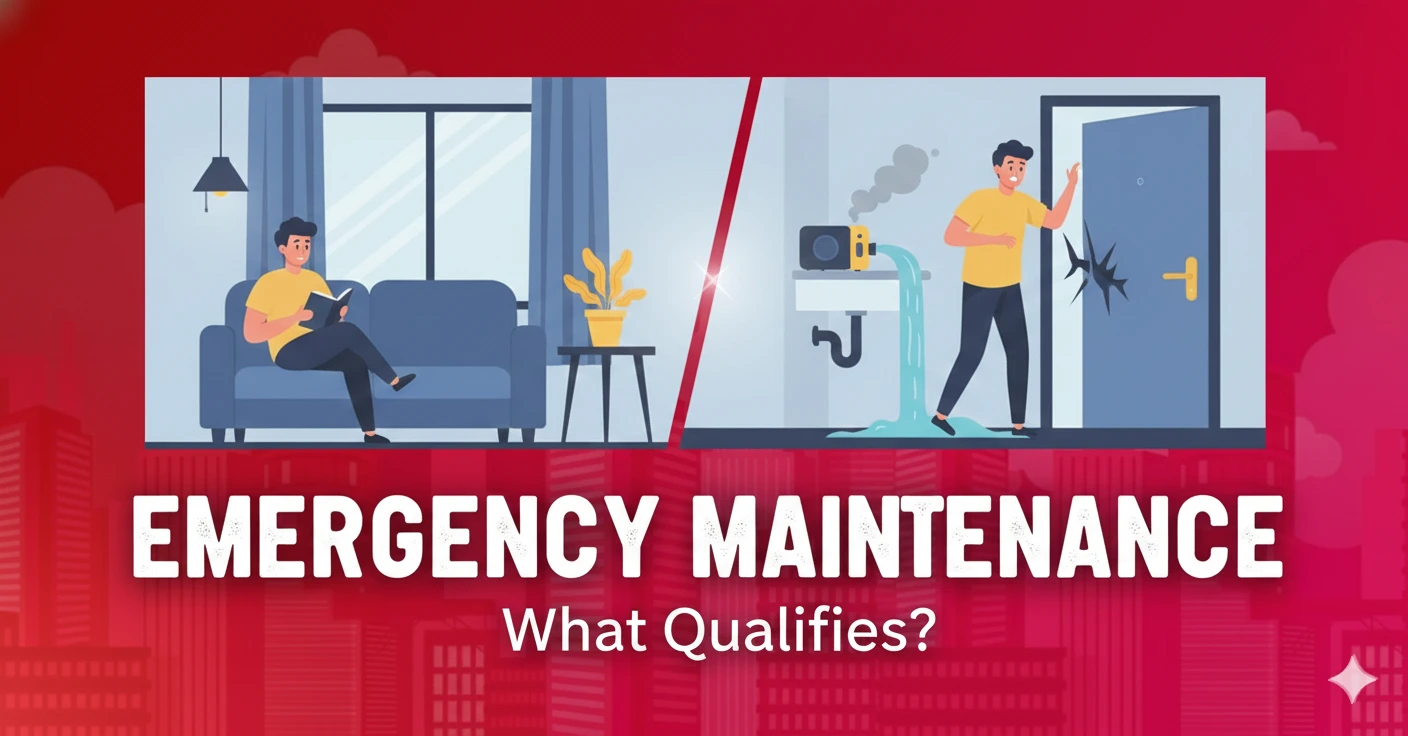
Emergency maintenance in an apartment refers to urgent repairs that require immediate attention to prevent injury, serious health hazards, or significant property damage. These are situations where delaying repairs could put residents, the apartment, or surrounding units at risk.
Understanding Emergency Maintenance in an Apartment Setting
Apartment living comes with shared responsibilities, and one of the most confusing aspects for residents is knowing when a maintenance issue becomes an emergency. While some problems can wait for regular service hours, others demand immediate attention to prevent harm or severe damage.
A routine maintenance request usually involves inconvenience, like a dripping tap or a slow drain. Apartment emergency maintenance, on the other hand, involves situations in which delaying repairs could threaten personal safety, health, or the property’s structural integrity. Knowing the difference helps residents act responsibly while allowing management teams to respond efficiently.
Risk to Health, Safety, or Property Damage
Universally, an apartment emergency maintenance issue meets at least one of these criteria:
- Immediate risk to life, health, or safety (for example, gas leaks or fire hazards).
- Severe or irreversible property damage if not fixed quickly (such as burst pipes or flooding).
- Loss of habitability, where the apartment becomes unsafe or unlivable.
From a legal standpoint, landlords or housing societies are typically obligated under the implied warranty of habitability to respond promptly to emergency repairs. While exact response times vary by lease and local laws, emergencies are expected to be addressed immediately or within hours, not days.
Top 7 Scenarios That Qualify as Emergency Apartment Repairs
While many maintenance concerns can be addressed during regular service hours, some situations escalate quickly and require immediate action. The following scenarios represent the most common emergency apartment repairs where delays can put residents or property at serious risk.
Immediate Safety and Security Risks
Issues related to personal safety and home security should always be treated as a top priority. When a resident’s sense of safety in their apartment is compromised, emergency maintenance is necessary.
Read more on: Gated Community Security
Total Loss of Unit Security
Broken main-entry doors, damaged locks, or shattered ground-floor windows that leave the apartment vulnerable constitute an emergency. An unsecured home exposes residents to theft and personal danger, requiring urgent repair or temporary securing.
Gas Leak or Fire Hazard
This is the highest-priority emergency. If you smell gas (often described as rotten eggs), hear hissing near appliances, or feel dizzy:
- Evacuate the apartment immediately.
- Call emergency services (911).
- Notify apartment management once safe.
Never attempt to fix a gas leak yourself. Fire risks, such as sparks, smoke, or burning smells, also require immediate evacuation and emergency assistance.
Catastrophic Water and Plumbing Issues
After safety-related threats, uncontrolled water damage is one of the fastest ways an apartment can become uninhabitable. Plumbing failures often impact not just one unit, but neighboring apartments as well.
Uncontrollable Apartment Flooding
A burst pipe, an overflowing appliance, or a significant leak that the resident cannot stop is an emergency. Water spreads quickly, damaging flooring, walls, electrical systems, and even neighboring apartments. Immediate intervention helps prevent mold growth and structural deterioration.
Severe Sewage Backup
Sewage overflowing or backing up into toilets, sinks, or drains, or floor drains poses a serious health risk. This type of plumbing failure makes the apartment unlivable and requires urgent professional cleanup and repair.
Essential Utility Failures in Extreme Weather
Any instance of raw sewage backing up into an apartment must be treated as an emergency. Sewage exposure poses serious health risks and makes the living space unsafe until properly cleaned and repaired.
Loss of Heat During Freezing Weather
Heating failures during cold conditions can lead to hypothermia, illness, and frozen pipes. In many regions, landlords are legally required to maintain heating when temperatures drop below a certain level, making this a common and serious emergency maintenance issue.
Total Power Failure (Internal)
If your entire apartment loses power, and it’s not a citywide outage, it may indicate a dangerous electrical problem. Signs like sparking outlets, burning smells, or smoke coming from panels indicate an emergency. After checking breakers and confirming it’s isolated to your unit, management should be contacted immediately.
Read Also: Emergency Evacuation Plan for Apartments
What is NOT Considered Emergency Maintenance?
Not every issue requires an urgent response. Understanding non-emergencies helps prevent unnecessary after-hours calls and allows maintenance teams to focus on critical situations.
Common Non-Emergency Service Requests
- Dripping faucets
- Running toilets that still function
- Minor toilet clogs when another bathroom is available
- Air conditioning issues during mild weather
- Slow-draining sinks or showers
These should be reported, but through regular maintenance channels.
Issues That Can Wait for Regular Business Hours
- Minor pest sightings, like ants or spiders
- Appliance failures, such as dishwashers or ovens
- Freezer or refrigerator issues where food spoilage is not imminent
- Flickering lights or single non-functioning outlets
While inconvenient, these situations generally do not pose immediate safety or health risks.
Steps on How to Report an Emergency Maintenance Request Effectively
Knowing how to report an emergency properly can make a key difference in reducing damage and ensuring a timely resolution. The following step-by-step guide helps residents respond quickly and effectively.
Resident’s Step-by-Step Action Plan
You can follow these steps:
Step 1: Assess the danger and prioritise safety
If there is an immediate threat, fire, gas, or flooding, contact emergency services first.
Step 2: Take temporary mitigation steps
Turn off the main water valve, unplug electrical appliances, or shut off breakers if it’s safe to do so. These small actions can significantly reduce damage.
Step 3: Contact management immediately
Use the designated emergency maintenance number, app, or reporting system. Clearly explain the issue, your apartment number, and any steps already taken.
Who is Responsible? Resident vs. Landlord/Housing Society
Understanding who is responsible for emergency repairs can prevent confusion and ensure the right actions are taken promptly.
Management / Landlord Responsibility
Landlords and housing societies are responsible for ensuring a safe and habitable living environment. This includes:
- Providing a safe and habitable apartment.
- Repairing structural components and major systems such as plumbing, electrical wiring, and HVAC.
- Maintaining common areas.
- Offering a reliable 24-hour emergency maintenance system.
Read Also about: Common Area Maintenance Charges
Resident / Owner Responsibility (Self-Help)
Residents also have an important role in emergency maintenance. Their responsibilities include:
- Promptly reporting issues before they escalate into bigger problems.
- Taking reasonable steps to limit damage, such as placing towels under leaks or turning off the water.
- Covering repairs caused by their own negligence, such as improper disposal or misuse of appliances.
For owners in housing societies or HOAs, interior responsibilities often include appliances, light fixtures, and minor internal leaks, while shared infrastructure remains the society’s responsibility.
Read Also: Bylaws for Internal Repairs
NoBrokerHood: Simplifying Apartment & Society Maintenance Management
Modern residential communities need faster, more transparent systems to handle emergencies effectively. This is where NoBrokerHood plays a key role.
Integrated Solutions for Resident Safety and Repair Response
Handling apartment emergencies effectively requires more than just reporting the issue; it also depends on how quickly and efficiently management responds. Modern platforms like NoBrokerHood streamline this process, ensuring residents receive timely assistance while reducing confusion.
Instant Emergency Reporting and Society Alerts (The NoBrokerHood Advantage)
When an emergency occurs, every second counts. NoBrokerHood’s SOS and Panic feature allows residents to alert security personnel and management instantly. This immediate visibility ensures that the right people are aware of the situation without delay.
In addition, the in-app maintenance ticketing system enables residents to submit emergency requests effortlessly and track repair progress. This creates a documented, transparent workflow that minimizes errors and keeps residents informed at every step.
Faster Vendor Triage for Emergency Apartment Repairs
Even after reporting an emergency, delays in assigning the right repair personnel can worsen damage. NoBrokerHood addresses this by automatically categorising urgent issues and routing high-priority tickets to the appropriate vendors, plumbers, electricians, or technicians.
This approach ensures that emergency apartment repairs are handled quickly and efficiently, reducing downtime, preventing further damage, and maintaining resident safety.
All Solutions by NoBrokerHood
Read Also about: Emergency Response Team in Housing Society
FAQs
No, lack of hot water is generally not an emergency unless extreme cold makes the apartment unsafe.
Landlords are expected to respond immediately or within a few hours, depending on local laws and the severity of the issue.
Withholding rent is typically not recommended without legal guidance; instead, notify the landlord in writing and follow local tenant laws.
Report it promptly through regular maintenance channels and take temporary measures like placing a bucket to prevent damage.
You may be responsible for the cost unless the issue was life-threatening or urgent and management was unreachable.