





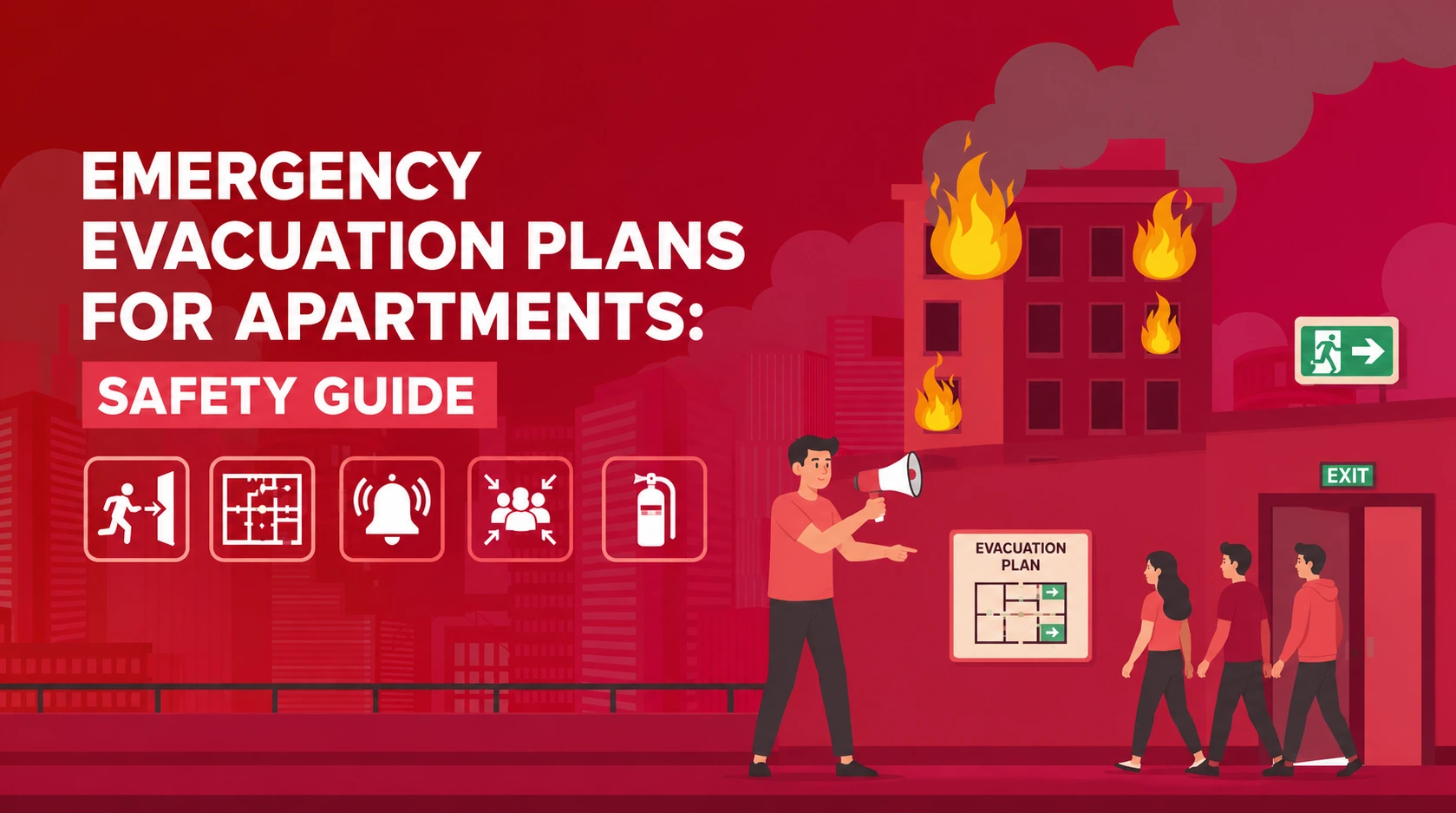


An Emergency Evacuation Plan can save your life when disaster hits your apartment building. Studies show that 85% of people don’t react as expected in emergencies. They stay in their apartments when fire alarms go off and put their lives at risk.

Your apartment building needs a detailed Building Fire Evacuation Plan that covers all emergency scenarios. A well-laid-out Fire Evacuation Plan does more than meet regulations. It gets you and your neighbors ready for unexpected situations and cuts down confusion when every second counts. This piece will help you create effective evacuation plans for your apartment building, so everyone knows what to do in an emergency.
Why Apartments Need a Fire Evacuation Plan
| Aspect | Details |
|---|---|
| Difficult Problems in Apartments | Vertical design creates complicated evacuation issues that do not exist in single-family homes. |
| Challenges for High-Rise Evacuations | Residents will often have to descend multiple flights of stairs, and it can take upwards of two hours until they reach safety. |
| Limited Exit Routes | Design with fewer exit routes create constrictions, with ground-oriented homes offering significantly more exits. |
| Elevators are not Available During a Fire | During any fire related emergency, elevators will not be available for use, forcing all residents to use the stairwells to evacuate. |
| Legal Obligation | Property managers and landlords have a legal obligation to guarantee safe passage for all residents. |
| Fire Evacuation Plans | In many areas, it is a legal requirement that property managers provide a fire evacuation plan in each apartment unit. |
| Purpose of Evacuation Plan | To provide an easily identifiable, accessible and expeditious way to exit a building or structure in an emergency. |
Residents need to evacuate immediately in these common apartment emergencies:
- Fires and electrical sparks
- Gas leaks and carbon monoxide detection
- Flooding
- Structural damage
Poor planning can lead to devastating collateral damage. Smoke creates a major threat, especially in apartments. It moves faster through hallways, stairwells, and vertical shafts, which can block escape routes. Well-designed Building Fire Evacuation Plans use smoke control systems to keep evacuation routes visible.
Detailed emergency evacuation plans do more than meet legal requirements – they save lives by reducing panic when seconds count. These plans tell residents exactly what to do, where to go, and how to help vulnerable neighbors. Regular practice drills help spot problems before real emergencies happen.
Creating, sharing, and practicing evacuation plans goes beyond checking a regulatory box for apartment residents and managers. This fundamental safety measure protects your community’s greatest asset: human life.
Steps to Create an Effective Emergency Evacuation Plans for Apartments
A well-laid-out Emergency Evacuation Plan needs careful preparation and teamwork. Good planning improves your chances of escaping dangerous situations safely and helps reduce confusion and panic.
Take action today to create your apartment’s evacuation plan. Your life and your neighbors’ lives depend on it.
A good Building Fire Evacuation Plan begins with a risk assessment. You should identify threats specific to your area, such as fires, floods, or severe weather events. This assessment helps you customize your evacuation plans based on likely scenarios.
After identifying the risks, draw detailed floor plans of your apartment building. These plans should mark:
- Primary and secondary escape routes
- Location of fire safety equipment (extinguishers, alarms)
- Exits, stairwells, and corridors
- Assembly points outside the building
Emergency Evacuation Plans for Apartments: Overview
| Aspect | Details |
|---|---|
| Assembly Points | Choose assembly points at least 1.5 times the building's height away to avoid falling debris, smoke, or collapse risks. Keep a backup assembly point ready if the main one is inaccessible. |
| Building Wardens | Assign wardens to check apartments, bathrooms, and common spaces before evacuation. Large buildings should ideally have one warden for every 20 residents. |
| Support for Vulnerable Residents | Evacuation plans should include special arrangements for people with disabilities, elderly residents, and families with young children. Residents with disabilities should also build personal support networks. |
| Regular Evacuation Drills | Conduct evacuation drills twice a year and make them realistic. These drills help identify issues and ensure residents know what to do during emergencies. |
| Pet Evacuation Planning | Include pets in evacuation plans. Identify pet-friendly shelters or hotels in advance and prepare emergency kits with food, medication, and identification for pets. |
Read Also: How to form an Emergency Response Team
Emergency Preparedness Kit for Apartment Dwellers
Due to storage constraints in apartments, the emergency bag should be portable, convenient and kept close to the main entrance of the home. Below is a list of what one needs in the kit of emergency preparedness for apartment dwellers :
Essential Go Bag Items:
- Torch or flashlight with extra batteries
- First aid kit
- Water supplies for 3 day (1 litre per person per day)
- Dry food items such as dry snacks, energy bars
- Photocopies of Aadhar, lease contract, and other important documents stored in a water proof pouch
- Power bank fully charged
- Cash in small denominations
- Medicines along with 3-day supply
- List of emergency contacts (on paper and not mobile)
- Dust mask or N95 mask
- Whistle (to signal for help if trapped)
For Families with Children:
- Diapers and baby food
- Comfort objects for children like a toy, etc.
- List of school ID and emergency contacts.
For Senior Residents or Medical Cases:
- Extra hearing aid batteries
- List of current medications and dosages
- Medical ID card with doctor's name
Training, Drills and Technology for Better Preparedness
Proper Emergency Evacuation Plans for Apartments need more than just documentation. Your apartment’s preparedness depends on thorough training and smart use of technology. People turn theoretical plans into survival skills through regular practice sessions.
Implement regular training and drills today so everyone knows their exact role when every second matters.
Healthcare facilities must conduct fire drills quarterly on each shift. Other buildings need these drills at least once every six months. The National Building Code 2016 requires high-rise buildings to conduct drills at least once every three months during the first two years, followed by semi-annual drills. These exercises help teams spot weaknesses in their evacuation plans and strengthen proper response procedures.
Effective drills include:
- Simulation of various emergency scenarios
- Practice using designated escape routes
- Crawling low under smoke (one to two feet above ground)
- Testing of all safety equipment functionality
- Evacuation to designated assembly points
Technologies to use for Better Preparedness:
| Evacuation Planning Aspect | Details |
|---|---|
| Staircase Design | Apartments achieve the best evacuation performance with two individual stairs designed for each floor. |
| Emergency Role Assignment | Specific emergency roles improve evacuation efficiency and coordination during emergencies. |
| Fire Wardens | Fire Wardens lead evacuations and inspect designated areas to ensure everyone exits safely. |
| Evacuation Marshals | Evacuation Marshals guide residents and visitors toward safe evacuation routes and assembly areas. |
| Visitor Management Systems | These systems track everyone inside the building during emergencies and generate live evacuation lists accessible from any device. |
| Emergency Alert Systems | Modern systems send emergency notifications through SMS, email, and push notifications for faster communication. |
| Cloud-Based Incident Management | Cloud platforms store floor plans, emergency contacts, and essential information for better emergency coordination. |
| Building Information Model (BIM) Technology | BIM technology simulates different evacuation scenarios to design the safest and most efficient evacuation routes. |
| Emergency Management Mobile Apps | Mobile apps provide real-time updates about evacuation routes, safe zones, and enable two-way communication during emergencies. |
| Integration with Fire Detection Systems | Advanced technologies integrate with fire alarms and detection systems to automatically unlock exit doors and activate emergency lighting. |
| Wireless Emergency Alerts (WEA) System | Launched in 2012, the WEA system has sent nearly 96,000 geographically targeted alerts to compatible mobile devices warning people about dangerous situations. |
Indian Legal Requirements for Apartment Evacuation Plans
Fire Safety Laws and Compliance for Apartments in India
Indian apartment complexes must comply with several fire safety laws both at the national and the state level. Knowledge of these fire safety laws would make it easier to keep your complex compliant.
National Building Code (NBC) 2016:
The NBC mandates that all high rise residential buildings (above 15 metres in height) must have:
- A fire evacuation plan displayed on every floor.
- Have at least two staircases for buildings above 24 metres.
- Must be fitted with automatic fire detection and alarm systems.
- Must have emergency Emergency lighting in all evacuation routes.
- Fire drills at least once every three months for the first two years, then semi annually.
Model Building Bye Laws:
States generally require that RWAs should maintain an emergency evacuation plan in writing, have a fire safety audit annually, and ensure that fire fighting equipment works properly.
Who is responsible?
- The builder is responsible for installing compliant fire safety infrastructure.
- The RWA or society committee is responsible for maintaining that infrastructure and conducting drills.
- Individual residents are responsible for knowing and following the plan.
In case your apartment lacks proper fire safety measures such as a fire safety plan or fire safety infrastructure, you can register a complaint.
Planning Emergency Evacuation for Apartments with NoBrokerHood
Evacuation plans in case of emergency are necessary to ensure the safety of residents from any danger caused by fire, earthquakes, gas leakage, etc. Manual evacuation communication might lead to confusion and even endangering lives. There are several NoBrokerHood functions that can be used in case of evacuation.
| Emergency Scenario | NoBrokerHood Feature That Helps |
|---|---|
| Fire/Gas Leak Alert | SOS Button in resident app |
| Who is inside the building? | Visitor & occupancy tracking |
| Alerting all residents fast | Push notifications & emergency alerts |
| Guard response coordination | GuardHood security app |
| Tracking entry/exit of all people | Digital In & Out records |
All Solutions by NoBrokerHood
