Subletting vs Subleasing in India: Rights, Responsibilities and Legal Differences
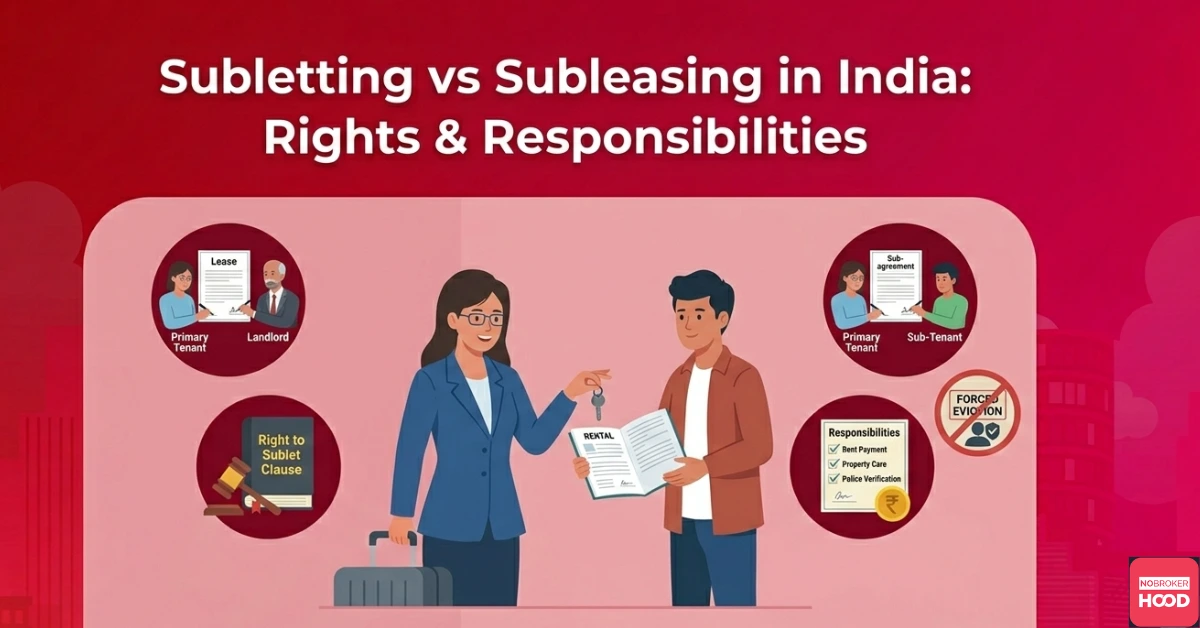
Subletting vs subleasing is mainly about who continues to hold responsibility for the rented property. In most situations, subletting means a tenant rents the space to another person but remains legally responsible to the landlord. Subleasing, on the other hand, may transfer rights and liability to a new tenant, depending on how the agreement is structured and approved.
What Is Subletting an Apartment?
Subletting is when a tenant rents out their leased apartment, or a part of it, to another person called a subtenant. However, the original tenant remains legally and financially responsible to the landlord.
Here are the key details:
- The original tenant continues to pay rent to the landlord.
- The subtenant usually pays rent to the original tenant.
- The tenant is responsible for any damage caused by the subtenant.
- A separate agreement is usually signed between the tenant and the subtenant.
Subletting is common when someone needs to relocate temporarily for work, education, or family reasons but does not want to break their lease. Understanding what is subletting an apartment helps tenants avoid confusion and legal trouble later.
What Is the Difference Between Sublease and Sublet?
The debate around subletting vs subleasing creates confusion because people often use the terms interchangeably. However, there are structural differences.
Key Differences between Sublet and Sublease
| Feature | Sublet | Sublease |
| Agreement With | Between the original tenant and the subtenant | Often involves the landlord directly |
| Rent Payment | Paid to the original tenant | May be paid to the landlord |
| Responsibility | Original tenant remains liable | Liability may transfer |
| Occupancy | Often partial or temporary | Often full lease transfer |
Responsibility and Liability
In subletting vs subleasing, liability is the biggest difference.
- In a sublet, the original tenant stays responsible for rent and damages.
- In a sublease, the lease may be formally transferred, and the original tenant can be released from responsibility.
Contractual Relationship
Subletting creates a chain: Landlord → Tenant → Subtenant
Subleasing may simplify it to: Landlord → New Tenant
The key difference in subletting vs subleasing lies in who remains legally liable and how the contract is structured between the landlord, original tenant, and new occupant.
Subletting vs Renting: What’s the Difference?
Another common confusion is subletting vs renting. They are not the same.
Renting
- You sign directly with the landlord.
- You have full legal status as a tenant.
- You deal directly with the owner for issues.
Subletting
- You sign with the existing tenant.
- The original tenant remains responsible.
- The landlord may or may not deal directly with you.
When comparing subletting vs renting, renting offers stronger legal clarity and long-term stability. Subletting works better for short-term or temporary arrangements.
For example, a tenant on a one-year lease who gets a three-month transfer may sublet instead of terminating the lease.
Is Subletting an Apartment Legal in India?
Yes, subletting is generally legal in India, but only if certain conditions are met.
1. Check Your Lease Agreement
Your lease is the primary document.
Many agreements:
- Prohibit subletting entirely
- Allow it with written consent
- Define penalties for unauthorized subletting
Read also: Stamp Duty on Rental Agreement
2. Get Written Landlord Consent
In India, written permission from the property owner is essential. Verbal approval is risky.
Without approval, unauthorised subletting can lead to:
- Eviction
- Loss of security deposit
- Legal notices
- Penalties up to Rs. 50,000 or double the rent in some cases
Read also: Rental Security Deposit
3. Tenant Liability Remains
This is one of the most important aspects tenants often overlook while subletting.
Even if subletting is approved, the original tenant remains responsible for:
- Monthly rent
- Property damage
- Society rule violations
So subletting an apartment is legal, but only with proper documentation and consent.
Sublease vs Sublet: Legal and Practical Differences
To clearly understand what is the difference between sublease and sublet, let us break it down further.
1. Subleasing While Retaining Liability
In many Indian residential cases:
- The tenant remains the master tenant.
- They act as a middle person.
- They pay the landlord directly.
Example:
You move to another city for six months, but keep your lease active. You allow someone to stay in your flat and collect rent from them. You are still responsible.
Read also: Pay Property Rent Online
2. Subletting as Lease Transfer
In a more formal arrangement, sometimes called an assignment:
- A new agreement is signed with the landlord.
- The new tenant pays rent directly to the landlord.
- The original tenant may be released from future responsibility.
This is common in commercial spaces but also happens in residential apartments.
Understanding subletting vs subleasing helps society committees maintain transparency and avoid unauthorised occupants.
What Should You Choose: Subletting or Subleasing?
Choosing between subletting and subleasing depends on how long you plan to move out and how much responsibility you are willing to retain. Before deciding, review your lease terms carefully and speak openly with your landlord to avoid future disputes.
Rights as a Tenant in India
Whether you choose subletting or subleasing, you have certain rights:
- Right to written clarity in the agreement
- Right to request landlord approval in writing
- Right to protection from unfair eviction, if procedures are not followed
- Right to recover dues from a subtenant if they default
At the same time, rights come with responsibilities. Even if subletting is allowed, you cannot bypass lease terms or society rules.
Choose Subletting If:
- You are leaving temporarily.
- You plan to return.
- Your lease allows it.
- The landlord gives written approval.
Choose Subleasing If:
- You are moving permanently.
- You want to exit the lease early.
- The landlord agrees to transfer the lease.
- You want to remove future liability.
In the debate of subletting vs renting, renting remains best for long-term stability. Subletting is useful for flexibility.
Subletting vs Subleasing: Which Option Protects Your Rights Better?
When comparing subletting vs subleasing, the real question is about your legal rights and future responsibility. Your decision should depend on whether you want to retain control of the lease or formally transfer it.
Rights in Subletting
If you choose subletting:
- You retain the right to return to the property.
- You continue to hold the primary lease with the landlord.
- You have the right to collect rent from the subtenant.
- You can set conditions in the subletting agreement, subject to your original lease.
However, your rights come with continued liability. You remain responsible for rent, damages, and compliance with society rules.
Rights in Subleasing
If you choose subleasing or assignment:
- You may request a formal transfer of lease rights to a new tenant.
- Once approved, you may be released from future rent liability.
- The new tenant may deal directly with the landlord.
- Your legal involvement with the property may end after transfer.
In short, in the discussion of subletting vs subleasing, subletting protects your right to return but keeps responsibility with you, while subleasing focuses on transferring both rights and liability to someone else, subject to landlord approval.
Read also: What Rights do Tenants have Without Lease?
Manage Subletting and Subleasing in Gated Communities with NoBrokerHood
NoBrokerHood is a society management app that helps apartment associations and RWAs manage cases related to subletting and subleasing with proper documentation, tenant registration, and billing transparency. Since unauthorised occupants often create disputes, digital tracking ensures better compliance with society rules.
| Services | How It Supports Subletting & Subleasing Management |
| Tenant Registration System | Register subtenants or new tenants with required documents and landlord approval |
| Resident & Occupancy Database | Update occupancy status when flats are sublet or lease-transferred |
| Document Storage | Upload rental agreements, consent letters, and KYC documents securely |
| Communication & Notices | Share society policies regarding subletting and approval requirements |
| Maintenance Billing Software | Generate maintenance invoices in the owner’s name while tracking tenant occupancy |
| Accounting & Payment Tracking | Monitor dues and ensure timely online payment of maintenance charges |
| Complaint Management System | Track issues related to unauthorised occupancy or rule violations |
By digitising tenant records and approvals, NoBrokerHood helps societies reduce conflicts, maintain security, and ensure that subletting or subleasing arrangements remain transparent and compliant with community rules.
All Solutions by NoBrokerHood:
FAQs
Subletting is when a tenant rents out their leased apartment or part of it to someone else. The original tenant still remains responsible to the landlord for rent and damages.
Yes, it is legal if your lease allows it and you obtain written permission from the landlord. Without consent, it can lead to eviction or financial penalties.
In a sublet, the original tenant remains liable and collects rent from the subtenant. In a sublease, the lease may transfer to the new tenant, and the original tenant may be released from responsibility.
Renting directly from a landlord is safer for long-term stability. Subletting is suitable for short-term or temporary arrangements but requires careful documentation.
Societies can regulate tenant entry through bylaws and documentation requirements. However, they cannot override legal lease rights unless rules are formally adopted and lawful.