






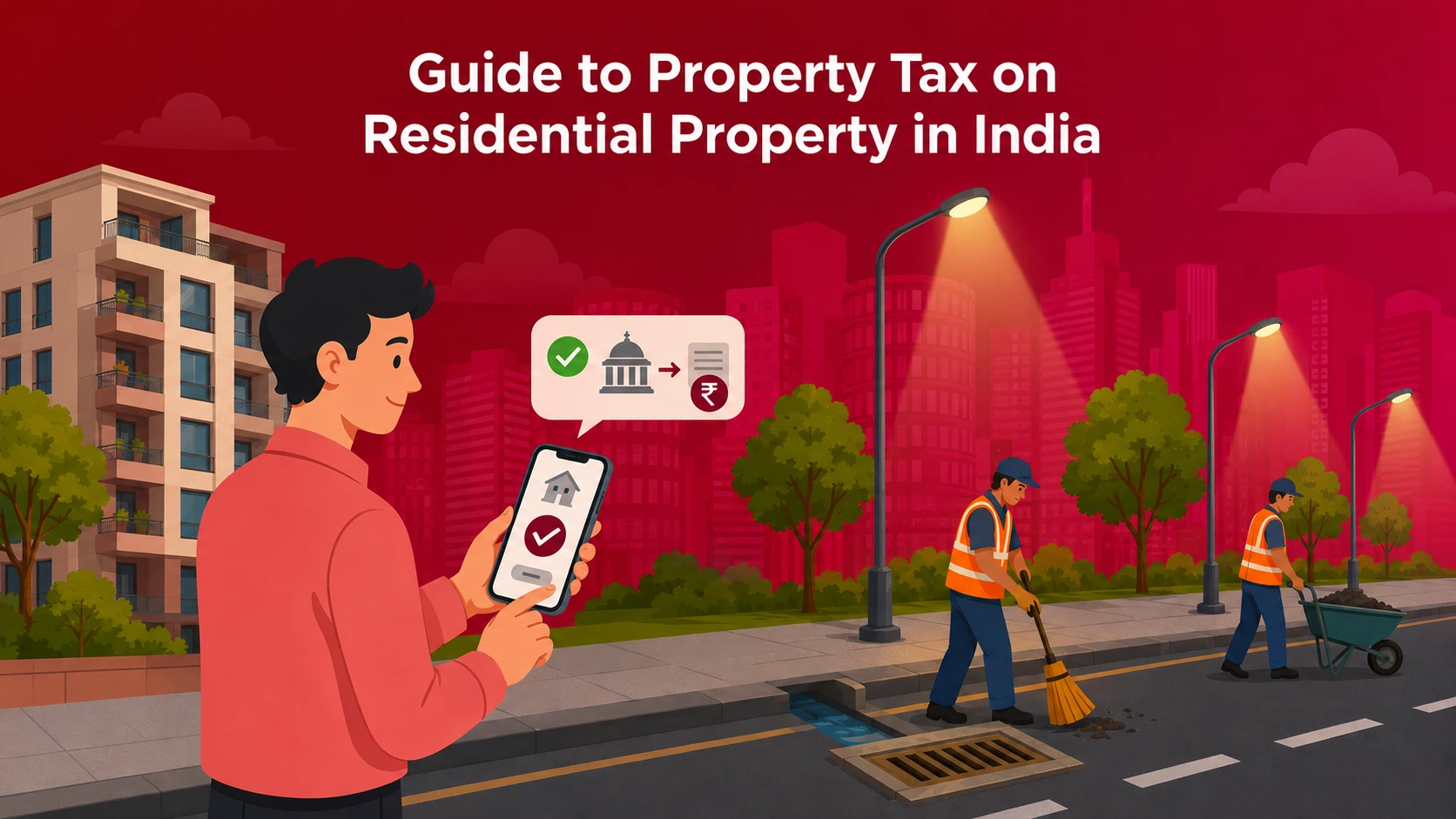


Property Tax on Residential Property is a mandatory tax that every homeowner in India has to pay to the local municipal authority. Learning how it works can help you avoid penalties, claim rebates you’re eligible for, and plan your finances better. This guide will cover what residential property tax is, how residential property tax is calculated, what determines the amount of tax you pay, how flat taxation is different from independent homes, online payment steps, exemptions available, penalties for late payment and tips to remain compliant.

What Is Property Tax on Residential Property?
Property tax on residential property is a direct tax levied by municipal corporations, municipalities, or village panchayats on anyone who owns a house, flat, or villa. It is not linked to who lives there. It is tied to whose name appears on the property records.
The tax is collected annually or in two half-yearly instalments, depending on the city. Municipal bodies use this revenue to build and maintain local infrastructure such as roads, drainage systems, street lighting, and waste collection.
For most residents in a housing society, this tax is separate from the monthly maintenance charges collected by the management committee. It goes straight to the local government, not to the society's own fund.
How Property Tax on Residential Property Is Calculated?
There is no single formula that is used across India. Each state and municipal body has its own method of payment, but most are in one of three broad systems. Knowing which one applies to your city allows you to double-check your tax notice instead of just accepting it blindly.
Annual Rental Value System (ARV)
Under this method, tax is based on the expected annual rent your property could earn, not the rent you actually charge. Cities like Chennai and parts of Kolkata use this system. The municipal body estimates a fair rental value using location, size, and amenities.
Unit Area Value System (UAS)
Tax here is calculated based on built-up area per unit and adjusted by factors like location, usage and age of building. Delhi, Bengaluru and Hyderabad follow this approach. A flat in a prime locality will have a higher unit value than a flat in a developing suburb.
Capital Value System (CVS)
This system ties the tax to the market value of the property as assessed by the stamp duty department. Mumbai uses this method, which means your tax bill can rise as area property prices climb, even without any change to your home itself.
Residential properties usually attract a lower rate than commercial or industrial ones, since the usage is treated as non-revenue generating.
Read also: Ways to Save Tax on Rental Income
Factors That Determine Residential Property Tax in India
A few factors shift the final number up or down, regardless of which system your city follows:
- Built-up area: Bigger floor space naturally means a higher assessed value.
- Location and zone: Premium localities carry a higher base value than developing ones.
- Age of construction: Older buildings often get a depreciation benefit.
- Type of structure: RCC buildings are taxed differently from semi-permanent ones.
- Occupancy status: A self-occupied home is generally taxed lower than a rented-out one.
- Floor level: In some cities, ground-floor or higher-floor units are taxed at different rates.
Checking these details against your municipal notice each year is a simple habit that prevents overpayment.
How Property Tax in Apartments Differs From Independent Homes
For flat owners, property tax for apartments works on the same core logic, but a few extra variables come into play. Floor level, apartment size, age of the building, and whether the unit is self-occupied or rented all factor into the final bill.
Cities apply their usual calculation method to apartments too:
- Delhi, Bengaluru, and Hyderabad use the Unit Area Value System.
- Mumbai applies the Capital Value System.
- Chennai and parts of West Bengal use the Annual Rental Value System.
One thing worth knowing about property tax for apartments is that the bill is raised against the individual flat owner, not the building as a whole. So even in a large residential complex with hundreds of units, each owner gets a separate assessment based on their own flat's size and location within the project.
How to Pay Property Tax on Residential Property Online?
Most municipal bodies now offer a digital payment option, which saves a trip to the ward office.
- Visit your local civic body's official portal, such as BBMP for Bengaluru, MCGM for Mumbai, or MCD for Delhi.
- Keep your Property ID, Khata number, Assessment number, or last year's receipt ready.
- Enter the property details and let the portal calculate the current dues.
- Choose your payment mode and complete the transaction.
- Download and save the receipt for your records, since you will need it for future assessments or property sales.
Committee members handling payments on behalf of a large society often keep a shared folder of these receipts, so any resident can check their status without chasing the office.
Read also: Housing Society Income Tax
Property Tax Rebates and Exemptions that Residents Can Claim
Local bodies build in a few concessions, and many residents simply do not know these exist.
- Senior citizen and women owner rebates: Several municipalities offer reduced rates for senior citizens and women property owners.
- Disability concessions: Owners with disabilities can often claim a lower rate too.
- Early payment discounts: Paying within the first quarter of the financial year usually earns a rebate. Bengaluru's BBMP, for instance, has offered a 5% discount for early payment in past cycles.
- Vacant land exemption: Land with no structure on it is typically exempt from building tax, though a separate vacant land tax may still apply in some states.
It is worth checking your municipal website each year, since these rebates and their percentages can change.
Read also: How to Save Capital Gain Tax on Sale of Residential Property
What Happens If You Delay the Payment?
Missing the due date for property tax on residential property usually attracts a penalty, commonly between 1 and 2% per month on the outstanding amount. This adds up quickly if left unpaid for several months.
Beyond the financial penalty, prolonged non-payment can complicate property transfers, since many registrar offices ask for a clear tax payment history before processing a sale. Setting a reminder a few weeks before your city's due date is a small habit that avoids these complications entirely.
Read also: Property Management Budget Planning
Simple Tips to Stay on Top of Property Tax on Residential Property
- Note your Property ID or Assessment number somewhere safe, not just in an old receipt.
- Check for early payment rebates before the financial year starts.
- Keep a soft copy of every receipt, since old records help during resale or refinancing.
- If your building's usage changes, such as converting a portion for rent, inform the municipal office so the assessment stays accurate.
- Encourage your society's management committee to circulate due dates well in advance, so no one pays a late fee over a missed reminder.
Better Communication Management in Housing Societies with NoBrokerHood
One of the biggest challenges for managing committees is ensuring that important information reaches every resident at the right time. Property tax deadlines, revised municipal notifications, rebate announcements, and changes in payment procedures often get lost between WhatsApp groups, emails, and printed notices. As a result, some residents miss deadlines or remain unaware of available concessions.
NoBrokerHood simplifies communication management by giving committees a single place to share notices, announcements, and reminders with the entire community. Instead of sending repeated messages across different channels, updates can be communicated in a more organised and consistent manner.
For property tax-related communication, this can help societies:
- Share property tax payment reminders before municipal due dates
- Notify residents about early payment rebates or revised tax schedules
- Circulate official payment links, municipal circulars, and supporting documents
- Inform new homeowners about the documents and details required for payment
- Keep important announcements available for residents to refer to later, instead of getting buried in chat conversations
Property tax is still on the individual homeowners, but with clear communication from the managing committee, the process can be much easier. NoBrokerHood supports societies in sharing updates in a timely and organised manner, minimising confusion and ensuring residents receive the right information at the right time.
