Notice Board for Housing Society
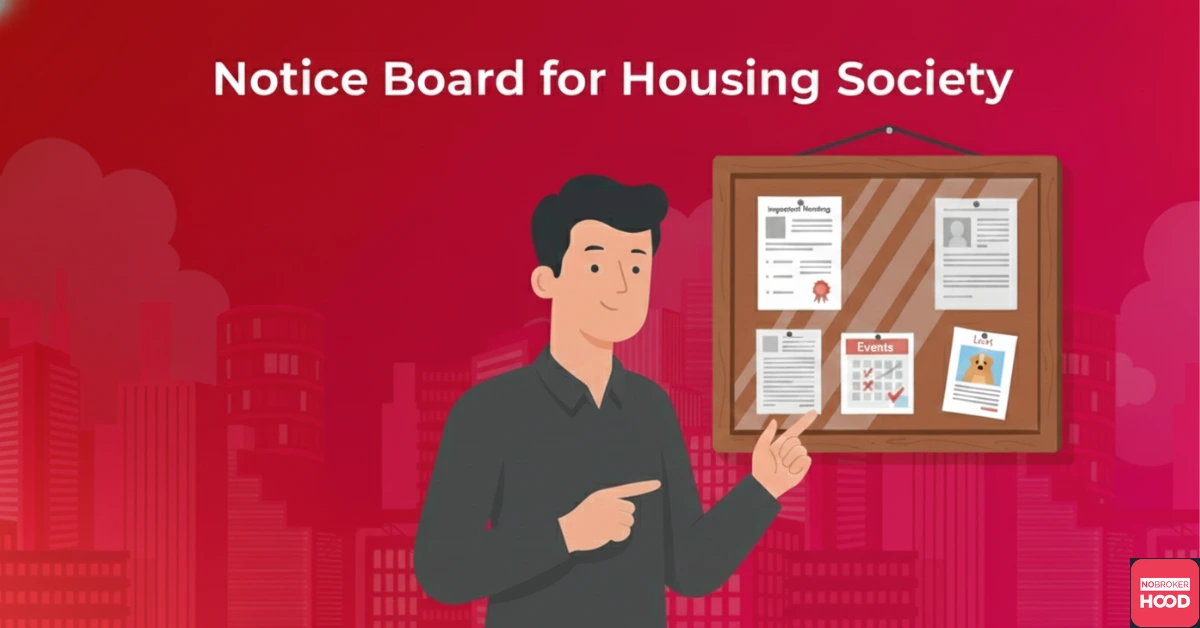
A notice board for housing society is the official communication space where committees share important updates, legal notices, and daily announcements with residents. It helps ensure transparency, compliance with society bylaws, and smooth day-to-day community management.
Why a Notice Board for Housing Society Matters?
A notice board for housing society acts as the primary channel for official communication between the managing committee and residents. Residents know exactly where to look for updates, and committee members have a defined channel to share decisions. In Indian residential communities, this board is more than an information display. It plays a role in governance, accountability, and resident awareness.
Most state cooperative housing laws require societies to display official notices in a clearly visible location. This ensures that every member has equal access to information related to meetings, finances, rules, and daily operations. This simple setup avoids confusion, reduces repeated questions, and supports smoother society management. Whether it is a meeting notice or a water supply update, a visible board keeps everyone on the same page.
Legal Role of a Housing Society Notice Board in India
In India, the housing society notice board is more than a convenience. It is often a legal requirement under state cooperative society acts and bylaws, such as the Maharashtra Cooperative Societies Act.
Most bylaws clearly state that important notices must be displayed in a conspicuous place, like the building entrance or lobby. Once a notice is displayed, it is considered officially communicated to all members. This helps avoid disputes where residents claim they were not informed. For managing committees, maintaining an updated notice board is part of responsible governance.
Purpose and Everyday Use of a Housing Society Notice Board
A notice board for housing society supports daily operations in several ways:
- Acts as the official communication channel between the Managing Committee and residents
- Records important decisions and resolutions
- Keeps residents aware of financial, administrative, and safety matters
- Supports orderly community living
- It also helps reduce confusion, repetitive questions, and informal message forwarding
Because everyone refers to the same board, there is less dependence on word-of-mouth or forwarded messages, which often lead to confusion.
What Information Should Be Displayed on a Housing Society Notice Board?
A well-managed notice board should carry both statutory and operational information.
Statutory and Legal Notices
The housing society notice board must display legally required information, such as:
- AGM and SGM notices with date, time, venue, and agenda details
- Audited financial statements
- Annual committee reports
- Election results with the names of committee members
These notices ensure transparency in governance and allow members to stay informed about how the society is managed.
Operational and Safety Updates
Daily operations also rely on the notice board for housing society communication:
- Water tank cleaning schedules
- Power cuts or lift maintenance alerts
- Maintenance dues reminders
- Emergency contact numbers
- Fire safety instructions and visitor rules
Timely updates help residents plan their day and follow society guidelines responsibly.
Community and Engagement Notices
Beyond administration, the housing society notice board also supports community bonding:
- Festival and cultural event announcements
- Blood donation or health camps
- Sports or recreational activities
- Greetings for important occasions
- Limited classifieds for renting or selling flats
These notices help residents feel more connected to their community.
Read also: Strong Communication for Better Housing Societies
Best Physical Notice Board Options for Housing Societies
For long-term use, societies should invest in well-built boards that suit Indian weather and usage conditions.
Recommended Notice Board Types
In 2026, housing societies use a mix of physical and digital boards to ensure information reaches all residents.
Traditional Pin-Up and Bulletin Boards
- Felt or fabric boards for frequent updates
- Cork boards with self-healing surfaces
- Softboard core boards for budget-friendly needs
These are commonly placed near lifts and staircases.
Secure and Weatherproof Boards
- Lockable shutter boards with acrylic or glass covers
- Sliding glass boards
- Outdoor boards with waterproof seals and rust-proof frames
These prevent unauthorised removal and weather damage.
Speciality Writing and Magnetic Boards
- Magnetic whiteboards for temporary notices
- Groove boards for welcome messages
- Combination boards with pin-up and writing surfaces
Key Features to Look for in a Notice Board
When selecting a notice board for housing society use, focus on:
- Lockable design to prevent unauthorised removal
- Covered enclosure using glass or acrylic
- Durable frame made from aluminium
- Strong backing, such as galvanised iron
- Clear visibility with transparent covers
- Right size, such as 3 x 4 feet, for large societies
- Easy wall mounting with provided hardware
These features help the board remain useful for years.
Where to Place a Housing Society Notice Board for Maximum Visibility?
A housing society notice board should always be placed where residents naturally pass by:
- Main entrance lobby
- Near lift areas
- Clubhouse or common hall entrance
Good placement ensures notices are actually read, not ignored.
Limitations of Traditional Housing Society Notice Boards
Physical boards have some practical limits. Notices can be missed by residents who travel often. Papers may get damaged over time. Updates also require manual effort and printing, which increases paper use. As societies grow larger, these challenges become more noticeable.
While physical boards are important, they have limitations such as,
- Notices can be missed by residents who travel
- Paper updates require frequent replacements as they can get damaged over time
- Updates also require manual effort and printing, which increases paper use
- Weather exposure damages outdoor boards
- Information may not reach tenants promptly
These challenges have encouraged societies to adopt digital support systems.
Advantages of Digital Notice Boards in Housing Societies
A digital notice board complements physical boards by offering faster access and better reach.
Key advantages include:
- Instant delivery of notices to residents
- No risk of paper damage or removal
- Easy access through mobile phones
- Reduced paper usage
- Clear record of past announcements
Digital systems work well alongside traditional notice board for housing society setups.
Read also: Post Your Society Announcements on our Digital Notice Board
Digital Notice Board for Housing Societies by NoBrokerHood
NoBrokerHood supports modern community living through its digital notice board feature within the mobile app. Committee members can share official announcements directly with residents using a one-way communication system.
Residents receive timely notifications for
- Meetings
- Maintenance updates
- Important alerts.
This reduces confusion from multiple group chats and supports a more organised, paper-free society communication process. In addition, NoBrokerHood also offers Forums for discussions, one-on-one chats with neighbours, and structured communication tools that help societies stay informed and connected.
All Solutions by NoBrokerHood:
FAQs
Yes, most cooperative housing society bylaws require a notice board to be placed in a visible area. It is used to officially communicate decisions and notices to all members.
Lockable, covered boards with acrylic or glass doors work best. Felt or cork surfaces allow easy pinning, while aluminium frames improve durability.
For larger societies, a 3 x 4 feet board is commonly used. Smaller buildings may use compact boards near lifts or entrances.
Digital notice boards support faster communication, but physical boards are still needed for legal compliance in many societies. Both are often used together.
Personal disputes, sensitive personal data, and unverified messages should be avoided. Only official, relevant society information should be displayed.