





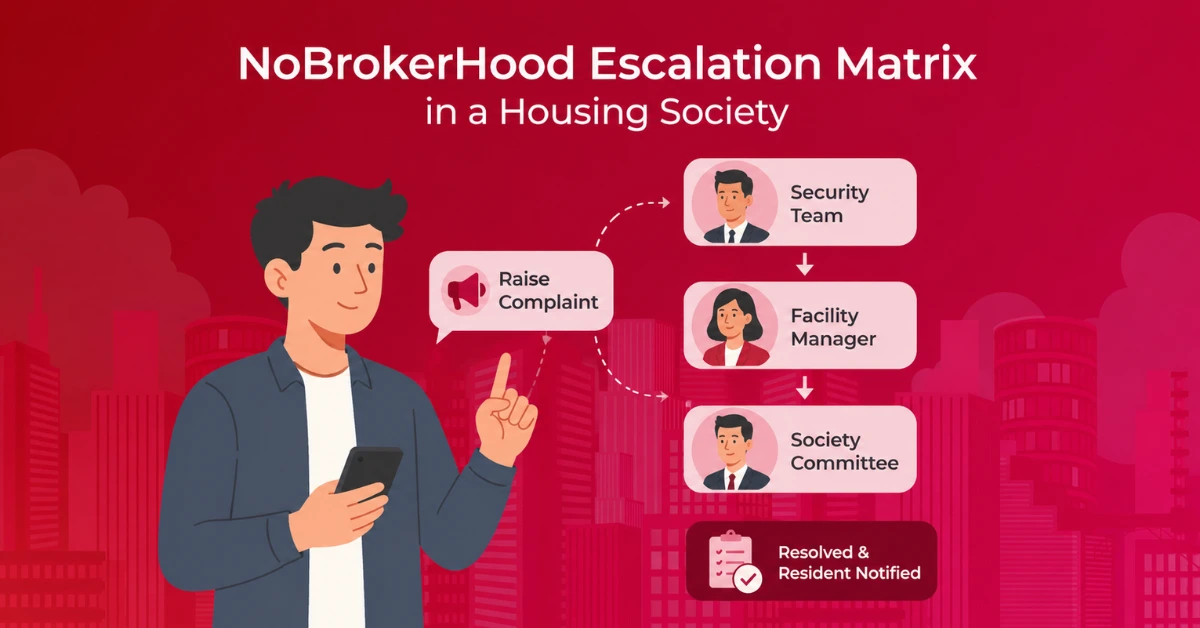


A leaky pipe, a parking problem that is not fixed, a broken elevator or constant noise complaints can really annoy people who live in a building when nobody takes care of it. Many housing societies just pass complaints from one person to another without checking if the problem is solved, which causes confusion and makes things take longer. This is where an escalation matrix comes into the picture. It creates an open system for the processing of complaints, the escalation of issues to higher authorities and residents’ ability to track progress. In this guide, you will learn how an escalation matrix works in a housing society, why it is important, typical complaint workflows and how digital systems like NoBrokerHood help communities manage complaints more effectively.

What Is an Escalation Matrix in Housing Society?
An escalation matrix in a housing society is a structured system that helps resolve resident complaints within a fixed timeline. Instead of complaints being delayed or ignored, the issue is moved from one level of authority to another until it is resolved properly. For example, if a resident reports a water leakage problem to the maintenance staff and if it is not addressed within 24 hours, the complaint is automatically escalated to the facility manager or society office. If still not resolved, the issue is escalated to the Managing Committee or Secretary.
An effective escalation matrix creates accountability inside residential communities. Residents know whom to contact, staff members understand their responsibilities, and society committees can monitor pending issues clearly.
Most modern communities in India now use digital complaint systems instead of manual registers because they improve tracking and transparency. A good escalation matrix also helps reduce conflicts between residents and management committees. Some common issues handled through an escalation matrix include:
- Water supply complaints
- Lift breakdowns
- Security concerns
- Parking disputes
- Vendor complaints
- Housekeeping issues
- Billing disputes
- Noise complaints
A proper escalation matrix sample usually includes timelines, responsible persons, complaint categories, and escalation triggers.
Read also: Step-by-Step Guide to NoBrokerHood Helpdesk
What are the Benefits of an Escalation Matrix in Housing Societies?
Housing societies function better when there is a defined escalation matrix, as each complaint has a defined process to follow rather than depending on word of mouth. Some of the major benefits of an escalation matrix in a housing society are as follows:
Faster complaint resolution
Issues are routed to the right person immediately. There is a timeline associated with every complaint, making it easier to identify delays.
Increased accountability
Staff, facility managers and committee members are clear about who is accountable at each level.
Higher resident satisfaction
Residents are more confident when they are kept updated and can follow the progress of complaints.
Smaller communication gaps
An escalation matrix avoids repeated phone calls and WhatsApp confusion because complaints are documented properly.
Transparent tracking
Each complaint gets an individual ticket number or reference ID to assist with audits or disputes.
Easier management reporting
Committee members can easily identify recurring issues like plumbing problems, security complaints, or negligence on the part of vendors.
Better emergency handling
Critical complaints like fire hazards, water leakage or power failures can skip the lower levels and go directly to senior authorities.
A well-defined escalation matrix example also helps societies comply with cooperative housing rules in many Indian states.
What Is the Complaint Escalation Process in Housing Society?
The complaint escalation process in a housing society follows a step-by-step hierarchy. Each level gets a fixed time to resolve the issue before it moves higher.
Level 1: Security or Maintenance Staff
This is the first point of touch.
Common complaints handled here include:
- Garbage collection issues
- Common area cleaning
- Light replacement
- Visitor gatepass issues
- Minor plumbing complaints
Turnaround Time: Immediate to 24 hours
If not resolved, the complaint then moves to Level 2.
Level 2: Society Manager or Facility Manager
This level is for operational complaints that require coordination or supervision.
Typical complaints are:
- Lift breakdowns
- Water supply interruptions
- Repeated housekeeping complaints
- Vendor issues
- Maintenance billing queries
Turnaround Time: 24 to 48 hours
Many societies now use digital helpdesk systems where complaints automatically move to the next authority if timelines are missed.
Level 3: Managing Committee or Secretary
This level handles serious or recurring complaints.
Examples include:
- Security breaches
- Financial disputes
- Policy violations
- Staff misconduct
- Infrastructure approvals
Turnaround Time: 3 to 7 days
The committee acts as the final internal authority within the society.
Level 4: External Authorities
If complaints remain unresolved, residents may approach:
- Deputy Registrar of Cooperative Societies
- Cooperative Court
- Consumer forums
- Local police authorities
Under Maharashtra cooperative housing bylaws, societies are generally expected to respond to written complaints within 15 days.
What Is the Standard Escalation Workflow in Residential Communities?
Below is a simple escalation matrix sample commonly used in Indian housing societies.
| Escalation Level | Responsible Authority | Timeline | Complaint Type |
|---|---|---|---|
| Level 1 | Security Guard / Maintenance Staff | 0-24 Hours | Cleaning, gatepass, bulb replacement |
| Level 2 | Facility Manager / Society Office | 24- 48 Hours | Water issues, lift complaints, vendor coordination |
| Level 3 | Managing Committee / Secretary | 3-7 Days | Financial disputes, policy issues, recurring complaints |
| Level 4 | Registrar / External Authority | 15+ Days | Legal disputes, mismanagement, and serious conflicts |
This escalation matrix example works well because it separates routine complaints from serious grievances.
Common escalation paths
Maintenance issue
Resident → Maintenance Staff → Facility Manager
Parking dispute
Resident → Security Supervisor → Managing Committee
Emergency issue
Resident → Security → Committee directly if unresolved within 2 hours
Important elements of a good system
- Defined complaint channels
- SLA tracking
- Ticket numbers
- Complaint history
- Escalation alerts
- Resident feedback system
A structured escalation matrix sample helps avoid unnecessary confusion during emergencies.
Read also: Society complaints piling up? NoBrokerHood’s ‘Complaint Management’ is here to solve it all
Who Handles Resident Complaints in a Housing Society?
Different kinds of complaints can be taken up by different parties within a housing society.
Frontline Staff
They take care of day-to-day problems related to cleanliness, access to the gates, visitors, and simple repairs.
Facility Manager or Property Manager
They take care of vendors, planning of repairs, technicians, and complaints.
Managing Committee
They deal with any policy-making, budget approvals, legal issues, and recurring disputes.
Chairman or Secretary
They manage high-level escalations that involve governance, financial approvals, or unresolved resident grievances.
A clear escalation matrix ensures complaints reach the correct authority without delay.
How Can Housing Societies Resolve Resident Complaints Faster?
Faster complaint handling depends on communication, tracking, and accountability. Here are some practical ways societies can improve complaint management:
Use digital complaint systems
Mobile apps and helpdesk platforms reduce dependency on paper registers and verbal complaints.
Define emergency priorities
Emergency issues like lift failures or water leakage should have separate response timelines.
Publish the escalation matrix
Residents should know whom to contact at every stage.
Maintain complaint records
Every complaint should include timestamps, updates, and closure details.
Train staff regularly
Security teams and maintenance staff should understand complaint workflows clearly.
Allow residents to reopen complaints
Complaints should move directly to the next escalation level if the residents are not satisfied.
Track KPIs regularly
Societies should monitor:
- Average complaint resolution time
- Number of unresolved complaints
- Repeat complaints
- Emergency response time
- Resident satisfaction rate
These KPIs help management committees identify operational gaps quickly.
Read also: NoBrokerHood Helpdesk
Simplify Complaint Management with NoBrokeHood
Modern society management apps help housing societies automate complaint handling and reduce the need for manual follow-ups. Platforms like NoBrokerHood provide digital helpdesk systems where residents can log complaints, upload images, track progress, and receive status updates in real time.
The NoBrokerHood escalation matrix escalates complaints automatically if timelines are not met. Facility managers and committee members can monitor categories of complaints, pending tickets, emergencies, and vendors' performances using one centralised dashboard.
How does the NoBrokerHood Help Desk work?
- Committee members log in to the dashboard
- Open the Help Desk section
- View resident complaints and their ticket status
- Filter complaints based on dates or categories
- Create new complaints if required
- Categorise complaints based on priority levels
- Attach images or any supporting documents
- Submit the complaint and track the process
The NoBrokerHood escalation matrix system increases transparency since residents can easily check if their complaints are being handled or escalated.
All Solutions by NoBrokeHood:
