Apartment Rules and Regulations in Bangalore
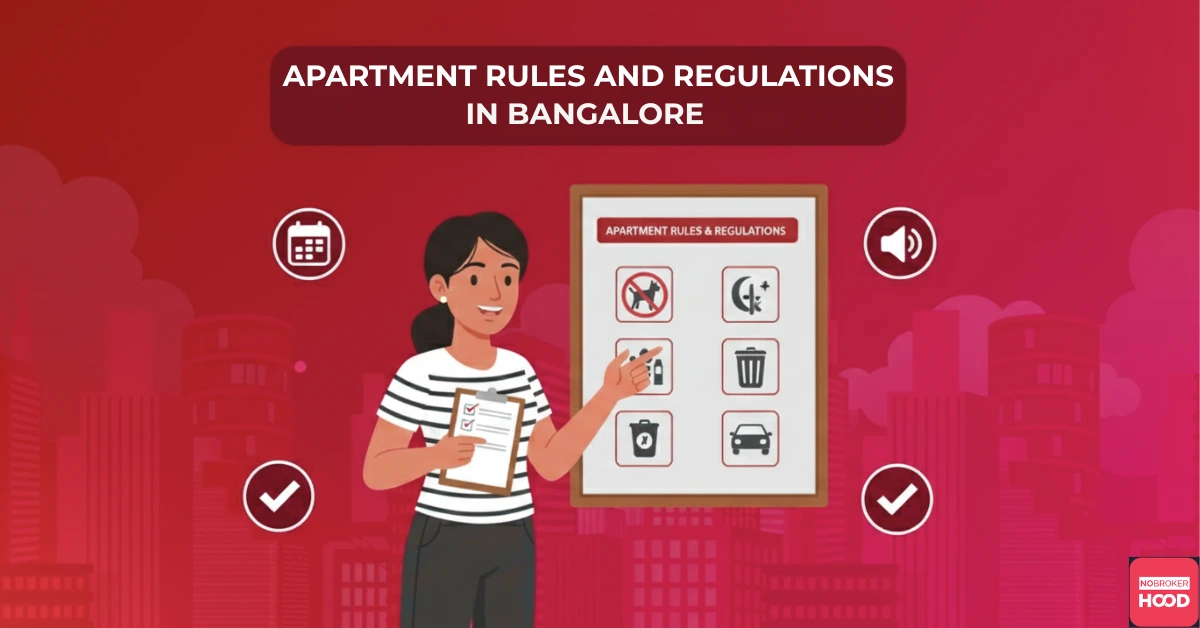
Apartment rules and regulations in Bangalore are governed by state laws such as the Karnataka Apartment Ownership Act, 1972 and Karnataka Ownership Flats Act, 1973, along with RERA and local court rulings. These rules cover maintenance payments, parking, rental agreements, security deposits, pet policies, and safety norms. Every resident and association must follow them to ensure fair and peaceful community living.
Why Apartment Rules Matter in Bangalore?
Bangalore has seen rapid apartment growth over the past decade. With hundreds of families living under one roof, clear apartment rules and regulations in Bangalore are necessary to avoid disputes.
These rules define how common spaces are used, how maintenance is collected, and how residents interact. When everyone follows them, daily life becomes predictable and peaceful. When ignored, small issues quickly turn into conflicts. Understanding these rules helps both residents and management committees make fair decisions.
Legal Framework Behind Apartment Living in Bangalore
Apartment living in Bangalore is primarily governed by:
- The Karnataka Apartment Ownership Act, 1972
- The Karnataka Ownership Flats Act, 1973
- Real Estate Regulatory Authority guidelines
- Recent Bengaluru city civil court rulings (2025)
Under these laws, Resident Welfare Associations or Management Committees manage daily operations through registered bylaws.
These bylaws cannot override state laws. They must align with apartment rules and regulations in Bangalore and be approved in the General Body Meetings. This legal framework ensures transparency in maintenance collection, parking allocation, and tenant management.
Read also: Apartment Association Registration Charges in Bangalore
Apartment Maintenance Rules in Bangalore
One of the most discussed topics in apartment communities is maintenance charges. Apartment maintenance rules in Bangalore are guided by RERA, state acts, and a recent 2025 Bengaluru city civil court ruling.
Key Maintenance Rules
- Equal Charges Rule (2025 Court Ruling): All residents must pay equal maintenance for shared services, regardless of flat size.
- Mandatory Payment: Charges must be paid even if the flat is vacant.
- General Body Approval: Any fee increase requires approval in a General Body Meeting.
- Transparency Requirement: RWAs must provide audited financial statements.
- Penalty for Non-Payment: Associations can levy late fees, restrict amenity access, or initiate legal action.
These apartment maintenance rules in Bangalore ensure fairness and prevent arbitrary billing.
What Maintenance Covers?
Maintenance charges typically include:
- Elevator servicing
- Security staff salaries
- Cleaning and housekeeping
- Landscaping and gardening
- Pest control
- Lighting in corridors and parking areas
Clear communication around apartment maintenance rules in Bangalore reduces confusion and payment delays.
How is Maintenance Calculated?
While equal charges are now mandated, some older societies still follow:
- Per Square Foot Model
Larger flats pay more. - Hybrid Model
Fixed base amount plus variable square footage component.
Associations must update policies in line with the latest apartment maintenance rules in Bangalore to avoid legal complications.
Read also: Bangalore Apartment Maintenance Charges
Parking Regulations in Bangalore Apartments
Parking is one of the most common sources of disputes.
Under apartment rules and regulations in Bangalore:
- Visitor parking is reserved for guests and is usually time-bound.
- Stilt and common parking are allocated by the RWA.
- The number of vehicles per unit may be restricted.
- Allocation must align with RERA guidelines.
- Common areas cannot be encroached for private parking.
Clear marking and digital parking logs help avoid daily friction between residents.
Read also: Apartment Car Parking Rules in Bangalore
Rental & Tenancy Regulations in Bangalore
Rental norms have become stricter in 2025.
Key Rental Rules
- Mandatory Written Agreement: Oral agreements have no legal standing.
- Security Deposit Cap: Commonly capped at two months’ rent.
- Notice Period: 90 days’ notice required for rent increase or vacating.
- Rent Increase: Not more than once a year.
- Police Verification: Often required for tenant safety compliance.
Apartment rules and regulations in Bangalore also ensure that:
- Landlords must give a 24-hour notice before entering rented premises.
- Essential services like water and electricity cannot be cut off by the association.
These measures protect both tenants and owners.
Read also: Karnataka Rental Agreement Stamp Paper
Pet Policies and Quiet Hours
Most Bangalore apartments follow pet-friendly policies, but associations can define reasonable restrictions.
Common rules include:
- Designated pet walking areas
- The cleaning responsibility of pet owners
- Restrictions in certain common zones
Noise restrictions usually apply between 10 PM and 6 AM. Apartment rules and regulations in Bangalore require RWAs to balance individual freedom with community comfort.
Simple steps residents can follow:
- Inform neighbours about gatherings in advance
- Use community halls for parties
- Ensure pets are vaccinated and registered
Read also: BBMP Guidelines on Housing Societies Pet Rules in Bengaluru
Safety, Security & Fire Compliance in Bangalore
Safety is non-negotiable.
Under apartment rules and regulations in Bangalore:
- Terrace access must be available during emergencies.
- Fire exits cannot be blocked.
- Visitor entry must be recorded.
- Security checks are mandatory in most gated communities.
- Structural changes require association approval.
Residents cannot tamper with load-bearing structures or modify common areas without permission. These regulations prevent accidents and legal liabilities.
Rights and Responsibilities of Owners and Tenants in Bangalore
Every resident has both rights and duties.
Rights
- Access to essential services
- Transparent financial reporting
- Participation in General Body Meetings
- Privacy protection
Responsibilities
- Timely payment of maintenance
- Compliance with bylaws
- Respecting parking allocation
- Avoiding misuse of common areas
Following apartment rules and regulations in Bangalore is not just legal compliance. It is about cooperative living.
How NoBrokerHood Supports Rule-Based Community Living
NoBrokerHood helps Resident Welfare Associations (RWAs) and apartment associations implement apartment rules and regulations in Bangalore through structured digital management tools. From maintenance billing to visitor tracking and compliance documentation, the platform supports transparent and organised community governance.
| Services | How It Supports Apartment Rules & Regulations in Bangalore |
| Maintenance Billing Software | Generate equal maintenance invoices, track dues, and share audited financial summaries |
| Visitor Management System | Record visitor entries digitally and strengthen gated security compliance |
| Parking Management Tools | Digitally allocate parking slots and reduce disputes over common areas |
| Resident & Tenant Database | Maintain updated records of owners and tenants for legal and security compliance |
| Communication & Notices | Share policy updates, AGM notices, rule changes, and emergency alerts |
| Complaint Management System | Track rule violations, maintenance requests, and community concerns transparently |
| Document Storage | Store bylaws, court rulings, RERA guidelines, and meeting resolutions digitally |
By digitising operations, NoBrokerHood supports fair rule implementation, reduces disputes, and promotes smooth apartment living in Bangalore communities.
All Solutions by NoBrokerHood:
FAQs
Yes. Under apartment maintenance rules in Bangalore, all owners must pay maintenance even if the flat is vacant. These charges fund shared services like security and cleaning.
Many rental agreements now follow a two-month rent cap as a standard practice, though exact terms depend on the agreement signed between landlord and tenant.
No. Blanket bans are usually not permitted. Associations can create reasonable rules regarding pet movement and hygiene.
No. Essential services such as water and electricity cannot be cut off. Associations must recover dues through legal and approved processes.
Parking allocation is handled by the RWA and must follow RERA guidelines and registered bylaws.