





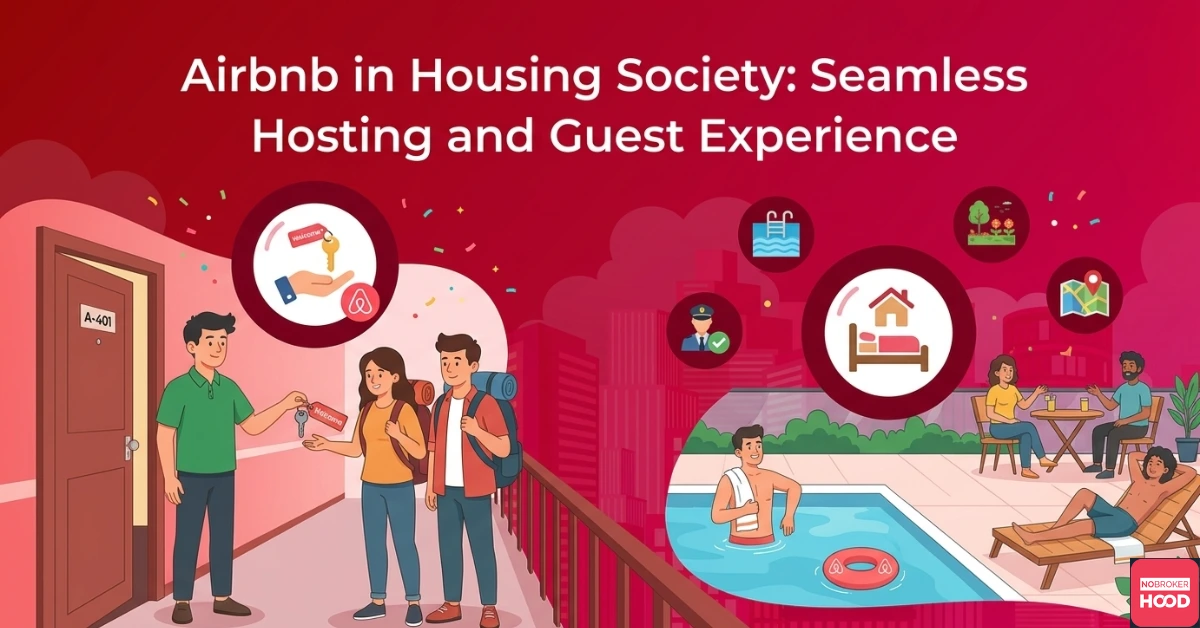


Many residents today are exploring extra income through short-term rentals, but Airbnb in housing society often leads to complaints or even legal notices. The biggest concern is whether it is allowed and how it affects safety and community living. Airbnb is not automatically illegal in India, but it depends on society's bylaws, permissions, and local rules. You usually need approval from your society, proper registration, and compliance with safety norms to operate without issues.

What is Airbnb in Housing Society and Why It’s a Concern?
Airbnb in a housing society refers to renting out a flat, or a portion of it, for short stays through platforms such as Airbnb. Although the concept seems straightforward, it has a direct impact on shared living environments. Residential societies are built around expectations of privacy, security, and a stable community. Frequent guest turnover can disrupt this environment, which is why many societies choose to regulate or restrict short-term rentals.
Unlike long-term leasing, where tenants stay for months or years, short-term rentals involve guests staying for only a few days. This trend is growing rapidly across India, particularly in urban and tourist-heavy locations. However, since most housing societies are intended for residential use, short-term stays often raise concerns related to safety, privacy, and potential disturbances.
Are Airbnb Legal in Residential Areas in India?
Yes, but with conditions. In India, Airbnb operates in a grey area. It is allowed if you follow local rules and society regulations.
Key requirements include:
- Approval from your housing society
- Register under tourism or homestay rules if required
- Compliance with local municipal and zoning laws
- Police verification for guests
- GST may apply if income crosses limits
- Foreign guests need C-Form registration
If these conditions are ignored, even a legal listing can become a problem. That is why many societies choose to restrict Airbnb in housing society setups.
Can Residential Property Be Used for Airbnb in India?
Yes, but it is not completely free. You need to consider a few important factors before starting:
- Society bylaws: Check if short-term rentals are allowed
- Zoning regulations: Ensure local laws permit such usage
- Owner permissions (for tenants): Written approval is required
Residential properties are primarily meant for living, not commercial activity. Since short-term rentals are often seen as commercial use, many societies may restrict or even ban Airbnb in housing society setups.
If you are a tenant, the rules are stricter. You must get permission from both the property owner and the housing society. Without these approvals, listing the property can be treated as a violation.
Read also: Business Ideas in Residential Area in India
Key Rules for Airbnb in Housing Society
If you are planning to start an Airbnb in housing society, here are the most important rules to follow:
1. Check Society Bylaws
Every society has registered bylaws. These define what is allowed and what is not. Some societies completely ban short-term rentals.
2. Get a No Objection Certificate (NOC)
Most societies require written approval from the Management Committee. Without this, you may face complaints or penalties.
3. Follow Legal Compliance
You may need:
- Some states require a tourism department license to legally operate.
- GST registration, if your income crosses the limits
4. Commercial Activity Restrictions
Daily rentals are often treated as commercial use, which may not be allowed in residential zones.
5. Police Verification
Guest verification is mandatory. For foreign guests, C-Form registration on the Bureau of Immigration website is required.
6. Tenant Restrictions
If you are renting, you cannot list the property without the owner’s consent.
7. Maintain Guest Records
Keep ID proofs and maintain a record of all guests. This is important for safety and compliance.
8. Respect Society Rules
Guests must follow:
- Noise restrictions
- Parking rules
- Usage of common areas
9. Limit Guest Capacity
Avoid overcrowding. Stick to the number of guests your home can handle comfortably.
These rules ensure Airbnb in a housing society works without disturbing others.
Legal Consequences of Ignoring Society Rules
Ignoring rules for Airbnb in housing society can lead to serious consequences.
Possible actions include:
- Warning notices from society
- Monetary penalties or fines
- Restriction on using common facilities
- Legal action through the Registrar
- Forced shutdown of your listing
In most cases, society's bylaws are enforceable. It is better to follow the process than deal with disputes later.
Society Bylaws and Legal Restrictions on Airbnb in Housing Societies
Every registered housing society has bylaws that define what is allowed. These rules are legally enforceable.
If your society has clearly stated that short-term rentals are not allowed, then Airbnb in housing society is not permitted in that building. Even if Airbnb is legal in residential areas is generally true, society rules can override that at a local level.
Residents can challenge such decisions, but courts often support societies in maintaining residential peace.
Why Do Many Societies Restrict Airbnb?
Housing societies often restrict Airbnb in housing society due to practical concerns:
- Security risks: Unknown guests entering frequently
- Noise issues: Short-term guests may not follow rules
- Commercial usage: Daily rentals are treated like business activity
- Overuse of amenities: Frequent visitor entry creates discomfort
- Impact on Shared Spaces: Misuse of lifts, parking, or the clubhouse
- Resident discomfort: Lack of familiarity with visitors
These concerns are valid, especially in large apartment complexes where safety and routine matter.
Safe Practices for Hosting Airbnb in Housing Society
If your society allows it, you can still follow safe practices:
- Host while staying in the same apartment
- Avoid renting out the entire flat frequently
- Limit the number of guests
- Share house rules clearly with the visitors
- Inform your neighbours in advance
- Maintain a guest register with ID proof
- Avoid late-night check-ins
- Set clear check-in and check-out timings
- Share guest details with security
- Keep emergency contacts ready
These small actions reduce friction and make Airbnb in housing society more acceptable, as they reduce security concerns and build trust.
Step-by-Step Guide to Starting an Airbnb in a Housing Society
If you want to start Airbnb in housing society, follow these steps:
1. Check Society Bylaws
Review the society’s rules on rentals and commercial activity to determine whether short-term rentals are allowed or restricted.
2. Get NOC from the Committee
Always take written approval.
3. Register as a Homestay
Apply through your state tourism department if required.
4. Complete Legal Formalities
- Police verification
- GST registration, if needed
- C-Form for foreign guests
- Ensure guest details are properly recorded.
5. Inform Neighbours
Let them know about your plan. This reduces complaints later.
6. Set Clear Guest Rules
Define limits on noise, visitors, and amenities.
7. Monitor Guest Activity
Ensure guests follow society norms at all times.
This step-by-step approach makes Airbnb in housing society smoother and conflict-free.
How Societies Can Manage Airbnb Smoothly?
Societies can create balance by setting clear rules:
- Define allowed and restricted hosting types
- Limit the number of days per month
- Require mandatory guest registration
- Set quiet hours and usage guidelines
- Introduce extra maintenance charges if needed
This approach helps address concerns around whether Airbnb is legal in residential areas while maintaining harmony.
Manage Airbnb in Housing Societies with NoBrokerHood
Managing short-term rentals like Airbnb within a housing society can be challenging without proper systems in place. NoBrokerHood is a society management app that helps societies maintain security, compliance, and transparency while allowing flexibility where permitted.
| NoBrokerHood Feature | How It Helps Manage Airbnb in Housing Societies |
| Visitor Management System | Record and verify all guest entries with ID details, ensuring security for frequent short-term visitors. |
| Gate Pass & Pre-Approval | Hosts can pre-approve Airbnb guests, reducing confusion at the gate and improving entry control. |
| Tenant & Owner Records | Maintain clear records of owners and tenants to verify who is authorised to host guests. |
| Security Alerts | Notify guards and residents about unusual visitor activity or repeated short-term stays. |
| Communication Tools | Send society rules and guidelines to hosts and residents to avoid misunderstandings. |
| Digital Notice Board | Share policies regarding short-term rentals, restrictions, or updates with all residents. |
| Complaint & Helpdesk System | Residents can report disturbances or violations related to Airbnb guests quickly. |
| Audit Trails & Logs | Maintain records of visitor history to address disputes or legal concerns if needed. |
By digitising visitor tracking, approvals, and communication, NoBrokerHood helps societies balance income opportunities from Airbnb with safety, compliance, and community harmony.
All Solutions by NoBrokerHood:
