Terrace Waterproofing for Apartments in India
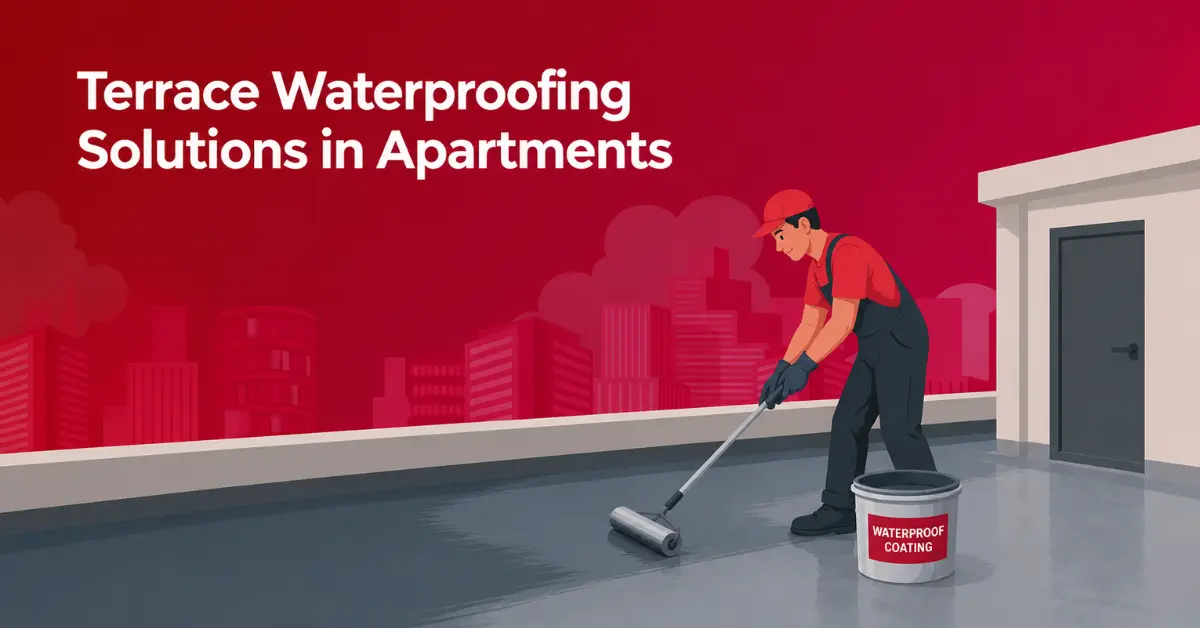
Water stains on the ceiling, peeling paint, musty smell after rain, and damp walls in top-floor flats are some of the common problems in many apartments. The main reasons behind these are cracks, blocked drainage, poor slope and damaged waterproofing layers. It slowly allow water to penetrate into the building. Proper terrace waterproofing helps stop terrace leakage, protects the structure, and reduces expensive repairs later. This guide explains the common causes of terrace leakage, the best terrace waterproofing solutions for apartments, practical maintenance tips, and how apartments can maintain and repair the terrace before the monsoon season becomes a bigger problem.
What Causes Terrace Leakage in Apartments?
Many apartment buildings in India face terrace leakage during or after the monsoon season. The terrace remains exposed to sunlight, rain, dust, and temperature changes throughout the year. Over time, this weakens the concrete surface and creates small cracks.
Some of the most common reasons behind water leakage from terrace areas include:
- Poor slope that allows water stagnation
- Cracked concrete slabs
- Damaged waterproof coatings
- Blocked drain outlets
- Low-quality construction materials
- Moss and algae growth retain moisture
- Old waterproofing losing its flexibility
Even a small crack can slowly allow water to move into the slab. Once seepage starts, residents may notice damp ceilings, peeling paint, mould growth, or dripping water during heavy rain.
Why Terrace Waterproofing Matters for Apartments?
Good terrace waterproofing is not only about stopping leaks. It also protects the long-term health of the building. When terrace leakage is ignored for months, the moisture slowly damages concrete, weakens reinforcement steel, and creates unhealthy indoor conditions. Top-floor residents usually experience the problem first, but the damage can spread to lower floors as well.
Proper terrace waterproofing helps apartment communities:
- Prevent ceiling seepage and damp walls
- Protect structural strength
- Handles harsh weather conditions
- Reduce repair expenses
- Avoid repeated repainting costs
- Improve indoor air quality
- Reduce mould and fungus growth
- Extend the life of the terrace slab
In Indian cities where heavy rainfall and high summer temperatures are common, regular terrace inspection and timely waterproofing are cheaper than repeated repairs every year.
Common Causes of Terrace Leakage in Apartments
Many apartment buildings experience water leakage from terrace areas because of delayed maintenance or poor drainage planning. Some problems develop slowly over the years, while others appear after a heavy monsoon season. Common reasons include:
1. Improper terrace slope
Flat surfaces allow water to collect instead of flowing toward the drain pipes.
2. Blocked drainage outlets
Leaves, dirt, and debris stop water from draining properly.
3. Cracks in the concrete slab
Continuous heat and rain create expansion and contraction in the surface.
4. Old waterproofing layers
Damaged coatings lose flexibility and start allowing seepage.
5. Poor quality repair work
Temporary patchwork often fails during heavy rain.
6. Moss and algae growth
Moisture retention weakens the surface over time.
7. Open joints near pipes and parapet walls
Corners and pipe entry points are common leakage zones.
When terrace leakage is ignored, it can affect electrical lines, wall strength, and interior finishes. In many apartment societies, the terrace slab is treated as a common area, which means the society management committee is generally responsible for major repair work.
Read also: Residential Drainage Problems
Signs That Your Terrace Needs Waterproofing
Many societies ignore early warning signs until the damage becomes serious. Spotting problems early can help avoid major repair work.
Watch for these warning signs:
- Damp patches on ceilings
- Peeling wall paint
- Bubbling plaster
- Fungus or mould smell
- Cracks on the terrace flooring
- Water pooling after rain
- White salt deposits on the walls
- Dripping water during the monsoon
- Loose terrace tiles
- Dark patches near corners or pipes
- Constant dampness near electrical points
If these signs appear repeatedly, the terrace waterproofing is already damaged so don’t delay the professional inspection.
What are the Best Terrace Waterproofing Solutions for Apartments?
Different buildings require different terrace waterproofing solutions depending on age, climate, surface condition, and budget. The right method depends on how severe the leakage is and whether the terrace already has tiles or an older membrane layer.
Polyurethane Waterproofing
Polyurethane waterproofing, also called PU waterproofing, is one of the most effective terrace waterproofing solutions for apartment buildings. It creates a flexible and seamless protective layer that adjusts to temperature changes and minor structural movement. This method works well for terraces with multiple corners, joints, uneven surfaces and pipe openings. PU coatings are highly elastic and durable. It is resistant to standing water and can handle thermal expansion caused by Indian weather conditions.
Benefits include:
- Excellent crack-bridging ability
- Long-lasting protection
- Strong resistance to rainwater
- Suitable for old terraces
However, surface preparation is extremely important before application. This method is commonly used in premium residential projects because of its long-lasting protection.
Acrylic Waterproofing Coatings
Acrylic coatings are commonly used for terrace waterproofing in Indian apartments because they are easy to apply and provide UV resistance. These coatings also help reduce terrace heat to some extent, making upper floors slightly cooler during summer.
Advantages include:
- Water-based and low odour
- Good UV protection
- Easy maintenance
- Suitable for moderate leakage problems
- Cost-effective
Acrylic systems are often used for preventive maintenance before the monsoon season.
Cementitious Waterproofing
Cementitious waterproofing is popular because they are budget-friendly and bonds well with concrete surfaces. This type of terrace waterproofing solution uses cement mixed with waterproofing additives.
It is commonly used in:
- Residential terraces
- Balconies
- Water tanks
- Wet areas
Cementitious waterproofing works best when combined with proper crack repair and slope correction. Many contractors use polymer-modified cement systems to repair terrace leakage and seal cracks before applying the final coating.
Bituminous Waterproofing
Bituminous waterproofing provides strong resistance against water penetration and is suitable for long-term protection. However, bituminous systems usually need proper UV protection because direct sunlight can reduce their lifespan over time.
It is commonly used in:
- Flat roofs
- Large terraces
- Older buildings
They are effective for severe terrace leakage issues but usually require skilled professionals for installation.
Brick Bat Coba Method
Brick Bat Coba is a traditional Indian terrace waterproofing method where broken bricks and waterproof mortar are laid to create a slope and insulation. This method is still used in many older apartment buildings. Proper workmanship is important because poor slope formation can lead to water accumulation later.
Read also: Waterproofing Solutions for Societies
Step-by-Step Terrace Waterproofing Process
Proper terrace waterproofing depends heavily on proper preparation and application. Skipping even one step can reduce longevity.
1. Surface Cleaning
The terrace surface should be cleaned completely before work starts. Dust, algae, loose particles, and old, damaged coating materials must be removed.
2. Crack Repair
Visible cracks are opened into small grooves and filled using suitable waterproof crack fillers or polymer-modified mortar. This step is critical because untreated cracks often become the main source of terrace leakage later.
3. Slope Correction
The terrace should have a slight slope toward the drain outlets. This helps prevent stagnant water accumulation. Even the best terrace waterproofing solutions can fail if water remains standing for long periods.
4. Primer Application
A primer coat is applied to improve bonding between the surface and the waterproofing layer.
5. Waterproof Coating Application
Two or three coats of waterproof material are generally applied. In many cases, fibre mesh reinforcement is added between coats for extra strength.
6. Protective Top Layer
A UV-resistant top coat or protective screed helps improve durability and protects the membrane from sunlight and foot traffic.
7. Curing and Inspection
The waterproofed surface is allowed to dry completely before final inspection and water testing.
For best results, terrace waterproofing work should be completed during dry weather conditions instead of during active monsoon periods.
How to Prevent Water Leakage from Terrace Before Monsoon?
Preventive maintenance helps societies avoid emergency repair costs during heavy rainfall.
Simple steps that help:
- Inspect the terrace twice every year
- Clear drain outlets before the monsoon
- Remove moss and algae regularly
- Repair small cracks immediately
- Avoid water stagnation on the terrace
- Check parapet wall joints carefully
- Inspect old waterproof coatings for peeling
- Avoid temporary patch repairs during rainy months
Housing societies that schedule preventive terrace waterproofing before monsoon usually face fewer resident complaints and lower long-term maintenance expenses.
Society Responsibility and Resident Action for Terrace Leakage
In many apartment communities across India, terrace slabs are treated as common structural areas. This means that the housing society or resident welfare association is responsible for terrace leakage repairs.
Residents should:
- Submit a written complaint for water leakage
- Share photos or videos of the damage
- Raise maintenance requests early
- Follow up before the monsoon begins
Society management committees should:
- Conduct regular terrace inspections
- Maintain waterproofing records
- Allocate preventive maintenance budgets
- Hire experienced waterproofing contractors
If terrace leakage continues without action, the damage can spread to multiple flats and increase repair expenses for the entire community. Regular maintenance schedules will prevent larger structural damage and complaints after rainfall.
Read also: Supreme Court Decision on Water Leakage from Upper Floor Flat
How Much Does Terrace Waterproofing Cost in India?
Terrace waterproofing costs in India usually depend on:
- Surface condition
- Type of waterproofing solution
- Crack severity
- Existing tile condition
- Labour charges
- Material quality
On average, terrace waterproofing solutions can cost between ₹60 and ₹180 per square foot, depending on the method used.
Approximate pricing:
| Waterproofing Method | Estimated Cost |
|---|---|
| Acrylic Coating | ₹60 – ₹90/sq ft |
| Cementitious System | ₹70 – ₹120/sq ft |
| PU Waterproofing | ₹120 – ₹180/sq ft |
| Bituminous Membrane | ₹90 – ₹150/sq ft |
Large apartment societies usually benefit from preventive maintenance instead of repeated emergency repairs after leakage starts.
Preventive Terrace Maintenance with NoBrokerHood
In many apartment buildings, terrace leakage becomes a repeated issue because maintenance happens only after visible damage appears inside flats. Small cracks, blocked drain outlets, or damaged waterproof layers often go unnoticed until residents start reporting ceiling seepage during the monsoon. Regular inspection and timely repairs help societies avoid expensive structural damage later.
Many apartment communities now use Society Maintenance App like NoBrokerHood to streamline common-area upkeep and complaint handling. Instead of relying only on manual follow-ups or scattered WhatsApp messages, committees can monitor terrace-related issues more systematically.
How organised maintenance helps reduce terrace leakage:
- Residents can raise waterproofing complaints early with photos and location details
- Maintenance teams can track recurring seepage issues across different blocks
- Drain cleaning and terrace inspections can be scheduled before the monsoon season
- Repair updates and contractor progress can be shared transparently with residents
- Committees can maintain waterproofing records for future maintenance planning
When terrace inspections, resident complaints, and repair schedules are properly documented, societies are usually able to identify leakage problems earlier and prevent repeated waterproofing failures.
All Solutions by NoBrokeHood:
FAQs
Yes, in some cases, waterproof coatings can be applied over existing tiles if the surface condition is stable. However, damaged or loose tiles may need removal before proper terrace waterproofing can begin.
The source of seepage should first be identified through inspection. Crack repair, slope correction, drain cleaning, and applying suitable terrace waterproofing solutions usually help stop water entry effectively.
Regular inspection, cleaning drainage outlets, repairing cracks early, and applying preventive terrace waterproofing before heavy rainfall are the best ways to reduce leakage problems during the monsoon.
There is no single permanent fix without maintenance. Long-term protection usually involves proper crack repair, slope correction, high-quality waterproofing membranes, and periodic inspection of the terrace surface.
In most apartments, the terrace is treated as a common area, so the management committee or RWA handles terrace waterproofing and structural repairs. However, rules may vary based on society’s bylaws.