RWA Issues in India- Rights, Rules and Solutions
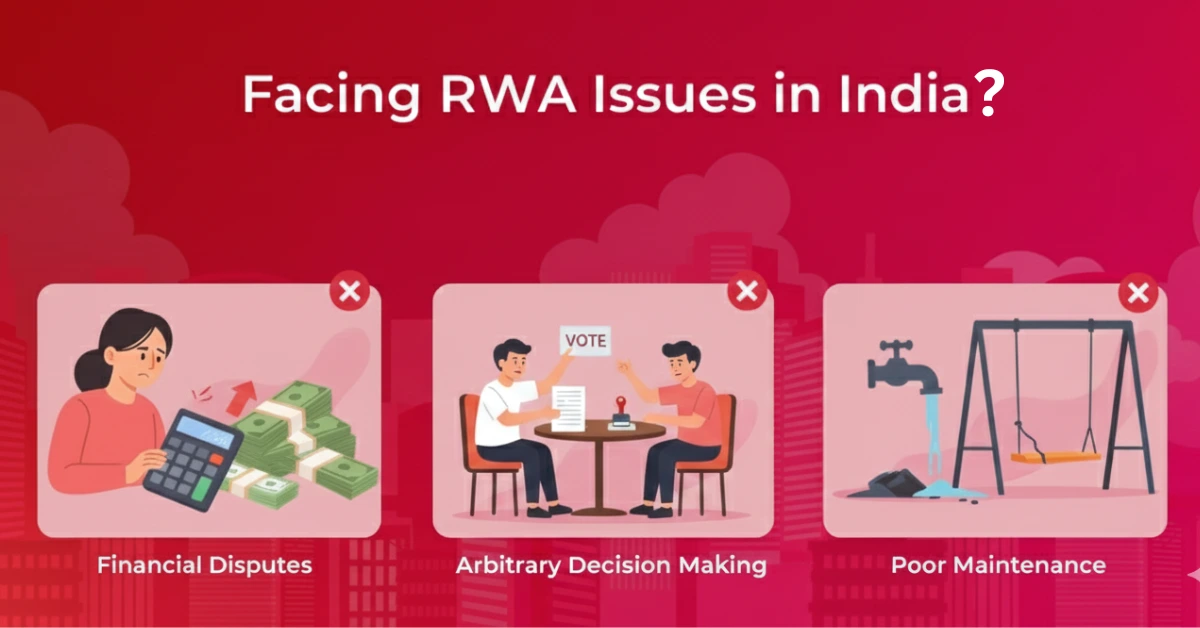
Facing RWA (Resident Welfare Association) issues in India is common in apartment living and usually involves disputes around maintenance, finances, rules, or transparency. Most issues can be resolved through structured communication, understanding bylaws, and using proper legal and administrative channels.
Understanding Resident Challenges with RWAs
Residents experience challenges with their Resident Welfare Association related to decision-making, services, finances, or rights. Since RWAs manage shared spaces and daily operations, even small gaps can directly affect quality of life.
In India, RWAs operate under defined legal frameworks. When rules are unclear, communication breaks down, or authority is misused, residents often feel confused about their rights and next steps. Awareness and documentation are the first steps toward resolution.
Common RWA Issues Faced by Residents in India
Residents across Indian cities report similar patterns when facing RWA issues. These problems usually fall into four broad categories.
Financial Mismanagement
Financial concerns are one of the most reported RWA issues in India. Residents often face:
- Lack of clarity on how maintenance funds are spent
- Delayed or missing audit reports
- Sudden increases in monthly maintenance charges
- Unapproved spending from sinking or corpus funds
RWAs are required to maintain proper accounts and share financial statements with members. Denying access to this information is not permitted under society laws.
Maintenance and Service Problems
Poor maintenance quickly turns into daily frustration. Common complaints include:
- Irregular cleaning of common areas
- Non-functional security systems or guards
- Poor waste management and hygiene issues
- Delayed repairs of lifts, water pumps, or lighting
When residents continue paying maintenance, but services remain poor, RWAs can be treated as service providers under the Consumer Protection Act.
Governance and Transparency Gaps
Many people facing RWA issues in India report governance problems such as:
- No regular General Body Meetings
- Decisions taken by a few committee members
- Meeting minutes not shared with residents
- Bylaws ignored or selectively applied
RWAs are not private authorities. The General Body must approve major decisions, and members have the right to participate and vote.
Arbitrary Rules and Rights Violations
Some RWAs enforce rules that go beyond their legal authority, including:
- Restrictions on tenants or visitors
- Higher charges for tenants compared to owners
- Pet bans or unreasonable pet rules
- Interference in property sale or rental transactions
- Denial of access to common facilities
Courts in India have repeatedly held that RWAs cannot violate constitutional rights, discriminate, or restrict lawful use of one’s property.
Why Facing RWA Issues Should Not Be Ignored
Ignoring RWA problems allows poor practices to become routine. Over time, this can lead to financial loss, legal disputes, and a breakdown of trust within the community.
When residents address issues early through formal communication and collective discussion, most problems are resolved without legal escalation. Awareness also discourages misuse of authority and encourages accountability.
Legal Rights of Residents Facing RWA Issues in India
When facing RWA issues in India, residents are protected under multiple laws. RWAs must operate strictly within their registered bylaws and applicable legislation.
Your key rights include:
- Right to Information: Access to financial records, audit reports, and meeting minutes
- Right to Participation: Voting and speaking in General Body Meetings
- Right to Fair Charges: Maintenance must be proportional and justified
- Right to Due Process: No penalties without notice and explanation
- Right to Essential Services: Water, electricity, and access cannot be cut off
RWAs cannot impose penalties or restrictions based on personal preferences or moral judgments.
Step-by-Step Process to Resolve RWA Issues
If you are facing RWA issues, follow a structured and documented approach.
1. Communicate Formally
Send a written email or letter to the RWA committee explaining the issue clearly. Refer to the relevant bylaw wherever possible.
2. Check Society Bylaws
Bylaws of RWA define what it can and cannot do. They are the most important reference point for resolving disputes.
3. Escalate Internally
Raise the issue during a General Body Meeting or request a Special GBM if needed. Collective voices often bring faster results.
4. Approach the Registrar of Societies
If internal resolution fails, file a complaint with the Registrar of Societies for mismanagement, financial irregularities, or bylaw violations.
5. Use Legal Remedies
Depending on the issue:
- Consumer Forum: For service deficiencies
- RERA: If the builder still manages the society
- Civil Court: For serious disputes or injunctions
- Police Complaint: For threats, fraud, or extortion
6. Dissolution in Extreme Cases
In rare situations, residents can initiate RWA dissolution under the Societies Registration Act with approval from three-fifths of members.
Documentation is critical at every step.
Legal Frameworks That Govern RWAs in India
Understanding the legal base helps residents act with confidence when facing RWA issues.
- Societies Registration Act, 1860: Governs RWA formation, functioning, and dissolution
- State Apartment Ownership Acts: Define rights and duties of owners and associations
- Consumer Protection Act, 2019: Treats RWAs as service providers
- RERA: Applies when the builder has not transferred maintenance
These laws ensure RWAs remain accountable to residents.
Read also: How to Form a Residents’ Welfare Association
How Technology Can Reduce RWA Issues
Many RWA issues arise due to poor communication and manual processes. Digital platforms help by:
- Sharing notices, bills, and meeting minutes transparently
- Tracking complaints and service timelines
- Maintaining clear financial records
- Encouraging resident participation
Structured systems reduce misunderstandings and improve trust within societies.
How NoBrokerHood Supports Better Society Management
NoBrokerHood works closely with residential communities to bring structure, transparency, and accountability to society operations. Centralising communication, complaint tracking, and financial records helps RWAs function more smoothly and reduces common friction points.
The platform supports compliant society management aligned with Indian regulations, making it easier for residents and committees to stay informed and involved without confusion or dependency on informal channels.
All Solutions by NoBrokerHood:
FAQs
No. Maintenance increases must be approved in a General Body Meeting. Arbitrary hikes without member consent are not valid and can be challenged.
RWAs cannot impose discriminatory rules on tenants or bachelors. Such restrictions violate legal and constitutional rights.
Residents have a legal right to access audited accounts and statements. You can escalate the issue to the Registrar of Societies.
No. RWAs cannot cut off water, electricity, or access to common areas, even if dues are pending.
If you are paying maintenance but not receiving promised services, the Consumer Forum is an appropriate remedy.