






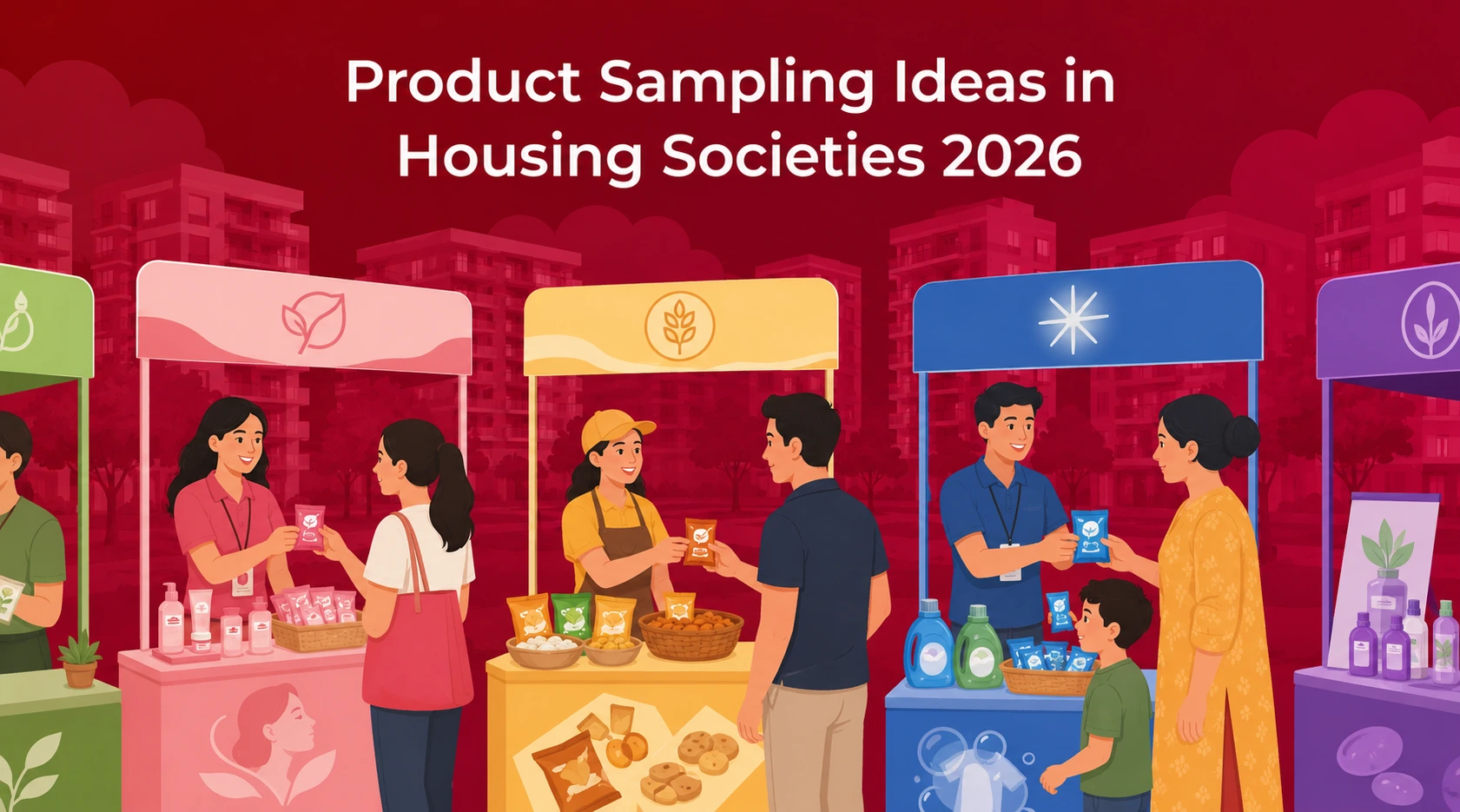


Product sampling is when a brand gives you something for free or a trial size of something so you can try it before you spend your cash on it. In most Indian housing societies, this appears as a weekend stall near the clubhouse, a small packet at your door, or a promoter standing by the main gate on a Saturday morning. When done right, it's a small, mildly useful part of living in a community. When it’s not managed properly, it’s random strangers in the lobby and a new round of complaints from the resident. This guide walks you through the actual process of sampling within a gated community, the reasons brands continue to partner with societies, and what society members can do to ensure the process remains valuable rather than a nuisance.
What Is Product Sampling?
Product sampling means giving away a free or reduced-price sample of a product so people can try it before they buy. That could be a shampoo sachet, a small snack pack, a tea bag, or a trial bottle of a cleaning liquid tucked into your newspaper.
The idea behind it is very simple. People buy things they've already tried and liked far more readily than things they've only read about. A sample takes the guesswork out of the decision. You're not relying on a label or a thirty-second ad; you're using the product at home, on your own schedule, with zero pressure to actually purchase anything afterwards.
Read also: Residential ad ideas for housing societies
What Is Product Sampling in Marketing?
Within marketing circles, product sampling falls under experiential or trial-based promotion. Instead of telling people a product works, the brand just lets them find out on their own.
A few reasons marketers lean on it so heavily:
- It lowers the hesitation people feel before spending money on something they haven't used.
- It generates blunt, first-hand feedback that a company can actually act on, whether that's tweaking the taste, the packaging, or the price.
- It sparks word-of-mouth conversations, which still carry more weight than a paid ad, especially in a neighbourhood where everyone more or less knows everyone.
Brands selling FMCG goods, skincare, food and beverages, and everyday household essentials rely on this heavily, mostly because these are low-cost, frequently repurchased items where a single good trial can genuinely shift someone's buying habits.
Read also: How to Do Marketing in Apartment Building
Common Product Sampling Ideas for Housing Societies
If your society is considering allowing a sampling activity, or you're just curious how these campaigns typically run, here are the formats that show up most often in Indian gated communities.
Weekend clubhouse kiosks
A small branded stall near the clubhouse, garden, or main gate, usually on a Saturday or Sunday morning when footfall is naturally higher. This works well for food, beverages, and quick-commerce brands.
Doorstep sampling
Trained promoters go door to door, leaving a small sample packet with a discount coupon attached. Common for detergents, snacks, and personal care products.
Event-linked sampling
Brands tie up with the RWA to sponsor a festival, a kids' carnival, or a talent night. Sampling happens almost naturally on its own while families are already gathered and relaxed.
Move-in welcome kits
New residents get a small kit with product samples along with their welcome packet from the management office. It tends to feel more like a genuine gesture than a sales pitch.
Bundled deliveries
Some brands tie up with the local milk delivery guy, newspaper vendor, or laundry pickup service to slip a sample into the daily drop, skipping a separate visit altogether.
App-based notifications
Instead of flyers pinned to a noticeboard nobody reads, some societies now use their community app to inform an upcoming sampling drive, so residents can decide whether to walk over or just skip it.
Each of these works a little differently depending on what's being sampled, but the underlying idea stays the same: reach residents where they already are, without disrupting their day upside down.
Read also: Gated Community Advertising
Why Housing Societies Are a Favourite Sampling Ground for Brands?
A housing society offers brands something a mall or railway station simply can't: a tight, known audience. Residents in the same complex often share a similar income level, family setup, and lifestyle, which makes targeting a lot more precise than throwing samples at anyone walking past. A few reasons brands keep coming back to societies for product sampling:
Precision targeting
A premium skincare brand will pick a high-rise society. A budget detergent brand will pick a mid-income township. The fit is intentional, not random.
Higher trust
A sample handed over right at someone's own door, inside a gated and secure environment, tends to feel safer than one handed out on a busy street.
Real conversations
Promoters actually get a few genuine minutes with a family instead of a rushed handoff in a crowded mall.
Natural word of mouth
If one household in a society likes a product, chances are a neighbour hears about it over a lift ride or a passing WhatsApp message.
This is why so many FMCG, food, and personal care brands now run their product sampling campaigns through Resident Welfare Associations rather than relying on retail shelves.
Product Sampling Approval Checklist for Housing Societies
Not every sampling request that comes to a society's gate is worth allowing in. A responsible process protects residents while still letting genuine brands run their campaigns. A few things worth checking before approving product sampling:
- RWA or management committee approval first: No brand or promoter should get to set up a stall or knock on doors without a written go-ahead.
- A defined time window: Most societies restrict sampling to a couple of hours on a weekend so it doesn't spill into weekday routines.
- Verified promoters: Anyone entering the premises should carry ID and be pre-listed with the security desk.
- Spacing between sampling drives: Allowing sampling drives too often creates fatigue and complaints, even from residents who do not mind the occasional stall.
- A booking or facility fee: A lot of societies now charge, with the money going toward the maintenance fund instead of being an informal, undocumented arrangement.
Get these basics right and sampling stops feeling like an intrusion. It becomes a small, optional convenience residents can engage with or simply walk past.
Run Product Sampling Campaigns in Housing Societies with NoBrokerHood
Finding the right audience is often the biggest challenge in any product sampling campaign. Rather than approaching societies individually, now brands can advertise with NoBrokerHood to reach verified apartment communities across multiple cities.
It helps brands run product sampling, kiosk activations, and community engagement campaigns in gated societies through a structured approval process. This allows Resident Welfare Associations (RWAs) and apartment associations to review campaigns before they are conducted, helping ensure that activities are organised and relevant for residents.
Why should brands choose this approach?
- Reach residents in verified gated communities
- Conduct sampling campaigns, weekend kiosks, and brand activations
- Coordinate campaigns with apartment management instead of individual outreach
- Create a more organised experience for both residents and committees
When product sampling is planned through an organised community engagement platform, it becomes easier for societies to manage access while giving residents the choice to participate in campaigns that interest them.
