






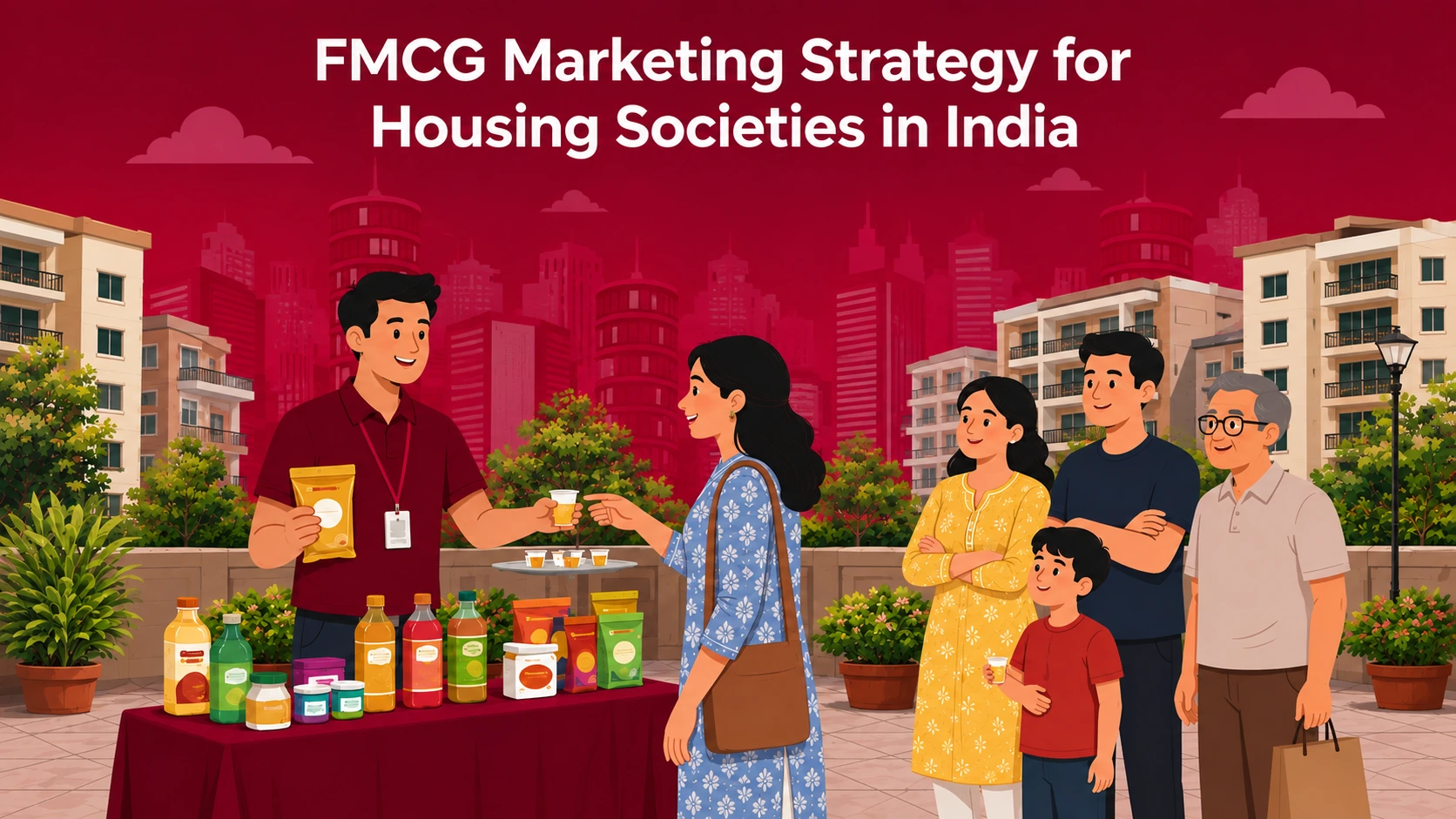


A strong FMCG (Fast-Moving Consumer Goods) marketing strategy helps brands reach residents where everyday purchase decisions happen. Housing societies offer a focused setting for sampling, on-ground promotions, digital advertising, and convenient doorstep sales. This guide covers practical ways to build brand visibility, engage residents, and understand how to sell FMCG products online and offline while keeping the approach relevant to the needs and rules of each society.
Why Housing Societies Are Becoming Important to FMCG?
Gated communities in India are compact, self-contained and accessible in a single visit. In a single society, there can be 200 to 2,000 households, all living within a few hundred meters of each other. This makes them attractive to FMCG brands looking to reduce distribution costs and build direct relationships with buyers. A good FMCG marketing strategy here doesn’t have to be a big advertising budget. It needs the right permissions, the right timing and a message that sounds local, not corporate.
Brands that turn up at their clubhouse or WhatsApp group get a better response from residents than a random newspaper insert. That familiarity is the real advantage of society-level marketing.
Building the Right FMCG Marketing Strategy Inside a Society
Before setting up any activity, it helps to understand the three broad approaches most brands use. Each one plays a different role, and combining them tends to work better than picking just one.
On-Ground Activation and Sampling
This is the most direct way to introduce a product to residents.
- Weekend kiosks: Set up a small stall near the clubhouse, park, or main gate during the weekend mornings when footfall is at its highest.
- Free sampling: Hand out trial packs and sachets to morning walkers, senior citizens, and children playing in common areas.
- Live demos: Show how a cleaning product works or let people taste a food item on the spot. Seeing a product in action builds more confidence than reading its label.
Read also: Product Sampling
Digital and Community Engagement
Not every resident steps out for a weekend stall, so digital touchpoints matter just as much.
- Society app promotions: Place banner ads or send notifications through the society management apps residents already use for gate passes and notices.
- Resident influencers: Work with home bakers, fitness instructors, or active community members who can speak about a product honestly.
- Group buys: Offer bulk discounts through resident WhatsApp broadcast groups, since bundled pricing usually gets more attention than a single unit discount.
Direct to Door and Convenience Models
Convenience is often the deciding factor for a purchase inside a society.
- Subscription tie-ups: Partner with the local milk delivery agent or in-society grocery vendor to slip a sample or flyer into daily deliveries.
- Pop-up flea markets: Join festive melas, Diwali bazaars, or cultural events organised by the society to get direct spot sales.
Together, these three approaches form the backbone of most successful FMCG marketing strategy plans at the society level, whether the brand is a large FMCG company or a small local seller.
Read also: How to Do Marketing in Apartment Building
How to Sell FMCG Products Inside a Residential Society?
If you are wondering how to sell FMCG products inside a society, it needs a few approvals first.
1. Get formal permission
Speak to the Residents Welfare Association or the society’s management office. Each society has its own rules about commercial activity, gate entry for vendors and pop-up stalls. The most common reason sales efforts get shut down early because this step is skipped.
2. Choose your selling channel
You could rent a small internal shop if one is available, use a clubhouse or parking area for a weekend flea market, or run a simple digital catalogue through society management apps like NoBrokerHood or WhatsApp.
3. Keep basic compliance ready
If you are selling food items, an FSSAI registration is a must. Local tax compliance should also be sorted before you start, even for a small setup.
4. Stock the right products
Focus on high-rotation daily essentials such as packaged snacks, soaps, dairy, cleaning supplies, and basic groceries. These are the categories residents restock most often, so they sell faster than niche or seasonal items.
5. Price it to compete
A small launch discount or a bundle deal can encourage residents to switch from their usual supermarket or quick commerce app, at least for the first few purchases.
6. Make delivery painless
Since you are already inside the compound, offer fast or scheduled free delivery. Proximity is your biggest advantage over any outside retailer, so use it.
Once the basics are in place, word of mouth does a lot of the remaining work. A pamphlet slipped under doors, a stall during a society event, or a festival day offer shared in the community group can all add up to steady, repeat sales.
How to Sell FMCG Products Online Within a Society?
For sellers who prefer not to run a physical stall, how to sell FMCG products online within a society follows a similar path with a digital-first setup.
Setting up the online store
- Create a simple digital catalogue with clear photos and prices using tools like a free store builder or WhatsApp Business.
- Focus on daily demand items like snacks, dairy, packaged food, and cleaning supplies rather than trying to stock everything at once.
- Share the store link in the official or resident-approved WhatsApp and community groups.
Society rules and permissions
- Talk to the RWA or management committee about guidelines for deliveries and resident-led micro businesses before you begin.
- Avoid heavy foot traffic, noise, or blocking common areas, since retail activity inside residential flats is often closely regulated.
- Keep basic documentation ready, including FSSAI registration for food items.
Managing orders and delivery
- Source stock directly from local wholesalers or stockists to protect your margins.
- Offer scheduled or instant doorstep drop-offs, since you are operating within the same complex as your buyers.
- Accept UPI payments, so checkout stays quick and simple for residents.
A society-based online model works well precisely because delivery time is minutes, not hours. That single factor often outweighs price when a resident is choosing between your catalogue and a large delivery app.
Advertising Strategy of FMCG Products in Residential Communities
The advertising strategy of FMCG products in a housing society is not so much about mass reach, but more about repeated, local visibility. A resident who sees the same brand name on the gate, in the lift and on the society app is more likely to try it out.
On-ground activation and sponsorship
- Weekend kiosks near the clubhouse or park during peak footfall hours.
- Free sample drops through mailboxes or door-to-door campaigns.
- Sponsoring society events like Diwali celebrations, Pongal gatherings, or summer camps for banner space and stage presence.
Hyper-local out-of-home media
- Elevator and lobby posters, since residents spend a captive minute or two waiting for the lift each day.
- Gate and perimeter branding on entrance archways or security cabin signage for daily visual recall.
- Society app ads or push notifications through the gate security and management apps residents already use.
Read also: Hyperlocal Advertising
Direct to consumer and word of mouth
- Partnering with RWA members or active homemakers who can speak about the product to their own network.
- Offering group discount codes exclusive to that specific society, which tends to spread faster through resident chat groups than a generic public coupon.
An advertising strategy of FMCG products built this way costs far less than mainstream media, and it reaches exactly the households a brand wants, without wasting spend on people outside the community.
Mistakes That Weaken an FMCG Marketing Strategy in Societies
Even a well-planned FMCG marketing strategy can fall flat if a few basics are ignored.
- Skipping RWA approval: Setting up without permission usually ends in a shutdown mid-campaign and damages trust with the committee.
- Ignoring quiet hours and common area rules: Loud activations near residential towers during rest hours tend to backfire quickly.
- One-time sampling with no follow-up: A single free sample rarely converts. Repeat visibility through the app, a flyer, or a second visit works far better.
- Overpricing for a captive audience: Residents will compare prices with quick commerce apps regardless of convenience, so pricing still needs to be fair.
- Ignoring digital channels: Not every resident steps outside for a stall, so skipping the society app or WhatsApp groups means missing a large chunk of the audience.
Advertise with NoBrokerHood to Reach the Right Households
For FMCG brands, advertising inside a housing society works best when the message reaches residents through channels they already use. Advertise with NoBrokerHood to bring campaigns closer to residential audiences through digital touchpoints within gated communities.
Brands can use NoBrokerHood to support campaigns such as:
- In-app advertisements: Keep the brand visible while residents use the platform for everyday community activities.
- Targeted society campaigns: Focus promotions on selected residential communities based on the campaign’s audience requirements.
- Product launches and offers: Share information about new products, special offers, or seasonal campaigns with relevant residents.
- Support for on-ground activities: Use digital communication to create awareness before a sampling event or reinforce the campaign after residents have interacted with the product.
This makes NoBrokerHood a useful addition to an FMCG marketing strategy when the goal is to combine digital visibility with focused residential reach, rather than relying only on broad advertising channels.
