






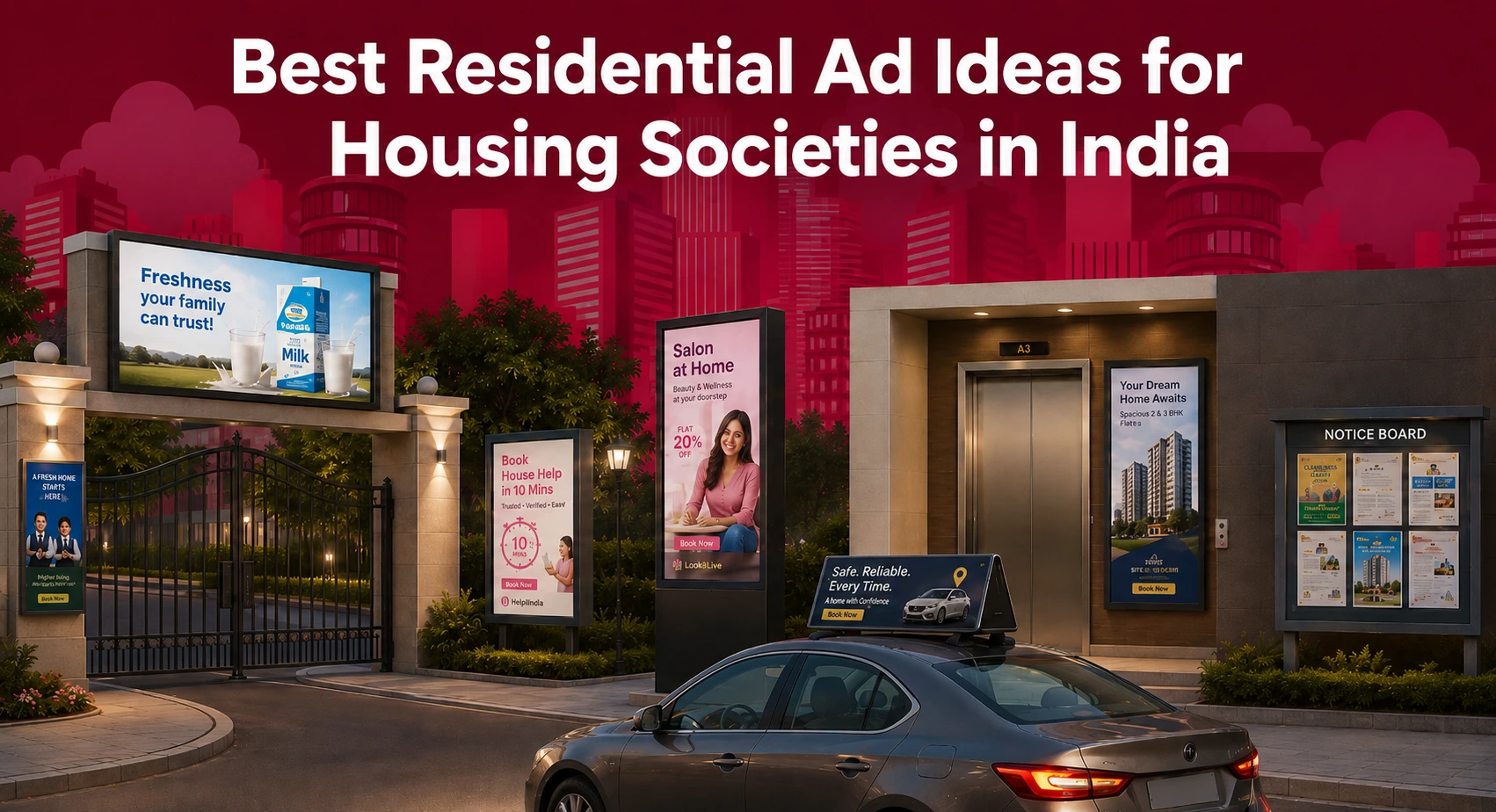


A residential ad is any paid message placed inside or around a housing society, such as lift posters, gate banners, digital screens, or notice board flyers, to reach residents where they actually live. It works because people see it daily, on their way in and out, which builds trust faster than most outdoor media. For brands and local businesses in India, it is one of the simplest ways to get noticed by a specific community without a large budget.
What Is a Residential Ad and Why It Works?
A residential ad is placed where people spend their everyday moments: the lift, the main gate, the clubhouse, or the parking area. A highway hoarding gets a single glance in passing, but this kind of placement gets seen multiple times a day, every time someone steps out for work, school, or a walk.
This repetition builds familiarity. Residents start recognising the brand without even trying to remember it. That is why local clinics, grocery brands, real estate developers, and service providers often prefer a residential ad over a citywide campaign. The audience is smaller, but the attention is far more consistent and the intent is higher, since these are people making real decisions about their homes and daily needs.
Popular Residential Ad Ideas in Indian Societies
Once permissions are sorted, brands can choose from a mix of formats depending on budget, audience, and how long the campaign needs to run.
Lift and Gate Branding
Lift interiors and main gates are some of the highest-visibility spots in any society. Every resident passes through them daily, sometimes several times.
- Backlit lift posters near the panel buttons
- Gate arch banners or entry gate branding
- Standees near the security cabin or reception
Digital Screens and Residential Digital Advertising
Residential digital advertising through screens placed in lobbies and lift landings is growing fast because it allows video content, rotation of multiple messages, and real-time updates. These screens typically run for several hours a day and repeat the same ad dozens of times, which is difficult to match with static posters. Many networks report that this kind of high-dwell-time, place-based media earns strong ad recall simply because residents cannot skip past it the way they scroll past a mobile ad.
Notice Board, Kiosk and Flyer Ads
- A4-size posters on the official society notice board
- Pop-up kiosks near the clubhouse or park during weekends
- Pre-approved flyers dropped at doorsteps or mailboxes
Transit and Car-Top Ads
For societies where static signage is limited, car-top displays and branded transit vehicles moving through internal roads offer another way to place a residential ad without breaking any zoning rule, since the vehicle itself carries the message rather than a fixed structure.
The Problem With Old-Style Advertising in Housing Societies
Traditional advertising was built for mass reach, not for trust. A billboard on a highway or a newspaper insert gets seen once and forgotten. It also cannot be placed inside a residential zone in most Indian cities, since municipal rules restrict large commercial signage within housing areas.
At the same time, many brands still rely on flyers pushed under doors or random posters stuck without approval. These often get removed within hours, annoy residents, and create no lasting brand recall. Housing societies today expect advertising that respects their space, follows their rules, and adds some value back to the community rather than just interrupting it.
Rules Every Advertiser Should Know Before Placing a Residential Ad
Before any campaign goes live inside a society, a few approvals and standards need to be in place. Skipping these steps is the most common reason campaigns get pulled down midway.
- RWA approval: Every Resident Welfare Association must sign off on the campaign, the placement, and the duration before any material goes up.
- Municipal permits: Local authorities require permits for outdoor displays, especially anything visible from public roads near the society.
- ASCI guidelines: The Advertising Standards Council of India expects all creatives to be honest, non-misleading, and appropriate for a residential audience.
- RERA compliance: For property and real estate promotions, the exact carpet area, RERA registration number, and approved project details must be shown clearly.
- Society-specific rules: Some societies limit poster size, screen brightness, or the number of brands allowed at a time, so it helps to check this early.
Getting these right protects the brand's reputation and keeps the relationship with the society smooth for future renewals.
[Talk to Our Advertising Experts]
Residential Online Advertising vs In-Community Ads
Residential online advertising usually means two different things, and it helps to separate them. The first is promoting a property for sale or rent through property listing platforms that connect owners directly with buyers or tenants online. The second is booking physical, in-community media, such as DOOH screens inside apartment complexes, through an online platform that manages the placement.
Both approaches serve different goals. A property listing helps someone find a home. An in-community screen or poster helps a brand stay visible to people who already live in that home. Many advertisers now combine both, using online booking tools to plan offline society placements at scale across multiple cities.
[Launch Your Residential Advertising Campaign]
Residential Cleaning Ads and Other Local Services That Do Well
Some categories consistently perform well with residential advertising because the need is immediate and local. Residential cleaning ads, in particular, tend to get strong response since residents often search for a trustworthy service close to home rather than one from across the city.
Other categories that typically do well include:
- Home cleaning, pest control, and maintenance services
- Local clinics, diagnostic labs, and pharmacies
- Grocery delivery, dairy, and daily essential brands
- Furniture, interior, and home decor businesses
- Schools, tutoring centres, and childcare services
These businesses benefit because a resident who sees the same ad near their lift for two weeks is far more likely to call when the actual need comes up.
Simple Steps for Societies and Brands to Get Started
- Identify the goal: Decide if the campaign is for brand awareness, lead generation, or a one-time promotion.
- Shortlist societies: Pick societies based on income group, flat count, and location relevance to the business.
- Get RWA sign-off: Share the creative and campaign duration with the association for written approval.
- Choose the format: Match the format to the budget, whether it is a simple poster or a full digital screen network.
- Track and renew: Monitor footfall or response, then renew or expand to nearby societies if the results are positive.
Following this order avoids most of the delays that hold up residential campaigns in the first two weeks.
[Start Your Society Advertising Campaign]
Reach Real Communities Through NoBrokerHood's Advertising Solutions
Reaching residents across hundreds of housing societies and multiple cities can be challenging without the right network. NoBrokerHood's Advertising solutions help brands to connect with verified, premium residential communities where purchasing decisions are made every day. Instead of relying solely on broad digital advertising, it enables businesses to engage with residents through trusted community touchpoints.
Some of the key advantages include:
- Access to verified residents across 13 brands and multiple industry categories through a single advertising network.
- A mix of engagement channels, including lift branding, gate branding, digital notifications, and on-ground activations, allowing campaigns to reach residents at multiple touchpoints.
- Experiential campaigns that encourage direct interaction with residents instead of limiting engagement to static advertisements.
- A proven record of repeat campaign renewals and expansion into additional cities, reflecting consistent campaign performance.
- Reach among affluent, high-intent households, helping brands focus on quality engagement rather than simply maximizing impressions.
For businesses looking to build stronger local visibility, hyperlocal advertising within gated communities offers a focused and measurable way to reach the right audience while making efficient use of marketing budgets.
