





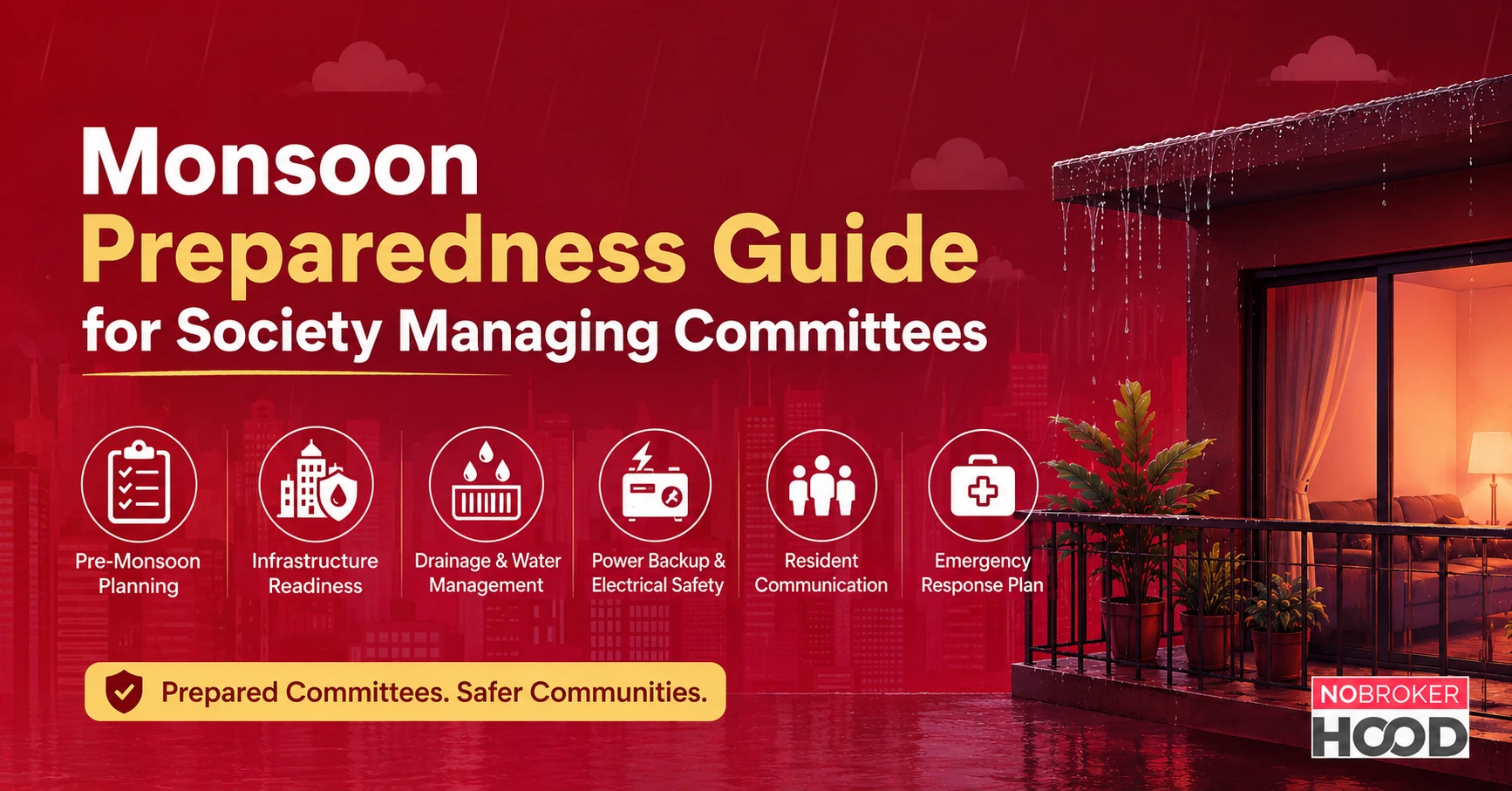


The real test of a housing society's preparedness often begins with the season's first heavy downpour. Will the drainage system handle the excess water? Are there hidden leaks waiting to surface? Could a minor maintenance issue turn into a major resident complaint overnight? These are questions many managing committees face every monsoon. Without adequate preparation, societies may experience water damage, safety risks, health concerns, and operational disruptions. Taking preventive action before the rains arrive helps committees avoid costly repairs, reduce resident grievances, and ensure a safer, smoother living experience for everyone in the community.

The Hidden Trouble Spots Every Managing Committee Should Check
Most monsoon-related problems do not appear overnight—they often start in areas that receive little attention during the rest of the year. A small crack on an external wall, a blocked drain, or poor water flow from the terrace can quickly lead to seepage, leakage, waterlogging, and even basement flooding once heavy rains begin. This makes pre-monsoon inspections essential for every housing society.
Before the rains arrive, managing committees should prioritize inspections of:
• Terraces and rooftops for cracks, damaged waterproofing, and stagnant water accumulation.
• External walls for signs of seepage, loose plaster, or structural wear.
• Drainage systems and rainwater pipes for blockages caused by leaves, debris, or silt.
• Basements and parking areas that are vulnerable to waterlogging and flooding.
• Common areas where poor water flow could create safety hazards for residents.
Simple preventive actions such as clearing drains, testing rainwater flow, repairing minor cracks, and identifying low-lying areas can help avoid costly repairs later. A proactive inspection today can protect common infrastructure, resident property, and society operations throughout the monsoon season.
Are Hidden Monsoon Risks Putting Residents at Risk?
While water damage is often the most visible monsoon concern, some of the biggest risks are the ones residents cannot immediately see. Stagnant water, damp conditions, slippery surfaces, and moisture exposure can create health and safety challenges across the community if left unchecked.
Managing committees should regularly monitor:
• Gardens, planters, terraces, and open spaces where stagnant water can collect.
• Utility rooms and service areas that may experience moisture buildup.
• Walkways, staircases, entrance zones, and parking areas that become slippery during rainfall.
• Children's play areas and other high-traffic common spaces that require additional safety checks.
• Electrical panels, wiring systems, and common-area equipment that could be exposed to water ingress or excessive moisture.
Routine inspections and timely preventive measures can help reduce mosquito breeding, minimize accident risks, and ensure essential electrical systems remain safe and operational. By addressing these concerns early, committees can create a healthier and safer environment for residents throughout the monsoon season.
Will Your Society's Essential Services Withstand Heavy Rainfall?
Beyond health and safety concerns, managing committees must also ensure that critical infrastructure continues to function without disruption during the monsoon. A flooded pump room, lift malfunction, or power-related issue can quickly impact the daily lives of residents and lead to emergency maintenance situations.
Before the peak rainy season, committees should focus on:
• Servicing lifts, pumps, generators, and electrical systems.
• Inspecting water management equipment and backup systems.
• Protecting equipment rooms and utility spaces from water ingress.
• Verifying vendor support and maintenance contracts for quick assistance when needed.
Preventive servicing and timely inspections can help societies avoid unexpected breakdowns, reduce repair costs, and ensure essential services remain operational even during periods of heavy rainfall.
Effective Communication Is the Foundation of Monsoon Preparedness
Along with maintenance and safety measures, clear communication helps societies stay prepared and respond quickly during the monsoon. Keeping residents informed can reduce confusion, encourage timely reporting of issues, and support faster resolution of concerns.
Managing committees should focus on:
• Encouraging residents to report leaks, waterlogging, and safety concerns early.
• Sharing weather alerts and society advisories when needed.
• Providing updates on maintenance work and service interruptions.
• Using NoBrokerHood's Digital Notice Board to share notices, announcements, and emergency information.
Timely communication helps residents stay informed, improves coordination, and enables a smoother response to monsoon-related challenges.
Preparing Today for a Smoother Monsoon Tomorrow
Monsoon preparedness is not just about responding to challenges as they arise, it's about preventing them before they impact residents and society operations. From managing water drainage and ensuring resident safety to maintaining critical infrastructure and keeping residents informed, every step contributes to a more resilient community.
By taking proactive measures before heavy rainfall begins, managing committees can reduce disruptions, avoid costly repairs, and create a safer, healthier, and more comfortable living environment throughout the monsoon season.