






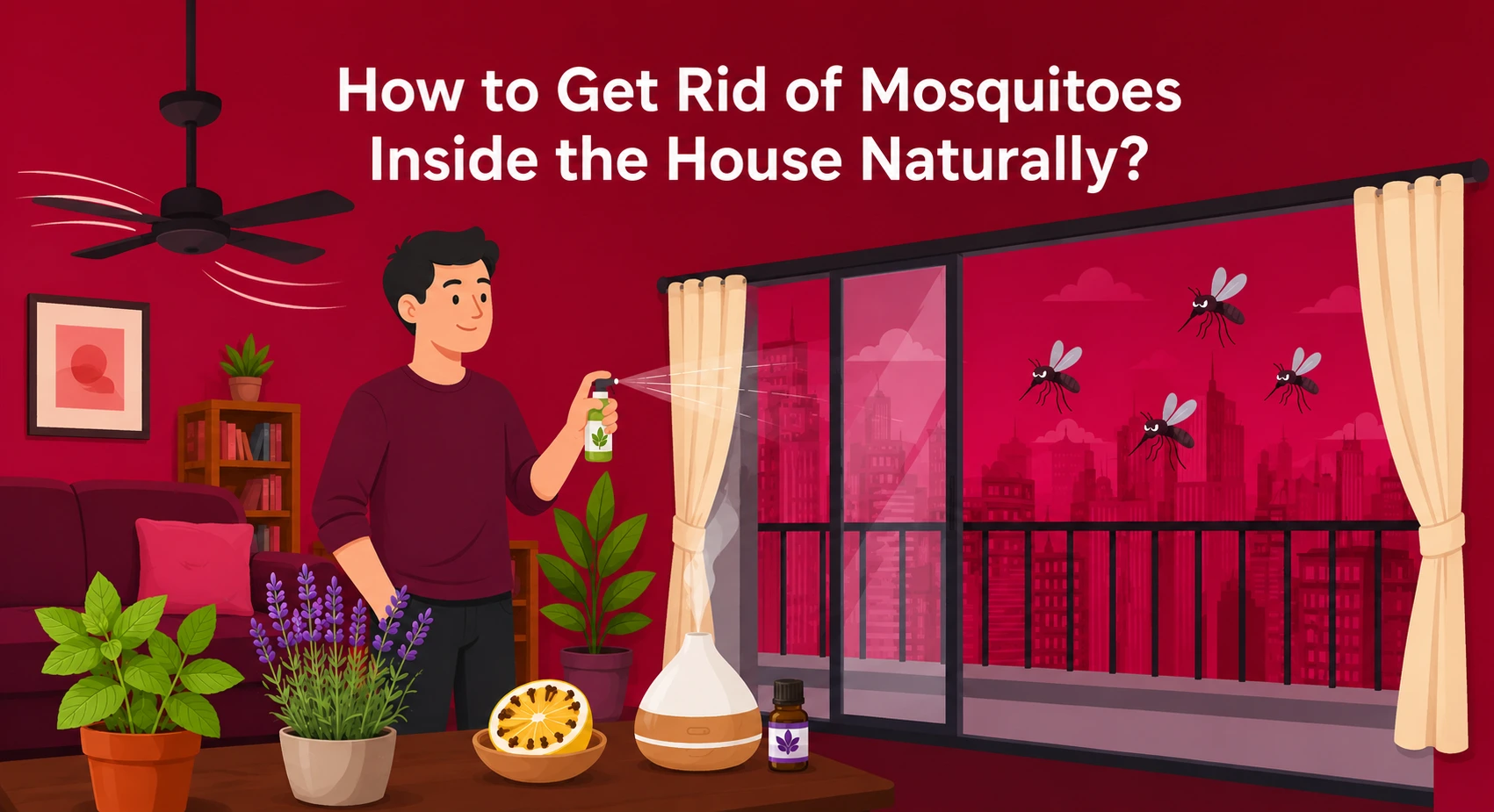


Mosquitoes in your home are more than just a seasonal problem. They can carry sicknesses like dengue, malaria, and chikungunya, which means stopping them is something every family needs to do. This blog shares real natural ways to keep mosquitoes away, helpful tips to stop them using things you already have in your house, and how housing societies can help stop mosquitoes from breeding. You will also learn about community-wide prevention measures, basic health practices to reduce the risk of disease and a quick checklist to help keep your home and neighbourhood mosquito free.

How to Get Rid of Mosquitoes inside the house: Home Remedies That Work
Now let's say the mosquitoes have already invaded your house. What is the next step to prevent them from breeding further? Here are a few chemical free tricks and tips which actually work:
1. Burn camphor in a closed room
You should close all the windows and doors, light up a small piece of camphor and keep the room closed for 20 to 30 minutes.This is really simple. Camphor fumes are one of the most reliable ways to get rid of mosquitoes inside the house naturally. Most Indian homes already have some camphor sitting on the puja shelf.
2. Try the lemon and clove trick
Cut a lemon into two. Push whole cloves into the flesh.Then place it on the table in the dining room or on your bedside stand. It’s a weird, sharp smell the mosquitoes seem to hate more than we do.
3. Use essential oil diffusers
You can use citronella, lemongrass or lemon eucalyptus oil in a diffuser. This imitates the scent that your skin naturally emits which's what attracts mosquitoes to you in the first place. Run the diffuser in the bedroom around dusk because that is usually when mosquitoes get active.
4. Turn on the fan
This one surprises people. Mosquitoes are terrible flyers. All you need is a fan running moderately fast; that would be sufficient turbulence to prevent the mosquitoes from landing on you, or even from finding you.
5. Make a DIY trap
Blend the dry coffee powder with a little bit of cinnamon in a tin can and let it burn for a while. After some time, the smoke drives away the mosquitoes, and that is without any chemicals.
Simple Kitchen and Garden Ingredients You Already Have
- Basil and mint: a couple of pots near an open window, and the strong scent does the rest.
- Neem oil: mix a few drops with coconut oil for skin, or add it straight into a diffuser.
- Garlic spray: boil a few crushed cloves in water, cool it, and spray it near doors and windows.
- Soapy water bowls: leave a shallow bowl in a dark corner overnight. It traps more adult mosquitoes than you'd expect.
None of this requires harsh chemicals, and that's the point. Small habits, repeated by everyone in a building, add up to something bigger than any single spray can do.
How Housing Societies Can Prevent Mosquito Breeding?
Here's a truth most residents don't think about. A single flat can only ever do so much. Mosquitoes breed in the smallest pools of water, and a large residential complex has dozens of hidden spots for that: terrace drains, unused flower pots sitting near the lobby, a forgotten tyre in the parking lot. Control measures of vector borne diseases really only work when the whole community pitches in, not just the one household that happens to be reading this.
Housing societies across India, particularly through the monsoon months, need something more structured than individual remedies scattered flat by flat.
What Residents Can Do Together?
- Report stagnant water the moment you spot it. Terrace tanks, clogged gutters, tyres left in parking areas- these are the usual suspects.
- Push for common area fogging. Ask the management committee to schedule eco-friendly fogging in gardens, basements and stairwells every few weeks during monsoon.
- Bring in larvivorous fish. Guppies in ornamental ponds or water tanks eat mosquito larvae on their own; no chemicals needed.
- Keep shared gardens trimmed. Overgrown shrubs and tall grass are basically a resting spot for adult mosquitoes during the day.
- Check drainage covers regularly. A loose or missing cover lets water collect and breed mosquitoes without anyone noticing for weeks.
When these concerns go through a proper channel instead of a WhatsApp group that everyone eventually mutes, societies tend to see faster, more consistent results.
Read also: Pest Control for Housing Society
Mosquito Borne and Water Borne Disease Prevention Basics
Mosquito borne disease prevention and water borne diseases and prevention usually get discussed separately, but in Indian housing societies they trace back to the same root cause, poor water and waste management.
For mosquito borne diseases like dengue, malaria and chikungunya:
- Empty flower pot saucers, coolers and pet bowls at least once a week.
- Sleep under a mosquito net during high transmission months.
- Wear full-sleeved, light coloured clothing around dawn and dusk.
For water borne diseases like cholera, typhoid and hepatitis A:
- Drink only boiled or filtered water, no exceptions.
- Wash hands with soap for a full 20 seconds before eating.
- Store drinking water in containers that are clean and properly covered.
Get these basic control measures of water borne diseases right alongside mosquito prevention, and a household ends up with two layers of protection instead of one.
Read also: Residential Drainage Problems
Quick Checklist: Vector Borne Diseases Prevention at Home
- Empty stagnant water sources every week, without fail
- Use camphor, neem or citronella as natural repellents indoors
- Fix torn window and door screens before monsoon hits
- Keep ceiling fans running in the evening hours
- Report society-level breeding spots through your management app
- Encourage larvivorous fish in shared water bodies
- Wear protective clothing during dawn and dusk
Read also: Monsoon Checklist Housing Society Committee
Keep Your Society Clean with NoBrokerHood
A clean community is one of the best defences against mosquito breeding. But maintaining common areas requires timely reporting and coordinated action from both residents and the management committee.
NoBrokerHood’s society management app helps make this easier by providing a centralized complaint management system where residents can report issues like stagnant water, clogged drains, overflowing garbage bins, or poor sanitation in common areas. This helps maintenance teams identify problems early and take timely action before they become larger health concerns.
How it helps communities stay clean:
- Residents can report stagnant water or sanitation issues as soon as they notice them
- Managing committees can assign the complaint to maintenance staff without delay
- The progress of each complaint can be tracked until it is resolved
Small actions, when reported and resolved on time, can go a long way in keeping apartment communities cleaner, healthier, and less prone to mosquito breeding.
All Solutions by NoBrokerHood:
