





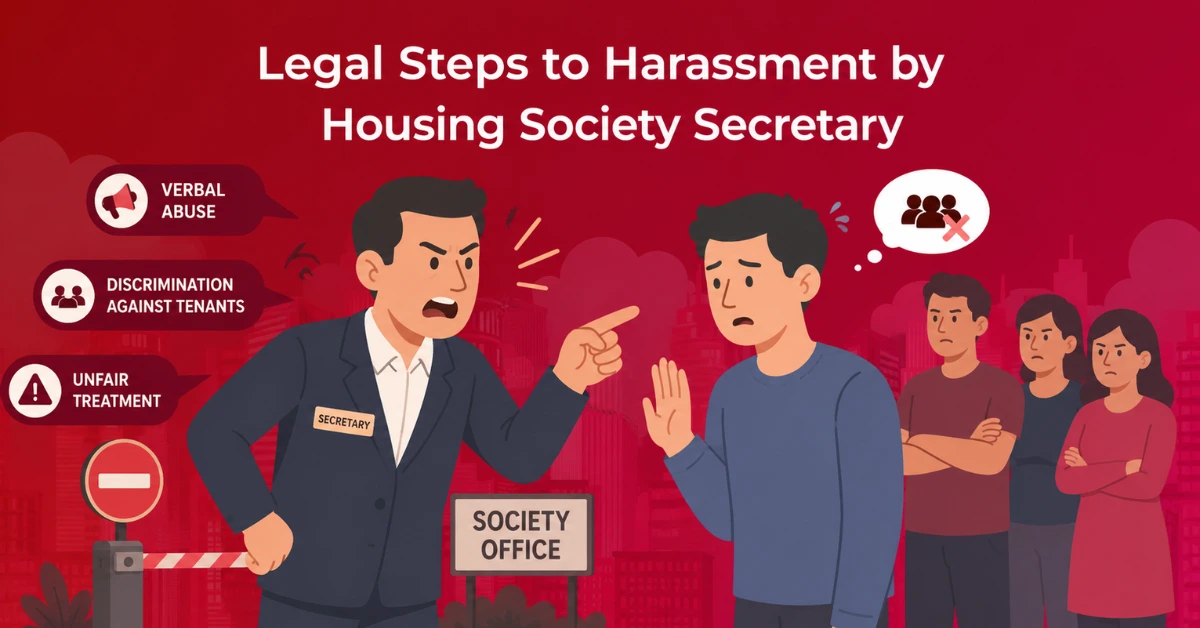


People often choose to live in a housing society for a safe and secure environment, but many face stress because of harassment by the housing society secretary or committee members. Problems may include illegal fines, denial of services, blocked visitors, misuse of authority, and a few even reach the extent of verbal abuse. In India, residents have legal rights against such behaviour. This guide explains what counts as harassment, how to collect evidence, when to file complaints, and the legal steps you can take to protect yourself and your family.

What Is Considered Harassment by a Housing Society Secretary?
Harassment by the housing society secretary happens when a committee member misuses authority to trouble residents unfairly. In many Indian housing societies, the secretary is responsible for administrative work and communication. But some office bearers go beyond their role and start targeting residents personally.
The harassment can be emotional, financial, verbal, or operational. It may involve threatening language, selective rule enforcement, unnecessary penalties, denial of society documents, or creating obstacles for tenants and visitors.
Many residents ignore these actions because they fear conflict with the managing committee. But repeated intimidation or misuse of power is not a normal part of society management. Indian cooperative housing laws and apartment ownership laws provide legal remedies against harassment by housing society secretary and committee misconduct. A society secretary cannot act above the law or violate residents’ fundamental rights. Every resident has the right to fair treatment and access to essential services.
Common Types of Harassment by Housing Society Secretaries
Harassment by housing society secretary may take many forms. Sometimes actions appear harmless at first but become quite severe upon repetition.
Illegal Charges and Penalties
Some societies charge arbitrary fees which have no justification either in bylaws or resolutions passed at general body meetings. Residents may be pressured to pay unfair charges for pets, guests, parking, renovation, etc.
Verbal and Mental Threats
Any aggressive verbal interaction, such as abuse or insults, during phone calls or WhatsApp messages, as well as public humiliation during meetings or threats by committee members, can constitute mental harassment.
Visitors or Maid Restriction
Security guards in some societies restrict the entry of tenants, delivery service providers, guests or maids unnecessarily, putting an undue burden on the resident.
NOCs or Official Paper Denial
Sometimes, housing society secretaries deny issuance of NOCs, maintenance receipts, or transfer approvals in order to put pressure on people and resolve personal disputes.
Restrict Utility and Maintenance Services
In some rare cases, residents face illegal water supply cuts, denied parking access, blocked clubhouse usage, or restricted entry to common areas.
Targeted Harassment of Tenants
Generally, tenants receive discriminatory treatment in societies. Some committees create unofficial rules that are not supported by state cooperative laws.
Repeated misuse of authority like this may qualify as harassment by housing society secretary and can be challenged legally.
Read also: Cooperative Housing Society Disputes
Rights of Residents Against Housing Society Secretary Harassment
Residents in India have legal protection under state cooperative housing laws, apartment ownership laws, consumer protection provisions, and general civil rights.
If you are facing harassment by the housing society secretary, you have the right to:
- Receive equal treatment within society
- Access common facilities without discrimination
- Question illegal charges or penalties
- Request society's financial records where applicable
- File written complaints against committee members
- Approach the Registrar of Cooperative Societies
- Seek police help in cases of threats or intimidation
A housing society cannot forcefully evict an owner or tenant without legal procedure. Similarly, committee members cannot misuse their position to settle personal disputes. Mental harassment, repeated intimidation, and public humiliation can also lead to taking legal action if supported by evidence. Many residents hesitate to complain because they fear social pressure inside the community. However, cooperative housing laws are designed to protect both residents and fair governance practices.
Read also: Apartment Resident Rights
What Evidence Should You Collect Against Society Harassment?
Before taking legal action, collect proper evidence. Strong documentation improves your case significantly.
Keep Written Records
Save:
- Emails
- Notices
- Maintenance bills
- WhatsApp chats
- SMS conversations
Maintain an Incident Log
Write down:
- Date and time
- What happened
- Names of witnesses
- Details of conversations
Preserve Financial Records
Keep copies of:
- Maintenance payment receipts
- Bank transfers
- Penalty notices
- Society invoices
Record Rule Violations
If society's rules are applied unfairly only against you, document similar cases where others were treated differently.
Save Audio or Video Proof carefully
If threats or abuse occur publicly, lawful recordings will add support to your complaint.
In cases of harassment by housing society secretary, evidence matters more than verbal allegations. A proper paper trail strengthens complaints before registrars, police, or courts.
How to File a Complaint Against a Society Secretary
Residents often feel confused about where to start. The best approach is to escalate step by step.
Step 1: Submit a Written Complaint to the Managing Committee
Start by filing a formal written complaint to the managing committee.
Mention:
- Exact incidents
- Dates
- Supporting evidence
- Rules or bylaws violated
Request a written acknowledgement and ask for action within 15 days.
Step 2: Send a Legal Notice
If the committee ignores your complaint, consult a property or cooperative housing lawyer.
A legal notice should:
- Describe the harassment clearly
- Mention illegal actions
- Demand immediate correction
- Provide a response deadline
Legal notices often help resolve disputes before court involvement.
Step 3: Approach the Registrar of Cooperative Societies
If internal resolution fails, escalate the matter to the Deputy Registrar or Registrar of Cooperative Societies in your district.
Your complaint should include:
- Society details
- Copies of evidence
- Complaint history
- Legal notice copy
You may request:
- Inquiry against the committee
- Audit investigation
- Administrative supervision
- Action against the secretary
Step 4: File RTI Applications if Needed
If authorities delay action, RTI applications can help track complaint progress and official responses.
Step 5: Involve the Police for Criminal Intimidation
If harassment by housing society secretary includes threats, extortion, stalking, abusive language, or physical intimidation, approach the local police station.
Depending on the situation:
- FIR may be registered
- Non-Cognizable complaint may be issued
- Police warnings may be given
Keep copies of all police acknowledgements for future legal proceedings.
Read also: Sample Complaint Letter Format to Registrar of Societies
Legal Action Against a Housing Society Secretary in India
Several legal remedies are available for harassment by housing society secretary, depending on the seriousness of the issue.
Cooperative Court Action
Disputes involving society functioning, committee powers, elections, or bylaw violations can be taken to Cooperative Courts under state cooperative laws.
You may seek:
- Injunction orders
- Cancellation of illegal resolutions
- Relief against committee misuse
- Restoration of services
Consumer Court Complaints
If society's actions amount to a deficiency in service, residents can approach the Consumer Commissions.
Examples include:
- Denial of amenities
- Refusal of maintenance services
- Unfair charges
- Mental harassment
Compensation may also be claimed in certain situations.
Civil Court Remedies
Residents can file civil suits when property access or peaceful living rights are affected.
Courts may intervene in cases involving:
- Illegal obstruction
- Water or electricity disconnection
- Parking disputes
- Entry restrictions
Police Complaints Under Indian Laws
Serious harassment involving threats or abusive behaviour may attract criminal liability under relevant provisions of the Bharatiya Nyaya Sanhita (BNS).
Removal of Committee Members
Residents can collectively challenge problematic committee members through:
- Special General Body Meetings
- No-confidence motions
- Election procedures
- Registrar intervention
Harassment by housing society secretary should never be accepted as normal society politics. Legal systems exist to protect residents from misuse of authority.
Tips to Prevent Housing Society Disputes
- Attend society meetings regularly
- Keep maintenance payments updated
- Request written communication instead of verbal discussions
- Read society bylaws carefully
- Avoid arguments in resident WhatsApp groups
- Escalate issues formally and calmly
- Encourage transparent committee practices
- Support proper record keeping and digital management systems
Small misunderstandings can become major disputes when communication breaks down. Early documentation and respectful escalation help prevent bigger conflicts.
Create Better Communication Records with NoBrokerHood
Many housing society disputes become difficult to resolve because conversations happen verbally or through scattered WhatsApp messages. During cases of harassment by housing society secretary, residents often struggle to maintain proper records of complaints, notices, or responses.
NoBrokerHood is a society management app that helps to organise this process through its centralised complaint and communication system. Residents can raise concerns digitally, while committees can respond through a structured platform that keeps records organised and traceable.
How this helps residents and committees:
- Complaints remain properly documented with timestamps
- Residents can track responses and updates clearly
- Committees can avoid communication gaps and misunderstandings
- Important notices and announcements stay centrally accessible
When communication is recorded and transparent, it becomes easier for both residents and management committees to handle issues more responsibly and reduce unnecessary conflicts within the community.
All Solutions by NoBrokerHood:
