







Waste management is one of the biggest problems in India’s urban areas. According to The Energy and Resources Institute (TERI), the country currently generates 62 million tons of waste annually, of which only 43 tons are collected each year. This makes waste disposal and management a massive headache for not only local governments but also for neighbourhoods, apartment complexes and societies. To avoid huge dumping of waste and maintain a clean environment, residents and societies must be aware of essential apartment waste management techniques and tips. Here, we have provided a detailed guide on waste management for apartments.

What is Apartment Waste Management?
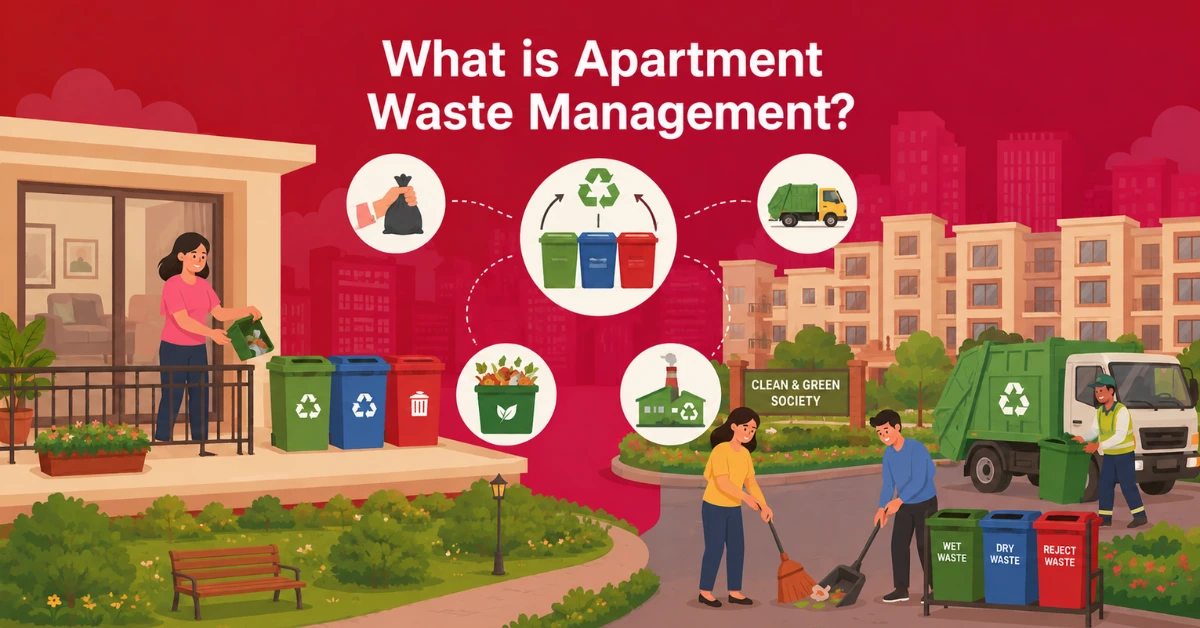
Apartment waste management refers to the systematic process of collecting, segregating, treating, and disposing of the waste generated by residents living in smart apartments or gated societies. It includes practices like:
- Garbage segregation at source (dry, wet, and hazardous waste)
- Composting of organic (wet) waste
- Recycling of dry waste like plastic, paper, and metal
- Safe apartment waste disposal of non-recyclables and hazardous items
- Organised garbage disposal for apartments through authorised collection systems
Waste Segregation Meaning
Waste segregation meaning simply refers to separating different types of waste at the source so they can be disposed of, recycled, or treated correctly. It is one of the most important steps in effective waste management in apartment buildings because mixed waste becomes difficult to recycle and process sustainably.
Why Is Apartment Waste Management Necessary?
Although millions of tonnes of waste are generated by Indian cities, there aren’t enough apartment waste disposal and management facilities. As the country’s population grows and more people move into cities from rural areas, the problem is likely to be aggravated. The growing amount of waste generated will be too much for conventional methods like landfills to cope with.
While growing waste generation is a grave concern for local, state and national governments, it is also a concern for individual citizens. Besides supporting improved environmental legislation, individuals and housing societies need to adopt sustainable waste management in apartment buildings to keep their neighbourhoods clean, reduce groundwater pollution, and prevent outbreaks of diseases.
Proper waste segregation and cleanliness in apartment common areas are also critical, as these shared spaces can quickly become hotspots for unhygienic conditions if not well-maintained. Efficient apartment garbage pickup schedules and organised disposal systems further help societies maintain cleanliness and hygiene standards.
Benefits of Apartment Waste Management
Here are some benefits of employing a proper individual and societal-level waste management in apartment buildings:
Contributes to a Greener Environment
Setting up waste management facilities in apartments reduces pollution and contributes to a greener environment. This creates a healthy environment and a cleaner neighbourhood.
Improves Quality of Living
Many Indian cities are experiencing high levels of air and noise pollution and groundwater contamination, deteriorating the quality of life among residents. Waste management improves the situation greatly for residents.
Increases Property Value
Apartment complexes and housing societies with local waste management facilities are considered more attractive to buyers. As a result, residents have a financial incentive to keep their neighbourhoods clean.
Encourages Responsible Garbage Disposal
A structured apartment garbage disposal process encourages residents to follow responsible disposal habits, minimise littering, and support recycling initiatives within the community.
Read Also: Waste Management in Indian Residential Societies
How to Set up a System for Apartment Waste Management?
Follow the steps below to set up a facility for waste management in apartment buildings:
Step 1: Waste Segregation at Source
The first step is to segregate waste produced by families into biodegradable, non-biodegradable and hazardous categories for easier disposal. In India, regulations like the Solid Waste Management Rules 2016 require waste generators to sort their garbage into colour-coded bins. Solid waste management in apartment buildings must install a centralised collection system on each block/floor to collect, segregate and transport waste materials.
Step 2: Composting Organic Waste
Organic waste is easy to dispose of as it can be composted. After segregating waste, the apartment waste management staff will deposit the organic garbage into pits and cover it with soil and biodegradable material like leaves and dried plants. The compositing pit needs to be watered in dry climates. This converts the waste into nutrient-rich compost, excellent for gardens and yards.
This process is especially important for wet waste management in apartments, as food scraps and kitchen waste form a large percentage of household garbage generated daily.
Read also: Advantages and Disadvantages of Composting
Step 3: Treatment and Recycling
Bulk waste generators like large apartment complexes are mandated to dispose of all non-biodegradable and hazardous waste. They are also allowed to treat various forms of garbage on-site using low-cost traditional incinerators, electric or high-temperature incinerators. Anything that cannot be treated, including construction waste, must be handed over to authorised agencies for disposal and recycling.
Step 4: Waste Transportation
Apartment complexes need to train or hire maintenance and staff to safely transport solid and sanitary waste. They need to engage with waste pickers and sorters employed by the local authorities and ensure that safety and hygiene protocols are followed. Many municipalities also require the timely payment of cess and user fees. Regular apartment garbage pickup services also play a major role in preventing waste accumulation and maintaining sanitation inside residential communities.
A built-in apartment waste management and staff management system like NoBrokerHood makes the whole process much easier.
Step 5: Resident Awareness and Training
For effective waste management in apartment buildings, residents must learn how to properly dispose of their daily waste. They must segregate garbage in the correct bins, wrap sanitary waste and materials like broken glass and syringes, and strictly avoid littering. To accomplish these goals, housing societies should hold regular workshops and knowledge-sharing events.
Types of Household Waste for Segregation
These are the different categories of waste materials that must be disposed of separately:
| Main Waste Type | Subcategories / Examples |
|---|---|
| Biodegradable Waste | Wet Waste: Rotten food, vegetable peels, coconut shells, eggshells, tea bags, etc. |
| Dry Waste: Newspaper, paper, wood, books, packaging. | |
| Non-biodegradable Waste | Plastic: Bags, pouches, food packets, soda bottles. |
| Glass: Bottles, broken glass, mirrors, plates. | |
| Metals: Foils, pipes, utensils. | |
| E-waste: Batteries, wires, bulbs, gadgets. | |
| Hazardous Waste | Sanitary Waste: Napkins, tampons, diapers. |
| Biomedical Waste: Contaminated cotton, dressings, syringes. | |
| Toxic/Reactive Chemicals: Bleach, petrol, kerosene, acids. | |
| Inert Waste | Sand, soil, rubble, stone chips (non-reactive and non-degradable) |
Each of these categories of waste materials must be segregated into separate bins before disposal.
Apartment Waste Management Rules and Regulations
The Solid Waste Management (SWM) Rules were formulated by the Ministry of Environment in 2016 to address the problem of unorganised and poor waste collection in India. These rules set the official waste categorisation and the provisions of waste collection and disposal.
According to the SWM Rules, apartment complexes are mandated to segregate waste into dry, wet and toxic sources while collecting from residents. Furthermore, bulk waste producers, which are entities generating more than 100 kg of daily waste, are mandated to carry out in-site composting for all biodegradable materials. The rules also laid out the disposal process for construction, demolition and large events and established spot fines for violations.
The Bio-Medical Waste Management Rules 2016 apply to the disposal of biomedical waste, such as blood, body fluids, contaminated items, dressings, cotton and bedding. These items must be sterilised before disposal. For wet waste management in apartments, the Liquid Waste Management Rules 2024 set the provisions for treatment, recycling and reuse of wastewater before disposal.
Key Apartment Waste Management Responsibilities
The following are some of the important apartment waste management responsibilities for housing societies, apartment associations and residents:
For Apartment Associations and Housing Societies
- Providing gloves and safety equipment to maintenance staff
- Paying user fees on behalf of residents
- Creating a centralised garbage collection system
- Having separate storage for different waste categories
- Installing facilities for traditional composting or a composting machine
- Creating awareness among maintenance staff and residents
- Coordinating regular apartment garbage pickup with municipal authorities
For Individuals and Families
- Maintaining separate bins for dry, wet, and hazardous waste
- Wrapping sanitary waste in newspaper or regular paper
- Avoid throwing, burning or burying solid waste on their own
- Putting broken glass, blades and needles in a transparent container
- Minimising daily waste generation
- Using more eco-friendly products
- Follow the recommended apartment garbage disposal methods.
Manage Waste Collection with NoBrokerHood
In many apartment communities, waste management problems begin with poor coordination. Missed apartment garbage pickups, unclear collection timings, and improper segregation often lead to overflowing bins and unhygienic common areas.
NoBrokerHood is a society management app that helps to simplify this through its community communication and staff coordination system. Apartment associations can share waste collection schedules, segregation instructions, and maintenance updates with all residents in one place.
How this helps apartment waste management:
- Residents receive clear updates on apartment garbage pickup timings
- Societies can share waste segregation guidelines easily
- Maintenance teams can coordinate collection activities better
- Complaints related to waste accumulation can be tracked quickly
NoBrokerHood helps apartment communities maintain cleaner common areas through better communication and organised day-to-day management.
All Solutions by NoBrokerHood:
