






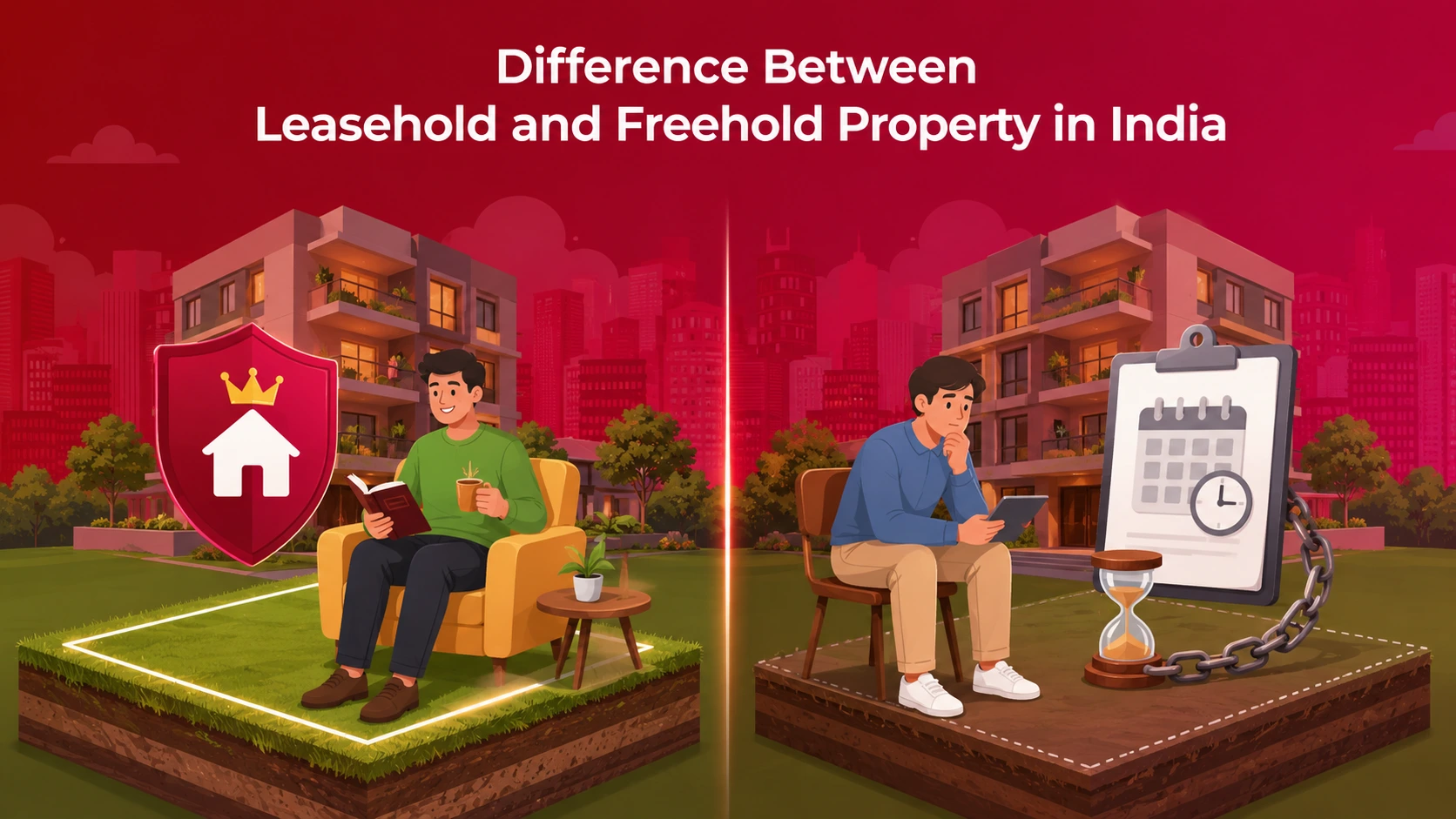


Understanding the difference between leasehold and freehold property in India is important for anyone buying or owning a flat in a housing society. While both offer the right to occupy and use a home, they differ in land ownership, tenure, resale, financing, and additional charges. These differences can directly affect your property's value and the paperwork involved. This guide explains how leasehold and freehold properties work, what you should check, and how to decide which option suits your needs.

What Is Freehold Property?
A freehold flat gives you complete and permanent ownership. This includes the apartment itself and an undivided share of the land it stands on. There is no expiry date, no renewal process and no ground rent to pay.
Once the sale deed is registered in your name, you can sell, rent, mortgage, or transfer the property to your children or legal heirs without any additional approval from a third party, except for complying with your local municipal rules and your society's bylaws. Freehold also makes regular property matters simpler for a housing society, since owners can sanction repairs, sell their unit or take a loan without waiting on an external authority. Most private builder projects in cities like Chennai, Bengaluru and Pune are sold as freehold.
Read also: Society Bylaws for Flat Transfer
What Is Leasehold Property?
A leasehold flat works differently. Here, you have the right to occupy for a set number of years, but the land underneath still belongs to the original owner, often a development authority, a state housing board or a private lessor. Many DDA and MHADA allotments, along with older government housing colonies, fall under this category.
Leases are normally for 30, 60 or 99 years. Technically, this means that at the end of the lease, rights over the land revert to the landowner unless the lease is renewed or converted. Until then, residents might also need permission for some resale transactions or major structural changes, as they don’t own the underlying land.
A recent example makes this risk very real. The current dispute over the Delhi Gymkhana Club on leasehold land shows that even a long-standing lease can be upset by an unexpected rent revision or a re-entry notice from the landlord. It is a reminder that leasehold rights, no matter how old, are not always as secure as owners think.
Read also: Subletting vs Subleasing
What is the Difference Between Leasehold and Freehold Property in India
The main difference between leasehold and freehold property in India is about land ownership, the duration of the rights and what it costs to hold the property. Here’s a simple comparison of freehold and leasehold property, considering the factors that matter most to residents.
Ownership of Land
- Freehold: You own the flat and an undivided share of the land, with no time limit.
- Leasehold: You own the flat only. The land belongs to an authority or lessor, and your society holds it on lease on behalf of all residents.
Costs and Ground Rent
- Freehold: No ground rent or lease renewal charges. You pay only the regular society maintenance.
- Leasehold: May involve annual ground rent, plus a renewal or conversion fee when the lease term is nearing its end.
Resale and Home Loans
- Freehold: Easier to sell, with minimal paperwork, and banks generally approve loans without much delay.
- Leasehold: Resale can need consent from the landowner, and banks will check how many years remain on the lease before approving a loan.
Read also: Co-operative Society Home Loan
A Quick Comparison Table
| Factor | Freehold Property | Leasehold Property |
| Land ownership | Owned by resident | Owned by authority or lessor |
| Time limit | None | 30 to 99 years, or as per lease deed |
| Ground rent | Not applicable | May apply periodically |
| Structural changes | Allowed as per local laws | Often needs lessor approval |
| Loan approval | Usually straightforward | Depends on remaining lease term |
| Inheritance | Passes on freely | Subject to lease terms |
Why Does This Difference Between Leasehold and Freehold Property in Indian Housing Society Matter?
For a resident welfare association, this is not just a legal technicality. It affects how quickly maintenance decisions get approved, whether a resale can go through without delay and how comfortable new buyers feel about investing in the society.
Many residents assume that once a society is built and running, questions about land ownership belong to lawyers, not to everyday flat owners. A recent case involving a well-known Delhi club shows why that assumption can be costly. The club held a lease on its land, not ownership, and for decades its ground rent stayed almost unchanged. That rent was then revised to a figure thousands of times higher, followed by eviction notices and alleged breaches of lease terms raised by the landowner. The distinction between holding a lease and owning the land is exactly what decided the outcome.
Housing societies built on land allotted by DDA, MHADA or similar bodies sit in the same category. While the circumstances of every leasehold property are different, ground rent revisions, delayed renewals or disputes over lease terms can affect resale value, loan eligibility and a resident's peace of mind. Outstanding dues or a delayed response to an official notice can turn a routine matter into a real complication. This is precisely why understanding the difference between leasehold and freehold property in India is not just an academic exercise. It has real financial consequences for anyone living in or buying into such a society.
A few practical points worth keeping in mind:
- Check your flat's title documents at the time of purchase itself, not after you move in.
- If your society sits on leasehold land, keep a copy of the lease deed and its expiry date on record with the managing committee.
- Track any correspondence from the landowner closely. Notices about rent revision or lease renewal can arrive with short deadlines, and a delayed response can create complications later.
- For any structural addition or major renovation, confirm whether society bylaws or the lease deed require prior approval.
- For residents buying a leasehold flat, check the remaining lease period, ground rent obligations and any pending notices or disputes before completing the purchase.
Keeping these details in order helps avoid unexpected issues with resale, financing, renewal or conversion, especially in older housing societies built on leasehold land decades ago.
How to Buy the Freehold of a Leasehold House?
Many residents living in leasehold housing societies eventually explore conversion to freehold, since it removes ground rent and makes future resale simpler. Here is a practical outline of how to buy the freehold of a leasehold house in an Indian housing society.
- Check eligibility: Confirm with the landowner, such as your state housing board or development authority, whether your category of property is allowed to convert to freehold.
- Get a No Objection Certificate: Request an NOC from your society's managing committee, along with any clearance documents it holds on file.
- Gather your documents: This typically includes the original lease deed, identity proof, property tax receipts and any past correspondence with the lessor.
- Submit the conversion application: File this with the appropriate authority, along with the documents above.
- Pay the conversion charges: The authority calculates this based on property size and prevailing circle rates.
- Register the Conveyance Deed: Once the authority approves the conversion, sign and register the deed at the local sub-registrar office. This is the step that legally makes your property freehold.
The process can take a few months depending on how responsive the authority is, so it helps to start early rather than waiting until a resale or loan application makes it urgent.
Read also: What is Conveyance Deed in a Society
Freehold Property and Leasehold Property: Which One Should You Pick?
Choosing between freehold Property and leasehold property depends on your budget, how long you plan to stay, and how much paperwork you are willing to handle.
- Choose freehold if you want a simple, permanent title, easier bank loans, and a smoother resale process later.
- Choose leasehold if the location works well for you and the lower entry price outweighs the extra approvals and ground rent.
- Check the remaining lease years carefully before buying a leasehold flat, since anything under 30 years can limit your loan options.
- Ask for the lease deed copy during due diligence, not just the sale agreement, so there are no surprises after registration.
- Factor in ground rent as a recurring cost when comparing the true price of a leasehold flat against a freehold one.
Smoother Society Management with NoBrokerHood
Managing a housing society involves much more than handling maintenance and meetings. Committees also need to keep residents informed, manage complaints, maintain records, and coordinate everyday activities. NoBrokerHood brings these routine tasks together through a single platform, helping committees manage them in a more organised way.
Some of the features that can support day-to-day society management include:
- Communication & Notices: Share announcements, meeting updates, reminders, and important alerts with residents.
- Complaint Management: Residents can raise concerns digitally while committees can track and manage them systematically.
- Billing & Maintenance: Manage maintenance bills, payment records, reminders, and outstanding dues.
- Document Management: Store important society documents and make relevant information easier for authorised members to access.
- Visitor Management: Manage visitor entries and keep a digital record of guests entering the premises.
- Facility Booking: Allow residents to book available society amenities while helping committees manage usage.
With these functions handled digitally, committees can spend less time managing scattered requests and more time addressing the actual needs of the community. This can be particularly useful in larger societies where everyday coordination becomes difficult to manage manually.
