Illegal Encroachment in Housing Society: Rights and Rules
Residents living in housing societies often face problems like blocked staircases, illegal parking extensions, terrace occupation, or unauthorised construction in shared areas. These issues not only create disputes among neighbours but can also become safety and legal concerns. Indian housing laws and society bylaws provide clear ways to report, resolve, and prevent illegal encroachment in housing society. This guide explains what counts as encroachment, what residents can legally do, how housing societies should respond, and how organised community management can help reduce conflicts.
What Is Illegal Encroachment in Housing Society?
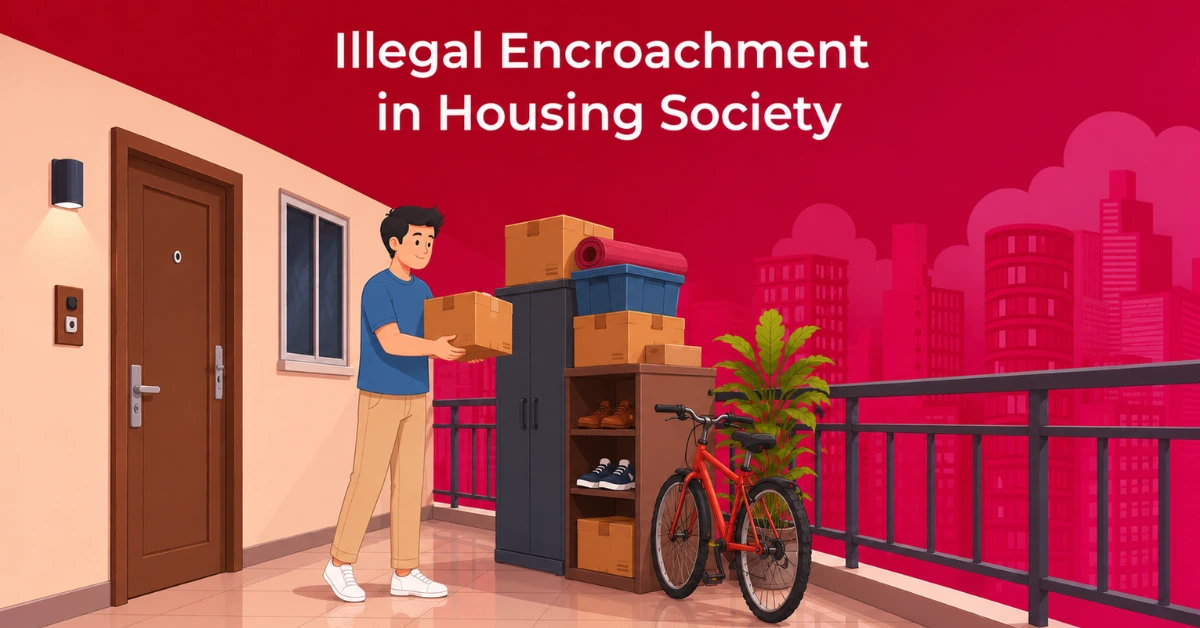
Illegal encroachment in housing society premises happens when a member uses or modifies a space which is legally owned by all members of the society. These areas may be corridors, terraces, parking areas, stairs, lobbies, gardens, fire exits or utility spaces. In many Indian apartments, encroachments start small. For example, a resident may use the corridors for personal storage, install grills outside approved boundaries, or increase parking areas. These changes, over time, lead to inconveniences, safety hazards and legal disputes.
Under cooperative housing society bylaws and apartment ownership laws, common spaces are shared property. No individual resident has the right to permanently occupy or alter these spaces without approval from the association and civic authorities. Illegal encroachment in housing society areas can also reduce property value, create tension among neighbours, and lead to penalties from municipal authorities.
Indian Laws for Common Area Encroachment in Housing Societies
Common area encroachment refers to unauthorized occupation or modification of spaces meant for collective use. Indian housing laws clearly state that these areas belong equally to all apartment owners.
Some important legal frameworks include:
- Cooperative Housing Society Bylaws
- Apartment Ownership Acts in different states
- Municipal Corporation Building Rules
- Fire and Safety Regulations
- Real Estate Regulatory Authority (RERA) guidelines
For example, blocking staircases or fire exits with personal belongings can become a serious fire safety violation. Similarly, unauthorized terrace rooms, parking sheds, or wall extensions may violate municipal construction rules.
Most housing societies in India also follow model bylaws that allow the Managing Committee to:
- Issue show-cause notices
- Impose fines
- Remove illegal structures
- Escalate matters to civic authorities
Illegal encroachment in housing society common areas is not just a neighbour dispute. It is also a violation of collective ownership rights. Residents should also remember that verbal approvals from previous committee members do not override legal building permissions or approved society records.
Read also: Adverse Possession Law in India
Common Types of Illegal Encroachment in Housing Societies
Many residents are unsure about what legally counts as encroachment. Here are some common examples seen across Indian apartment complexes:
Unauthorized Construction
- Terrace rooms
- Balcony extensions
- Extra walls or sheds
- Permanent storage units in common spaces
Encroachment of Shared Areas
- Blocking corridors with furniture
- Occupying visitor parking
- Converting stilt areas into personal storage
- Using society gardens for private purposes
Parking-Related Violations
- Claiming extra parking without approval
- Expanding parking boundaries
- Installing unauthorized barriers
Utility Area Occupation
- Taking over the electrical rooms
- Occupying pump rooms or maintenance spaces
- Restricting access to water pipelines or meters
Illegal encroachment in housing society premises often starts as a convenience issue but can later become a major legal conflict.
Read also: Illegal Parking in Apartment Complex
Rights of Owners Against Illegal Encroachments
Every apartment owner has the right to peaceful and equal use of common facilities. If illegal encroachment in housing society areas affects access, safety, or property value, residents can formally object.
Residents have the right to:
- File written complaints with the Managing Committee
- Request inspection and documentation
- Seek copies of approved building plans
- Demand action under society bylaws
- Escalate complaints to municipal authorities
- Approach the Registrar of Cooperative Societies
- Seek legal remedies through courts
In case of encroachments that block the emergency exits or pose any structural danger, the residents can also approach the local municipal corporation or the fire department directly. The Indian courts have repeatedly held that no individual resident can permanently take over the common areas without permission. In cases of severe illegal residential occupation or repeated violations, courts may issue injunctions, demolition orders or compensation directions.
Illegal encroachment in housing society properties can be a problem for the whole community. That’s why it’s important for residents to get on top of these things early, and not wait for conflicts to grow bigger.
Read also: Apartment Resident Rights
How Residents Can Report Encroachment?
Residents often hesitate to report unauthorised construction because they want to avoid conflict with neighbours. However, following a proper process helps keep the matter professional and legally documented.
Step 1: Collect Evidence
Take clear photographs or videos of:
- The encroached area
- Structural changes
- Blocked access points
- Safety hazards
Keep records of dates and flat numbers.
Step 2: Submit a Written Complaint
Write to the Managing Committee with:
- Details of the encroachment
- Supporting photos
- Request for official inspection
- Request for written acknowledgement
Always keep copies of the complaint.
Step 3: Request Action Under Society Bylaws
The Managing Committee should:
- Inspect the site
- Verify approvals
- Issue a show-cause notice
- Provide a timeline for removal
Many societies also impose penalties for continued violations.
Step 4: Escalate to Civic Authorities
If illegal construction continues:
- Contact the municipal corporation
- Report fire safety violations
- Request a building inspection
Municipal authorities can issue stop-work or demolition notices for unauthorised structures.
Step 5: Approach the Registrar or Court
If the society refuses to act, residents can approach:
- Deputy Registrar of Cooperative Societies
- Consumer Court
- Civil Court
Courts may grant injunctions against illegal encroachment in housing society premises and direct authorities to restore common spaces.
What Owners Should Know About Illegal Occupation of Residential Property?
Illegal occupation of residential property does not only happen in vacant land disputes. It can also occur inside apartment complexes when shared spaces are gradually taken over without consent.
This may include:
- Locking shared terraces
- Occupying common passages
- Using shared utility areas privately
- Restricting resident access
These actions can affect:
- Resident safety
- Property resale value
- Emergency movement
- Community relationships
In many Indian cities, civic authorities have increased scrutiny of unauthorized structures because of fire safety and urban planning concerns. Residents should avoid informal settlements or verbal compromises without written approvals. Even if a structure has existed for years, it may still violate approved plans. Illegal encroachment in housing society properties should always be documented properly before escalation. Clear records strengthen the case if authorities or courts become involved.
What Happens if the Housing Society Ignores the Complaint?
Sometimes, housing societies avoid taking action to prevent internal conflict. However, ignoring complaints can create legal liability for the association itself.
If the Managing Committee remains inactive:
- Residents can escalate the matter to the Registrar
- Civic authorities may directly inspect the property
- Courts may question the committee’s negligence
- Safety violations can attract municipal penalties
Housing societies are expected to protect common property and enforce bylaws fairly for all residents. In some cases, courts have also held associations responsible for failing to act against illegal encroachment in housing society premises despite repeated complaints. Residents should maintain written records of all communication, notices, and responses throughout the process.
Tips to Prevent Illegal Encroachment in Housing Society Premises
Clearly Define Common Areas
Display approved layout plans in common areas and society offices.
Conduct Regular Inspections
Periodic checks help identify violations early.
Maintain Digital Complaint Records
Written and digital documentation improves accountability.
Create Awareness Among Residents
Share bylaws during resident meetings and onboarding.
Enforce Rules Consistently
Societies should avoid selective enforcement.
Review Parking Allocations Properly
Transparent parking policies reduce disputes.
Encourage Resident Participation
Community discussions often resolve smaller issues before escalation.
Preventing illegal encroachment in housing society areas becomes easier when societies maintain transparency, communication, and consistent rule enforcement.
How NoBrokerHood Helps Societies Handle Complaints More Transparently?
Many disputes related to illegal encroachment in housing society premises become more difficult when complaints are handled informally. Verbal discussions, missing records or delayed responses can often lead to confusion between the residents and managing committees.
NoBrokerHood’s digital complaint and communication system helps ease this process. Through a structured platform, residents can register complaints against illegal construction, obstruction in common areas or wrong parking instead of just depending on calls or WhatsApp messages.
How does this help housing societies to settle disputes better?
- Complaints are correctly logged with timeframes
- Clear visibility of issues, pending and resolved for managing committees
- Complaint status visibility improved for residents
- Key notices and rule changes are shared centrally with all residents
This adds transparency to the process of handling common area disputes and helps apartment communities resolve minor issues before they become major legal disputes.
All Solutions by NoBrokerHood:
FAQs
Encroachment of a common area is occupation or changes of common areas such as corridors, terraces, staircases, parking areas or gardens by a resident without the permission of the society or civic authorities.
Depending on the seriousness of the issue, residents can file complaints with the Managing Committee, municipal corporation, Registrar of Cooperative Societies, Consumer Court or Civil Court.
The association or the Managing Committee shall inspect complaints, issue notices, enforce bylaws and protect common property for the benefit of all the residents.
Indian courts also generally support restoration of common areas, removal of unauthorised structures and protection of rights of residents in cases of encroachments that violate bylaws or approved plans.
Yes. Many cooperative housing bylaws provide for fines, penalty charges, or additional maintenance charges to be levied against societies for continued illegal occupation of common areas.