Housing Society Rules and Regulations in India
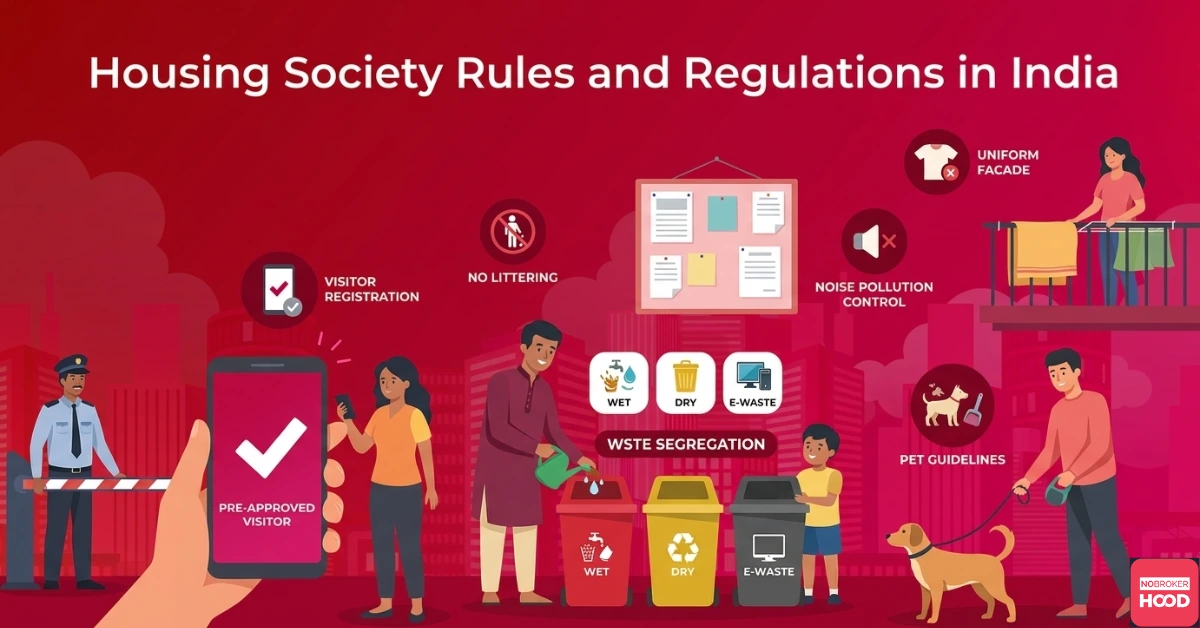
Late-night noise, parking fights, unpaid maintenance charges, garbage issues, and renovation disputes are some of the most common problems in housing societies today. Without clear rules, even small misunderstandings can create tension between residents and management committees. Housing society rules and regulations help to maintain safety, cleanliness, fairness, and peaceful living in residential communities. These rules also explain the responsibilities of residents, tenants, and society committees. This guide covers co op housing society rules followed in India, member rights, committee responsibilities, tenant guidelines, and how communities manage everyday issues smoothly.
What Are Housing Society Rules and Regulations?
Housing society rules and regulations are the guidelines followed by residential communities to manage everyday living smoothly. These rules are usually created using model bylaws under state-specific cooperative society laws in India. They help societies maintain discipline, safety, hygiene, financial transparency, and peaceful community living.
Most housing society rules cover maintenance payments, parking allocation, waste disposal, use of common areas, visitor management, pet policies, and renovation approvals. In many apartment communities, these rules are managed by an elected committee that handles day-to-day operations and resident concerns.
Co operative housing society rules and regulations are legally registered bylaws in many states. These bylaws define member rights, voting rights, dispute handling procedures, and responsibilities of the managing committee. Since rules can slightly differ from one state to another, residents should always refer to their own society’s registered bylaws.
Read also: Bye laws of Cooperative Housing Society
Why Housing Society Rules and Regulations Matter?
Living in a shared community means multiple families use the same spaces, facilities, and services every day. Without proper housing society rules and regulations, common issues can quickly become major conflicts.
Clear rules help societies:
- Maintain cleanliness and hygiene
- Reduce disputes between residents
- Ensure fair use of common facilities
- Improve safety and security
- Manage finances properly
- Prevent unauthorized construction work
- Maintain peaceful living conditions
Housing society rules also protect the interests of residents. For example, parking guidelines prevent misuse of common areas, while waste management rules help to keep the premises clean and healthy. Housing society rules and regulations for residents become especially important because hundreds of people may share the same lifts, gardens, clubhouses, gyms, and parking spaces daily.
Common Housing Society Rules Every Resident Should Know
Every society may have slightly different bylaws, but certain housing society rules are commonly followed across India.
Maintenance and Monthly Charges
Timely payment of maintenance charges is mandatory in most societies. These funds are used for security salaries, housekeeping, lift maintenance, electricity for common areas, repairs, and water management. Under many co operative society rules and regulations, repeated non-payment may lead to penalties, interest charges, or legal recovery notices.
Parking Rules in Residential Societies
Parking disputes are one of the most common apartment conflicts today. Most private housing society rules clearly define parking allocation, visitor parking, and restrictions on using common spaces.
Residents are usually expected to:
- Park only in the allotted areas
- Avoid blocking pathways or emergency exits
- Follow visitor parking guidelines
- Register additional vehicles when required
Some societies also limit commercial vehicle parking inside residential premises.
Waste Management and Cleanliness
Proper garbage segregation and cleanliness are now part of standard housing society rules and regulations for residents in many Indian cities.
Common rules include:
- Separating wet and dry waste
- Avoiding garbage disposal from balconies
- Using designated collection points
- Following garbage collection timings
Societies that actively manage waste disposal often experience fewer hygiene complaints and pest-related issues.
Noise, Privacy, and Community Behaviour
Community living requires residents to respect each other’s privacy and comfort. Co op housing society rules usually include quiet hours to reduce disturbances late at night.
Residents are generally expected to:
- Avoid loud music during late hours
- Inform management before large gatherings
- Prevent nuisance in common areas
- Respect neighbours’ privacy
Repeated complaints regarding disturbance may result in warnings or penalties.
Read also: What Is Considered Excessive Noise in an Apartment?
Rules for Renovation and Structural Changes
Many co operative housing society rules and regulations require residents to obtain written approval before carrying out structural work inside flats.
This is done to avoid:
- Damage to the building structure
- Excessive noise during restricted hours
- Plumbing or electrical risks
- Safety hazards for neighbours
Some societies also require contractors and workers to register at the security office before entering the premises.
Read also: Housing Society Bylaws for Internal Repairs
Rules for Tenants in Housing Societies
Tenants must also follow co op housing society rules and regulations for residents. Most societies require owners to submit tenant information before move-in.
Typical tenant procedures include:
- Submission of the rental agreement copy
- Police verification documents
- ID proof submission
- Vehicle registration details
- Emergency contact information
Tenants are generally expected to follow the same community rules as owners. This includes noise regulations, parking rules, waste disposal guidelines, and common area usage policies. Many housing society rules also require tenants to follow visitor registration procedures and security guidelines. In gated communities, digital visitor approval systems are becoming increasingly common for better security management. Some private housing society rules may also include pet guidelines, restrictions on commercial activity, or rules related to short-term rentals.
Read also: Housing Society Rules and Regulations for Tenants
What Are the Legal Responsibilities of a Society Committee?
The managing committee plays a major role in implementing co op housing society rules and regulations within residential communities.
The committee is usually responsible for:
- Maintenance charges collection, and financial management
- Conducting annual meetings
- Managing repairs and vendor services
- Handling resident complaints
- Implementing security measures
- Enforcing society’s bylaws
- Maintaining records and audits
The co op housing society rules board or managing committee is elected by members during General Body Meetings. Most societies follow a democratic voting process in which each member has voting rights as defined in the bylaws.
Committee members are also expected to maintain transparency in financial decisions and community operations. Residents often have the right to inspect records, attend meetings, and raise concerns through formal channels. In many co operative housing society rules and regulations, disputes are first handled internally before escalation to the Registrar of Cooperative Societies.
Read also: Society Management Committee Roles & Responsibilities
Can Housing Societies Make Their Own Rules?
Yes, housing societies can create their own operational rules. However, these rules must align with state laws, registered bylaws, and constitutional rights. Can housing societies make their own rules regarding parking, amenity usage, renovation timings, and visitor management? In most cases, yes. Societies often adapt model bylaws to suit their specific community needs.
However, societies cannot create discriminatory or unlawful rules. For example, rules based on religion, food habits, gender, or unfair restrictions may be challenged legally. Most co operative housing society rules and regulations require important decisions to be approved during General Body Meetings rather than being imposed only by committee members.
If residents believe a rule is unfair, they can:
- Raise objections during AGM meetings
- Submit written complaints
- Request clarification from the committee
- Escalate matters to the Registrar of Cooperative Societies
Housing society rules should always support peaceful and fair community living rather than creating unnecessary restrictions.
Rules for Formation of Housing Society in India
The rules for formation of housing society in India are governed by state cooperative society laws. While procedures may differ slightly across states, the general process remains similar.
Basic Requirements
- Minimum 10 members in many states
- Residential property documentation
- Proposed bylaws submission
- Selection of a Chief Promoter
- Registration with Registrar of Cooperative Societies
- Proof of identity and address of members
- No objection certificate (NOC) from the builder or landowner in some cases
- Details of share capital contribution by members
Common Steps for Registration
- Form a group of eligible members
- Choose a name for the society
- Open a bank account in the proposed society name
- Prepare required documents and bylaws
- Submit registration forms to the authorities
- Complete document verification
- Receive registration certificate
- Adopt final bylaws after registration
- Elect the managing committee members
- Conduct the first Annual General Meeting
- Apply for a PAN and a bank account activation after registration
The rules for formation of housing society also include financial compliance requirements, audit procedures, and election guidelines. Many co operative society rules and regulations further require societies to maintain updated records, member registers, and financial transparency after registration.
What Happens If Someone Violates Housing Society Rules?
When residents repeatedly violate housing society rules, societies may take disciplinary action based on their bylaws and state laws.
Common violations include:
- Non-payment of maintenance dues
- Illegal structural modifications
- Noise complaints
- Misuse of parking areas
- Damage to common property
- Repeated security violations
Depending on the seriousness of the issue, societies may issue:
- Verbal warnings
- Written notices
- Monetary penalties
- Temporary restrictions on facilities
- Legal notices in severe cases
However, committees must follow proper legal procedures while enforcing co operative housing society rules and regulations. Arbitrary punishments or discriminatory actions may be challenged legally.
Better Community Management with NoBrokerHood
In many apartment communities, rules are not always ignored intentionally. Problems usually happen when residents are unaware of updated policies, meeting decisions, or community guidelines.
NoBrokerHood is a society management app that helps to simplify this through its notice and communication system. Managing committees can share society rules, policy updates, maintenance reminders, and important announcements directly with residents through one organised platform.
How this helps residential communities:
- Residents can easily access important society notices and updates
- Committees can communicate rule changes and meeting decisions clearly
- Important circulars remain stored and accessible instead of getting lost
- Societies reduce confusion caused by scattered WhatsApp messages or printed notices
This creates better transparency between residents and managing committees while helping communities follow housing society rules in a more organised and informed way.
All Solutions by NoBrokerHood:
FAQs
Yes, societies can create operational rules for residents and common facilities. However, these rules must follow state cooperative laws and cannot be discriminatory or unlawful.
Residents can raise objections during General Body Meetings or submit written complaints to the committee. Serious disputes may also be escalated to the Registrar of Cooperative Societies.
Societies may issue warnings, notices, fines, or penalties depending on the violation. Repeated or serious violations can sometimes lead to legal action as per the registered bylaws.
Yes, societies can impose fines for rule violations if allowed under registered bylaws. The penalty process must be fair, transparent, and legally valid.
Housing society bylaws are usually drafted using state-issued model bylaws and approved during General Body Meetings. The managing committee enforces these rules through notices, meetings, penalties, and official complaint procedures.
Residents can first submit written complaints to the managing committee or society office. If the issue remains unresolved, they may approach the Registrar of Cooperative Societies or relevant local authorities for further action.