Garbage Segregation Guidelines for Housing Societies in India
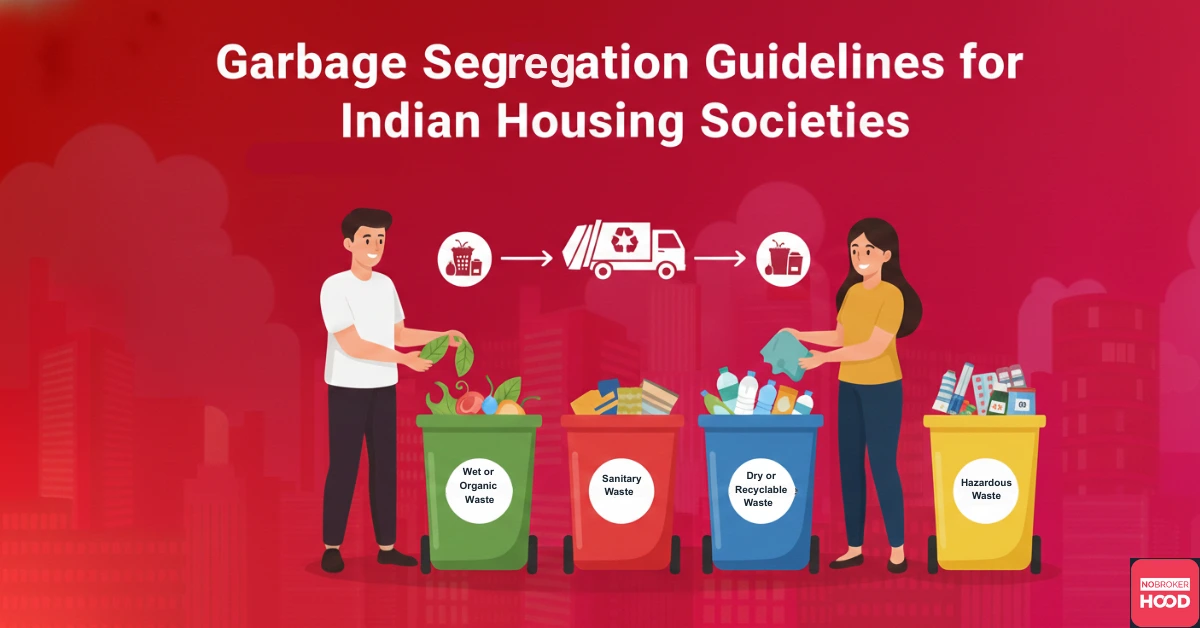
Garbage Segregation is the practice of separating waste at the source into wet, dry, sanitary, and hazardous categories. In Indian housing societies, this is not only a good practice but also a legal requirement under the Solid Waste Management Rules. When residents follow simple sorting habits, societies stay cleaner, safer, and more sustainable.
What Is Garbage Segregation and Why Does It Matters?
Garbage Segregation means separating waste where it is generated, usually at home, into different streams so each type can be treated correctly. This helps recycling, composting, and safe disposal.
When societies do proper Garbage Segregation:
- Less waste goes to landfills
- Recycling becomes easier and cleaner
- Compost can be created from kitchen waste
- Sanitation workers handle materials more safely
- Pollution risk reduces in and around the community
For gated communities and apartment complexes, source-level sorting is the foundation of any waste management plan.
Garbage Segregation Rules for Housing Societies in India
Under the Solid Waste Management Rules 2016 and updated 2026 guidelines, Garbage Segregation at source is mandatory across India. Residential societies are expected to enforce this at the flat level.
Key regulatory expectations include:
- Source-level separation by every household
- Segregation into biodegradable, dry, sanitary, and hazardous waste
- Societies above 5,000 square meters must manage wet waste on-site
- Unsegregated waste can be refused by collection staff
- Bulk waste generators must arrange for authorised recyclers and handlers
These rules apply to RWAs, apartment associations, and gated communities. Compliance is not optional, and local municipal bodies may issue penalties for repeated violations.
Waste Categories Every Housing Society Must Follow
Correct Garbage Segregation works only when residents understand the categories clearly.
Green Bins for Wet or Organic Waste
- Fruit and vegetable peels
- Leftover food
- Tea bags and coffee grounds
- Egg shells
- Garden leaves and flowers
- Soiled food paper
This waste can be composted within the society.
Blue Bins for Dry or Recyclable Waste
- Paper and cardboard
- Plastic containers
- Metal cans
- Glass bottles
- Clean packaging material
- Old clothes and wood pieces
Items should be clean and dry before disposal.
Red Bins for Sanitary Waste
- Diapers
- Sanitary napkins
- Tampons
- Used wipes
Wrap securely before disposal to protect waste handlers.
Yellow Bins for Domestic Hazardous Waste
- Batteries
- Medicines
- Paint containers
- Bulbs and tube lights
- Cleaning chemicals
- Small e-waste items
Never mix these with regular household waste.
Read also: Apartment Waste Management
Colour Coded Bin System for Easy Segregation
Most Indian cities recommend a colour-coded bin system to make Garbage Segregation simple and visual.
- Green bin for wet waste
- Blue bin for dry recyclable waste
- Red bin or bag for sanitary
- Yellow bin for hazardous waste
Societies should place labelled bins in:
- Each household
- Common garbage rooms
- Clubhouse and park areas
- Maintenance zones
Clear labels and posters near bins help residents follow the process daily.
Society Level Responsibilities and Compliance
Garbage Segregation is not only a resident task. The managing committee and RWA also have defined responsibilities.
Society’s responsibilities include:
- Enforce source level Garbage Segregation rules
- Refuse pickup of mixed waste
- Provide separate containers in common areas
- Form a waste management subcommittee
- Tie up with authorised waste collectors and recyclers
- Set up composting units for wet waste
- Maintain records of waste volumes
- Run awareness drives and training sessions
When rules are consistent and visible, participation improves.
Read also: Housing Society Waste Management
Practical Garbage Segregation Tips for Residents
Daily habits make Garbage Segregation successful. Small actions at home matter more than large plans on paper.
Simple tips residents can follow:
- Keep two or three small bins in the kitchen for each type of waste
- Do not mix food waste with dry plastic
- Rinse milk packets and food containers
- Dry plastic and metal before disposing them in the dry bin
- Wrap sanitary waste in paper
- Keep hair,nails and pet waste separate
- Store batteries and medicines in a small box and drop off weekly
- Teach children the bin colours and categories
- Start a small home compost bin if possible
Consistency is more important than perfection. Even partial sorting is better than none, but full sorting should be the goal.
Read also: Waste Management in Indian Residential Societies
Composting and On-Site Waste Handling
Large housing societies are expected to process wet waste within the premises. This is a core part of Garbage Segregation compliance.
Common composting options:
- Aerobic compost bins
- Compost drums
- Pit composting for garden waste
- Machine-based composters for large complexes
Basic steps:
- Collect only wet organic waste
- Remove plastic and foil pieces
- Add dry leaves or compost powder
- Turn or mix as per the method
- Use finished compost in society gardens
This reduces garbage transport and supports local reuse.
Awareness, Enforcement, KPIs and Tracking for Society Waste Management
Top ranking society waste programs focus on measurement and awareness, not only rules.
Important waste management KPIs for societies:
- Percentage of homes following garbage segregation
- Daily wet waste generated per block
- Compost produced per month
- Dry waste sent for recycling
- Number of awareness sessions conducted
- Complaints related to waste handling
- Rejection rate of mixed waste
Digital tracking, reminders, and training sessions improve long term compliance. Workshops and demo sessions help new residents understand bin rules quickly.
Common Mistakes That Break Garbage Segregation
Many societies struggle not because of lack of rules but because of small daily mistakes.
Common errors include:
- Mixing wet food waste with dry recyclables
- Throwing unwashed containers in dry bins
- Putting sanitary waste in wet waste
- No bin labels in common areas
- No training for housekeeping staff
- No monitoring committee
- No composting plan for wet waste
Fixing these basics improves garbage segregation results quickly.
How NoBrokerHood Supports Society Waste Management
In many apartment communities, digital tools help improve Garbage Segregation compliance and reporting. RWAs use platforms such as NoBrokerHood to coordinate daily operations and resident communication.
Through app-based notices, task tracking, vendor coordination, and resident alerts, societies can send segregation reminders, schedule waste pickups, and maintain digital records of vendors, recyclers, and housekeeping workflows. Entry controls and verified staff records also support safer waste-handling operations within gated communities.
All Solutions by NoBrokerHood:
FAQs
Garbage Segregation at source means separating wet, dry, sanitary, and hazardous waste at home before giving it for collection. This makes recycling and composting easier and safer for waste workers.
Yes. Under Solid Waste Management Rules, source-level segregation is mandatory. Societies and residents are expected to follow bin categories and sorting practices defined by local authorities.
Yes. After proper notice and awareness, societies can refuse unsegregated waste. This rule is encouraged to improve compliance and protect downstream recycling and composting systems.
At least two bins are required for daily use, wet and dry. A small separate container for sanitary and hazardous waste is also recommended for safe handling.
Mixed waste usually goes to a landfill because sorting later is difficult. This reduces recycling value and creates health risks for waste workers handling the material.