Resident Welfare Association Uttar Pradesh
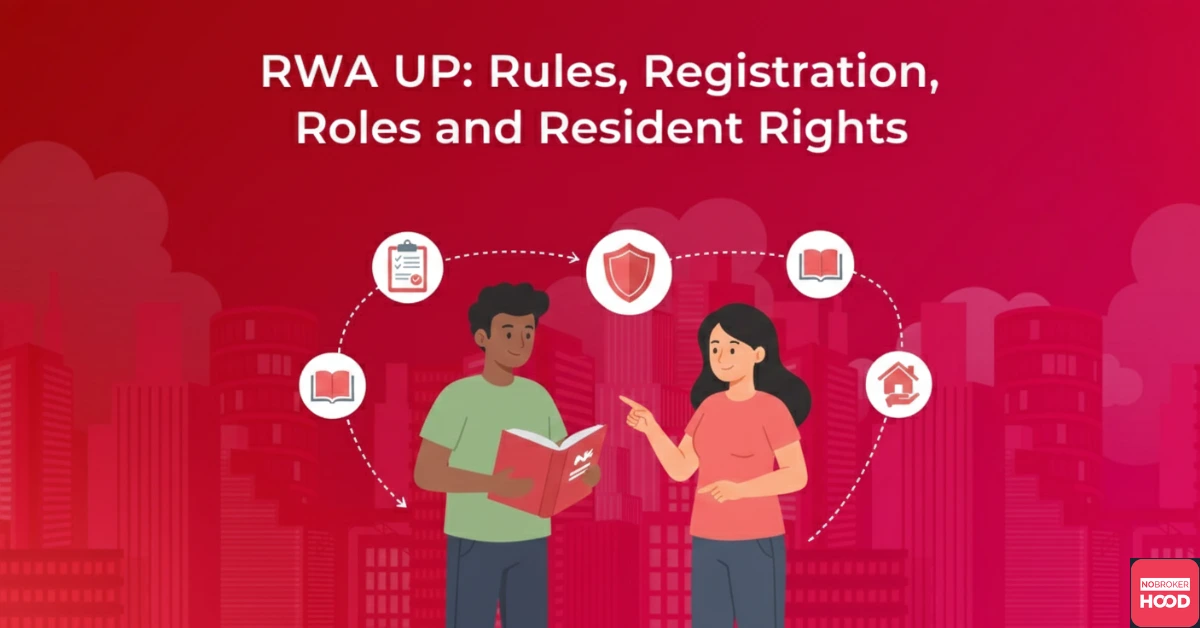
RWA UP refers to Resident Welfare Associations formed by residents in Uttar Pradesh to manage common facilities, address civic issues, and represent the community before authorities. These associations act as local self-governance bodies that help residents live in an organised, safe, and cooperative environment.
Why Resident Welfare Association UP Matters?
RWA UP stands for Resident Welfare Associations operating across cities and towns in Uttar Pradesh. These associations are formed by residents of a locality, apartment complex, or housing colony to collectively manage shared responsibilities.
In growing urban areas, civic systems often struggle to address hyperlocal issues. An active RWA UP helps bridge this gap by representing residents, coordinating maintenance, and ensuring basic services function smoothly.
What is a Resident Welfare Association UP?
A resident welfare association UP is a legally recognised body created by residents to look after the welfare of their neighbourhood. It works as a collective voice for residents on matters related to amenities, safety, cleanliness, and disputes. Such associations encourage shared responsibility and help residents take part in decisions that affect daily living.
Legal Framework for RWA UP
An RWA UP is not an informal group. It has legal standing and defined powers once registered under applicable laws. This legal recognition allows the association to open bank accounts, manage funds, and correspond with government bodies.
Acts that Govern RWAs in Uttar Pradesh
RWAs in UP are mainly governed by:
- Societies Registration Act, 1860
Requires a minimum of 7 members to form an association - UP Apartment Owners Act
Applicable to apartment complexes and group housing projects - RERA Act
Encourages the formation of resident bodies in new housing developments
These laws give RWA UP the authority to function as a legal entity that can sue and be sued.
Formation and Registration of RWA UP
Forming an RWA UP follows a structured but manageable process.
Basic steps include:
- Gathering at least 7 willing residents
- Finalising the association name and registered address
- Drafting the Memorandum of Association (MOA)
- Creating Rules and Regulations or bylaws
- Submitting documents to the Registrar of Societies
The MOA defines the objectives, while the bylaws outline membership rules, elections, meetings, and financial procedures. Once registered, the resident welfare association UP becomes an official body.
Read also: How to Form a Residents’ Welfare Association
Governing Body Structures in RWA UP
Every RWA UP functions through an elected managing committee. This structure ensures accountability and smooth functioning.
Typical roles include:
- President: Oversees overall functioning and represents the RWA
- Secretary: Handles documentation, meetings, and communication
- Treasurer: Manages finances, collections, and expenses
- Executive Members: Support daily operations and decisions
Committee members are elected during general body meetings for a fixed term, usually two years.
Key Functions of Resident Welfare Association UP
A resident welfare association UP handles multiple responsibilities that directly affect daily life.
Core functions include:
- Maintenance of common areas, parks, and internal roads
- Managing security arrangements and lighting
- Coordinating waste management and sanitation
- Liaising with municipal bodies for water and drainage
- Collecting maintenance charges and managing expenses
- Resolving disputes related to parking or common facilities
- Organising community events and meetings
These activities help create a safer and more organised neighbourhood while ensuring effective housing society management across finances, facilities, and resident coordination.
How RWA UP Works on a Daily Basis?
An RWA UP operates through regular coordination between committee members and residents. Decisions are usually taken during managing committee meetings and general body meetings.
Membership is open to residents as per bylaws. While RWAs can refuse membership, reasons must be valid and documented. Transparency in communication and finance is essential for long-term trust.
Rights and Duties of Members in RWA UP
Membership in an RWA UP is usually open to property owners and, in some cases, long-term residents. Bylaws clearly define eligibility, fees, and voting rights. An RWA UP may refuse membership only for valid reasons mentioned in its rules. Residents who are members of an RWA UP have clear rights and responsibilities.
Members can:
- Attend general body meetings
- Vote in elections and decisions
- Access financial records
Members should also:
- Follow the bylaws and community rules
- Pay dues on time
- Participate in meetings and discussions
Active participation ensures the association truly represents the community.
Read also: Bye laws of Resident Welfare Association
Elections and Accountability in RWA UP
Elections are central to accountability in an RWA UP. They are usually held every one or two years during a general body meeting.
A fair election process ensures leadership rotation and transparency. Financial reports, meeting minutes, and decisions must be shared with members to maintain trust within the residents welfare association UP.
Common Challenges Faced by RWAs in UP
Despite their importance, many RWA UP bodies face challenges such as,
- Low participation
- Manual record-keeping
- Communication gaps
- Disputes over funds
- Lack of clarity in the bylaws
Addressing these issues requires better systems, clear processes, and consistent resident engagement, often supported by modern society accounting software that improves transparency and coordination.
Read also: RWA Issues in India
How NoBrokerHood Supports RWA UP
NoBrokerHood supports RWA UPs by helping communities manage records, finances, and communication in one place. It supports digital records, transparent maintenance tracking, complaint handling, resident communication, and issue resolution while keeping processes transparent and accessible for residents.
By simplifying routine administrative tasks, NoBrokerHood allows a resident welfare association UP, to focus more on community well-being rather than paperwork.
All Solutions by NoBrokerHood:
FAQs
RWA UP refers to Resident Welfare Associations formed in Uttar Pradesh to manage community facilities, resolve local issues, and represent residents before authorities through a legally recognised structure.
A minimum of seven residents are required to register an RWA UP under the Societies Registration Act, 1860.
Registration is not mandatory but highly recommended, as it gives legal standing, financial authority, and recognition to the association.
Yes, an RWA UP can collect maintenance charges to manage common expenses, provided the process is defined in the bylaws and approved by members.
Elections are usually held every one or two years, depending on the association’s bylaws.