RWA Election Process: Eligibility, Rules & Nomination Form
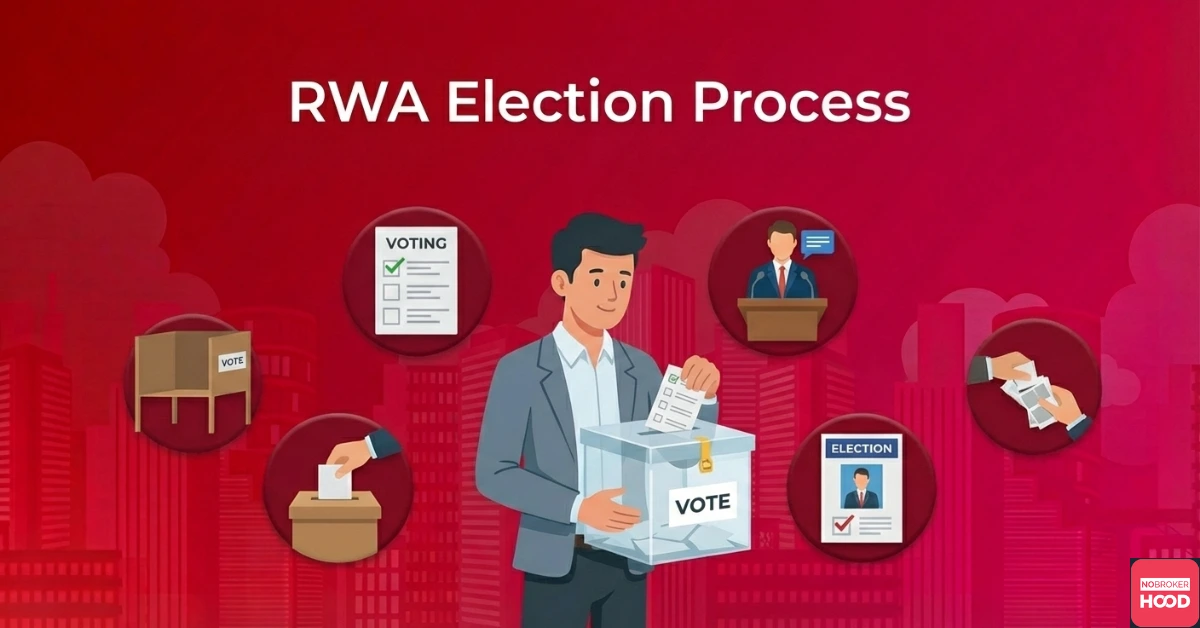
The RWA election process ensures fair representation and transparent governance in housing societies. It defines who can vote or contest, outlines key election rules, and explains how nomination forms are submitted and approved. When followed correctly, this process promotes accountability, encourages resident participation, and helps build a well-managed, responsive community.
Understanding the RWA Election Process
Resident Welfare Associations (RWAs) are the backbone of housing societies and gated communities. They handle everything from maintaining gardens and common areas to managing finances and community amenities. All of this works smoothly only when the management committee is elected fairly. That’s where the RWA election process comes in.
Elections give residents a voice and ensure that decisions reflect the community’s interests. Typically, societies hold elections every 2 to 5 years, depending on their bylaws. If done correctly, these elections encourage participation, promote accountability, and prevent the same small group of members from running the society indefinitely. After all, no one wants a committee that isn’t responsive to residents’ needs.
Read also: How to Form a Residents’ Welfare Association
Eligibility and Membership for RWA Elections
Eligibility and membership rules form the foundation of a fair RWA election process. Clearly defining who can vote or contest helps avoid disputes, ensures legal compliance, and guarantees that decisions are made by genuine, responsible members of society.
Who Can Participate?
Not everyone living in a society can contest or vote in RWA elections. Only members who are officially registered, have paid their dues, and hold ownership rights in the society can participate. Tenants, unless explicitly allowed by the bylaws, usually cannot vote.
For candidates, the rules are stricter. They must have no outstanding dues, be free of disputes over their property, and be active participants in society. Small details matter; someone who consistently misses society meetings or sublets their property without informing the committee may not be eligible.
Read also: Who Cannot Become Committee Member of Housing Society
Voter List Preparation
Preparing an accurate voter list is a critical step in the RWA election process.
- The society management committee roles and responsibilities include collecting the names, flat numbers, and contact information of all eligible members.
- A preliminary voter list is displayed publicly and shared via community apps or notice boards.
- Residents can verify their details and request corrections or updates.
- After all discrepancies are addressed, the voter list is finalised.
- The final list serves as the official reference for the election, helping prevent confusion or disputes later.
Election Procedure of RWA
The election procedure of RWA defines how it conducts the elections in a structured and lawful manner. From announcements to vote counting, each stage is designed to prevent disputes and ensure smooth formation of the managing committee.
Announcement and Notification
The housing society election starts with a clear announcement. Members must be given at least 2–3 weeks’ notice, sometimes more, depending on the bylaws. Notices are shared on boards, in WhatsApp groups, via email, or in printed circulars. It’s essential to communicate the schedule clearly so no resident misses the chance to participate.
Nomination Process
The nomination process is as follows:
- Residents who wish to contest must fill out the RWA election nomination form.
- The form requires basic details and the position(s) the candidate is contesting.
- Each nomination must be proposed by one member and seconded by another.
- The candidate must formally accept the nomination.
- There are strict deadlines for submitting nominations.
- Candidates can withdraw their nomination within a specified period if needed.
Role of the Returning Officer
A Returning Officer oversees the entire election, ensuring it is fair and conducted in accordance with the rules. They cannot be a candidate or support anyone. Their responsibilities include supervising nominations, monitoring polling, addressing grievances, and announcing results. Choosing a neutral and respected member as the Returning Officer helps prevent disputes and builds trust among residents.
Conduct of Elections
Voting is usually done via a secret ballot to maintain privacy. Proxy voting is generally not allowed, meaning members must vote in person. The Returning Officer sets the date, time, and venue, making sure the polling process is convenient and accessible. After the polls close, votes are counted, and the results are announced publicly. Ballot papers and related documents are stored for a few months in case of disputes.
Read also: Online Voting in Housing Society Elections
RWA Election Rules in Delhi
RWA election rules provide a legal and procedural framework to ensure elections are conducted smoothly. These guidelines help societies stay compliant with the law while protecting the rights and voting power of every eligible member.
Legal Framework and Model Constitution
RWA election rules in Delhi are governed by the Delhi Cooperative Societies Act and model bylaws. These rules set out eligibility criteria, election timelines, and procedures for disputes. Following them is essential to ensure that the election is legally valid.
Equal Voting Rights and Voting Weightage
The “one member, one vote” principle applies in most societies. Every member has an equal say, regardless of property size. If a member owns multiple flats, they may receive different votes, depending on the society’s rules. This ensures fairness and prevents dominance by any single resident.
Handling Election Disputes and Malpractices
Disputes sometimes happen, whether over eligibility, counting, or procedural lapses. These are reported to the Chief Welfare Officer or designated authority, who can take action such as recounts or legal remedies. Timely and transparent resolution maintains trust and ensures that future elections are respected.
Post-Election Formalities
Once the votes are counted, the Returning Officer declares the results. A formal handover from the outgoing committee to the newly elected members ensures smooth continuity. All records, including voter lists, nomination forms, and ballots, are retained for a defined period and serve as reference material for post-election queries.
Simplify Your Society Management with NoBrokerhood
Managing a housing society can be challenging, especially during elections. Platforms like NoBrokerhood make the process simpler and more transparent. It helps generate voter lists, distribute nomination forms, schedule election events, and notify residents. Members can track progress and see results in real time, reducing confusion and boosting engagement.
Beyond elections, NoBrokerhood also streamlines day-to-day operations, including maintenance tracking, booking amenities, and account management. This makes society governance easier, more transparent, and more efficient, giving residents confidence that their voices truly matter.
All Solutions by NoBrokerHood:
FAQs
Announcement of elections, nomination filing, appointment of the Returning Officer, secret ballot voting, counting of votes, and declaration of results.
Only members who have paid their dues, are not in dispute over property, and meet society membership criteria can contest.
The managing committee compiles a list of eligible members, displays it for verification, allows corrections, and then publishes the final list.
No, proxy voting is generally not permitted; members must vote in person.
Disputes are reported to the Chief Welfare Officer or the relevant authority, who can take remedial action, such as recounts or legal intervention.