Vendor Management Guidelines for Residential Societies
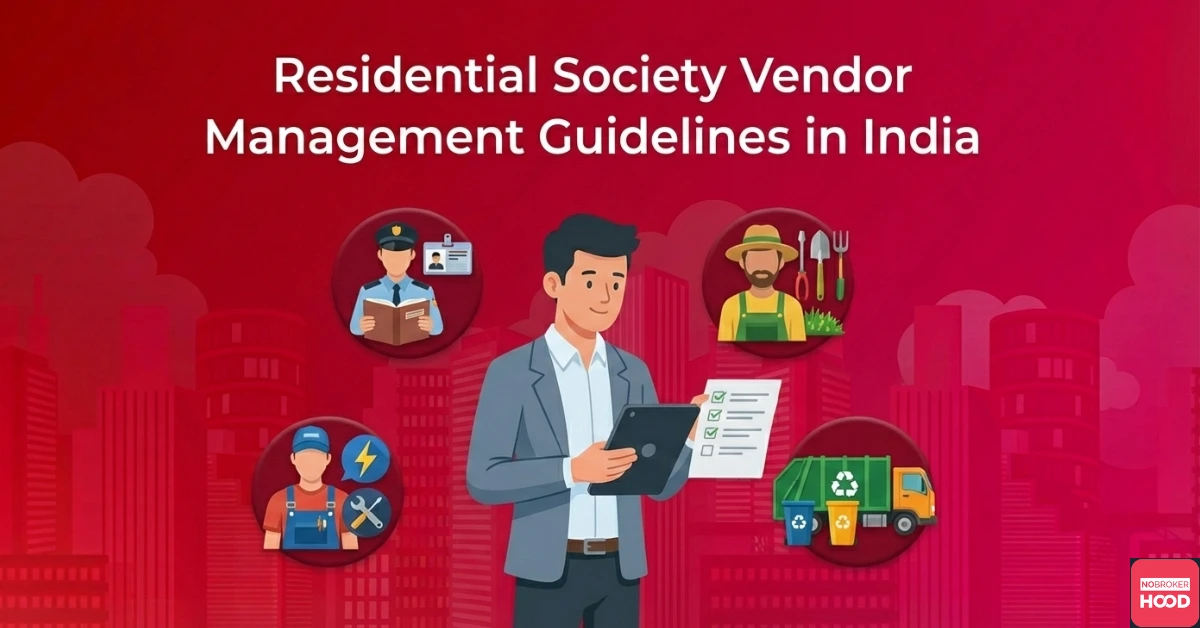
Vendor management guidelines enable residential societies to select the right service providers, effectively monitor their performance, and ensure safety and transparency. When followed properly, these guidelines reduce disputes, improve service quality, and support smooth day-to-day community living.
What Is Vendor Management?
Vendor management is the structured process of selecting, onboarding, monitoring, and managing third-party service providers who support daily operations in a residential society. These vendors may include security agencies, housekeeping staff, maintenance teams, and utility service providers.
In the context of housing societies, vendor management ensures that services are delivered on time, safety protocols are followed, and responsibilities are clearly defined. When aligned with clear vendor management guidelines, it helps RWAs maintain service quality, accountability, and smooth coordination across the community.
Why Vendor Management Matters in Indian Societies?
Residential societies depend on multiple vendors every day. Without structured vendor management guidelines, small issues often turn into larger conflicts.
Strong guidelines help societies:
- Maintain safety for residents and children
- Ensure timely and consistent service delivery
- Avoid disputes related to payments or service quality
- Stay compliant with local laws and society bylaws
- Create trust between residents, vendors, and RWAs
In large gated communities, vendor mismanagement can affect hundreds of families. That is why clear processes are no longer optional.
Read also: Top 12 Vendor Management Best Practices
Common Vendor Challenges Faced by RWAs
Many RWAs across India face similar vendor-related issues, such as:
- Inconsistent service quality or missed schedules
- Lack of background verification for vendor staff
- Poor communication between vendors and residents
- Delayed payments leading to service disruption
- No clear exit process when vendors underperform
Vendor management guidelines address these problems by setting expectations upfront and defining accountability at every stage.
Vendor Selection and Onboarding Process
Vendor selection is the foundation of effective vendor management guidelines. A rushed or informal process often creates long-term issues.
Define Clear Requirements
Before approaching vendors, societies should clearly define:
- Scope of work and daily responsibilities
- Expected quality standards
- Timelines and frequency of service
- Compliance needs such as uniforms or ID cards
For example, common area cleaning may need to be completed by 9 AM daily without exception.
Background Checks and Verification
Every vendor company and their on-ground staff should be verified. This may include:
- Identity proof and address verification
- Police verification wherever required
- Verification of business registration and GST details
This step is critical for societies with high resident movement and shared amenities.
Evaluate Credentials and Experience
RWAs should prefer vendors with:
- Prior experience in residential societies
- Relevant licenses or certifications
- Positive references from other communities
This reduces onboarding risks and improves service continuity.
Transparent Selection Process
Vendor selection should be fair and open. Allowing new vendors to apply periodically promotes healthy competition and prevents dependency on a single service provider.
Contracts, SLAs, and KPIs
Written contracts are a core part of vendor management guidelines. Verbal agreements often create confusion and disputes.
Formal Contracts
Each vendor contract should clearly mention:
- Scope of work
- Payment terms and billing cycle
- Termination and notice clauses
Contracts should be reviewed by an empanelled lawyer to ensure compliance with Indian laws.
Measurable SLAs
Service Level Agreements define what success looks like. Examples include:
- Garden maintenance twice a week
- Lift servicing once every month
Key Performance Indicators (KPIs)
KPIs help track vendor performance objectively. Common KPIs include:
- Timeliness of service delivery
- Quality of work
- Staff behaviour and discipline
- Complaint resolution time
- Cost efficiency
KPIs bring clarity and remove subjectivity from vendor reviews.
Monitoring Vendor Performance Effectively
Vendor management guidelines do not end after onboarding. Continuous monitoring is equally important.
Regular Performance Reviews
RWAs should schedule monthly or quarterly reviews to assess vendor performance against SLAs and KPIs. This keeps vendors accountable and encourages improvement.
Resident Feedback Mechanism
Residents interact with vendors daily. Simple feedback channels help societies identify issues early. Feedback can be routed through the RWA to avoid direct conflicts.
Timely and Transparent Payments
Delayed payments often lead to poor service. A clear invoice approval and payment process helps maintain a healthy working relationship.
Build Long-Term Partnerships
Vendors should be treated as service partners. Open communication and clarity often result in better service consistency.
Risk, Compliance, and Security Controls
Risk management is a key pillar of vendor management guidelines in residential societies.
Maintain Digital Records
Societies should securely store:
- Vendor contracts
- Insurance documents
- Licenses and certifications
- Staff verification records
Centralised records improve audit readiness and reduce dependency on individuals.
Contingency Planning
For critical services such as water supply, power backup, or elevator maintenance, societies should maintain a list of backup vendors to minimise service disruptions.
Entry and Exit Monitoring
Vendor staff movement should be tracked to ensure resident safety. Digital entry systems improve accountability and reduce security gaps.
Read also: Simplify Pre-Approvals to Daily Help Management
Digital Records and Transparency
Manual registers and paper files often lead to data loss and confusion. Digital tools help RWAs maintain transparency and quick access to information.
Clear records also help during committee transitions, audits, or dispute resolution. Digital systems make vendor management guidelines easier to follow and enforce consistently.
Vendor Management With NoBrokerHood
NoBrokerHood supports residential societies by offering a structured, digital approach to vendor management. The platform enables societies to maintain vendor records, track entry and exit, manage complaints, and store documents securely in one place.
By improving coordination between residents, management committees, and security teams, NoBrokerHood helps societies follow vendor management guidelines without adding complexity to daily operations.
All Solutions by NoBrokerHood:
FAQs
Common vendors include security agencies, housekeeping staff, lift maintenance teams, electricians, plumbers, gardeners, and waste management service providers.
SLAs clearly define service expectations and timelines. They help societies measure performance objectively and address issues without disputes or confusion.
Most societies conduct monthly or quarterly reviews. Regular reviews help identify service gaps early and maintain consistent quality.
Vendor management helps RWAs maintain service quality, control costs, and reduce risks. It also creates clarity around roles, timelines, and accountability for vendors working inside the society.
Digital platforms like NoBrokerHood simplify record-keeping, performance tracking, and communication. They help RWAs follow vendor management guidelines more consistently.