






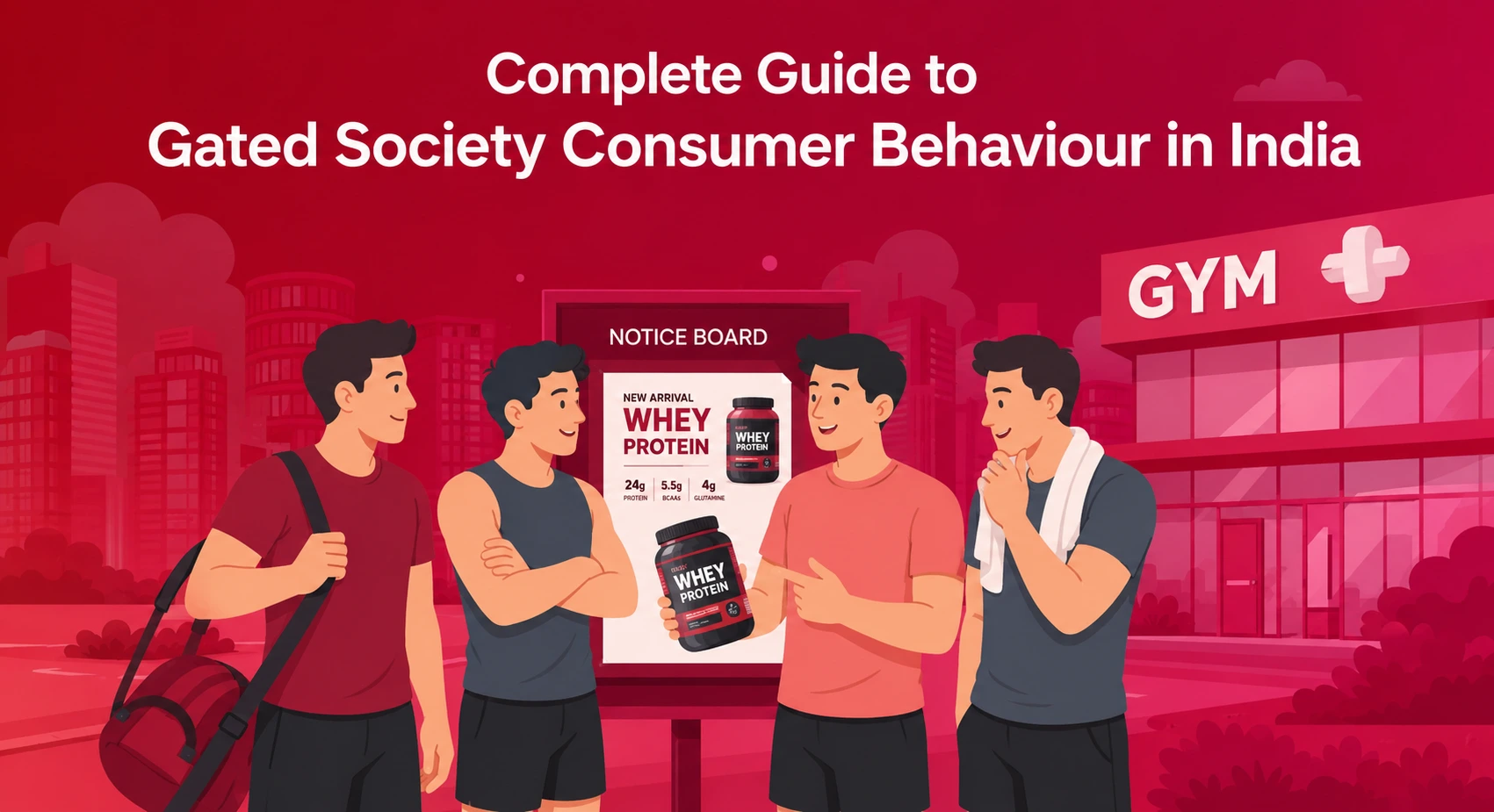


Gated society consumer behaviour in India is shaped by trust, proximity, and community influence. Residents buy what their neighbours recommend, prefer services that reach their doorstep, and rely heavily on society apps for daily decisions. This guide walks through why this behaviour is growing, the key drivers behind it, real examples residents see in their own buildings, and what it means for RWAs, local businesses, and brands trying to reach these communities the right way.
What Is Gated Society Consumer Behaviour in India?
This pattern refers to the buying habits that emerge when families live close together inside a secure, well-managed residential complex. It is different from how people shop in open, scattered neighbourhoods, mainly because trust travels faster within a closed community.
Here, decisions are influenced by shared amenities, common WhatsApp or app groups, and a sense of familiarity among neighbours. India now has close to 32 million households living in such communities, and this segment is expected to drive nearly 900 billion dollars in annual consumption by FY31.
That scale is why understanding gated society consumer behaviour in India matters, not just for marketers, but for residents who want to make informed choices and RWAs who manage vendor requests every week.
Why Gated Communities Are Becoming India's Biggest Consumer Clusters?
Gated communities were originally built for safety and better infrastructure. Today, they are turning into dense, digitally connected micro-markets.
A few numbers explain this shift:
- Gated communities are projected to house nearly half of all urban households across India's top 50 cities by 2031.
- Around 25% of these communities already use a digital community management platform, and this is expected to cross 40% by FY2031.
- Residents in these societies typically have disposable incomes five to seven times the national average.
This combination of income, density, and app adoption is exactly why gated society consumer behaviour in India looks so different from behaviour in scattered, open localities. Brands are not just selling to individuals anymore. They are selling to tightly connected micro-communities.
Check Also: What is a Gated Community?
Key Drivers of Gated Society Consumer Behaviour in India
A few clear patterns repeat across most Indian housing societies. Knowing them helps residents spot trends in their own community and helps local vendors plan better outreach.
Hyper-Localised Convenience
Residents want things fast and close by. With high purchasing power packed into a small radius, quick commerce apps, local sampling stalls, and small pop-up counters near the gate work far better than a traditional mall visit.
Platform-Driven Ecosystems
More than 80% of the gate management and community app market is controlled by a handful of platforms. Residents already use these apps for bill payments, visitor entries, and maintenance requests, which makes the same app a trusted channel for local offers too.
Premium and Sustainable Choices
Many residents lean toward imported goods, organic groceries, and energy-efficient appliances. Peer conversations inside the community, often on a resident WhatsApp group, play a big role in shaping this preference.
Community-Based Word-of-Mouth
Buying choices in a gated society rarely happen in isolation. A single review shared in a residents' group can shape demand for an entire wing or block within days.
[Start Your Society Advertising Campaign]
Gated Society Consumer Behaviour Examples Residents See Every Day
If the drivers above sound a bit abstract, these gated society consumer behaviour examples make the pattern easier to spot. Most residents have seen at least one of these play out in their own building.
Peer Influence and Herd Mentality
- Word-of-mouth scaling: If one flat tries a new water purifier brand or a housekeeping service and is happy with it, three or four neighbouring flats often sign up for the same service within a month or two.
- Group discounts: Residents commonly pool together to negotiate bulk rates on broadband connections, solar panel installations, or pest control, timing their purchase to match what the group decides.
Hyperlocal and App-Driven Convenience
- In-gate commerce: Grocery delivery, laundry pickup, and repair services that skip the usual gate-entry hassle are picked over options that require a visitor pass or a long wait.
- Centralised information: A service listed or recommended on the society's digital notice board is trusted more easily, since it feels like it already has the community's approval.
Premiumisation and Lifestyle Maintenance
- Wellness spending: Organic food subscriptions, health supplements, and home fitness equipment see steady demand, since residents see these as part of daily life rather than an occasional purchase.
- Outsourced upkeep: Instead of hunting for an independent electrician or plumber, most residents now book a verified, on-demand professional through an app, even if it costs a little more.
Space, Privacy and Status
- Status signalling: Premium car brands, designer furniture, and branded home appliances are often chosen partly to match the general lifestyle of the community.
- Eco-friendly purchases: Since many societies actively promote green spaces and sustainable living, residents show a clear preference for energy-efficient lighting, water-saving fixtures, and organic gardening supplies.
[Get Started with Gated Community Advertising]
What This Shift Means for Residents and Local Businesses
For residents, this pattern means more relevant offers, fewer random ads, and services that are already vetted by people they trust. For local businesses and larger brands, it means the old approach of scattered flyers or random cold calls no longer works as well.
A single well-placed message inside a society, whether on a notice board, a lift screen, or a community app, tends to travel through resident groups on its own. That is the practical value of understanding this kind of behaviour before planning any outreach.
RWAs and residents can put this to good use with a few simple steps:
- Set clear vendor guidelines: A short, written policy on who can advertise inside the society, and where, avoids random pamphlets under every door and keeps trust intact.
- Use the community app for approvals, not just complaints: Most societies already have one. Routing vendor requests, offers, and event updates through it keeps everything in one trusted place.
- Ask for references before a bulk deal: Group discounts work well, but it helps to check with one or two other societies before signing a long-term contract for internet, security, or housekeeping services.
- Keep the notice board updated and relevant: A cluttered board with old flyers loses credibility fast, while a well-managed one becomes a genuine source of local information residents check often.
These small habits protect residents from spam while still letting genuinely useful, local offers reach the right households.
[Advertise Across Premium Apartment Communities]
How NoBrokerHood Advertising Solutions Fits Into This Shift
Reaching gated communities effectively needs more than a single ad placement. It needs a presence across the touchpoints residents already trust every day, from the app they use for visitor approvals to the screen they pass in the lift lobby.
NoBrokerHood enables brands to connect with verified residential communities through multiple engagement channels across 13 platforms and a wide range of industries. Instead of relying on broad advertising, it focuses on reaching real households where everyday purchasing decisions happen.
A few things worth knowing about how it works:
- Multiple touchpoints, one community: Lift branding, gate branding, digital notifications, and on-ground activations can run together inside the same society for repeated visibility.
- Verified, high-intent audiences: Since access runs through resident-only apps, campaigns reach actual households rather than a broad, unfiltered audience.
- Consistently higher recall: Campaigns on this format regularly show stronger brand recall and engagement compared to mass advertising, since residents see the message in a space they already trust.
- Repeat renewals and expansion: A large share of advertisers renew their campaigns or expand into new cities, which points to steady, measurable results rather than one-off visibility.
- Built for affluent, high-intent households: The platform is designed for brands that want to connect with premium residential communities at scale, without losing the local, community feel that makes this format work.
