





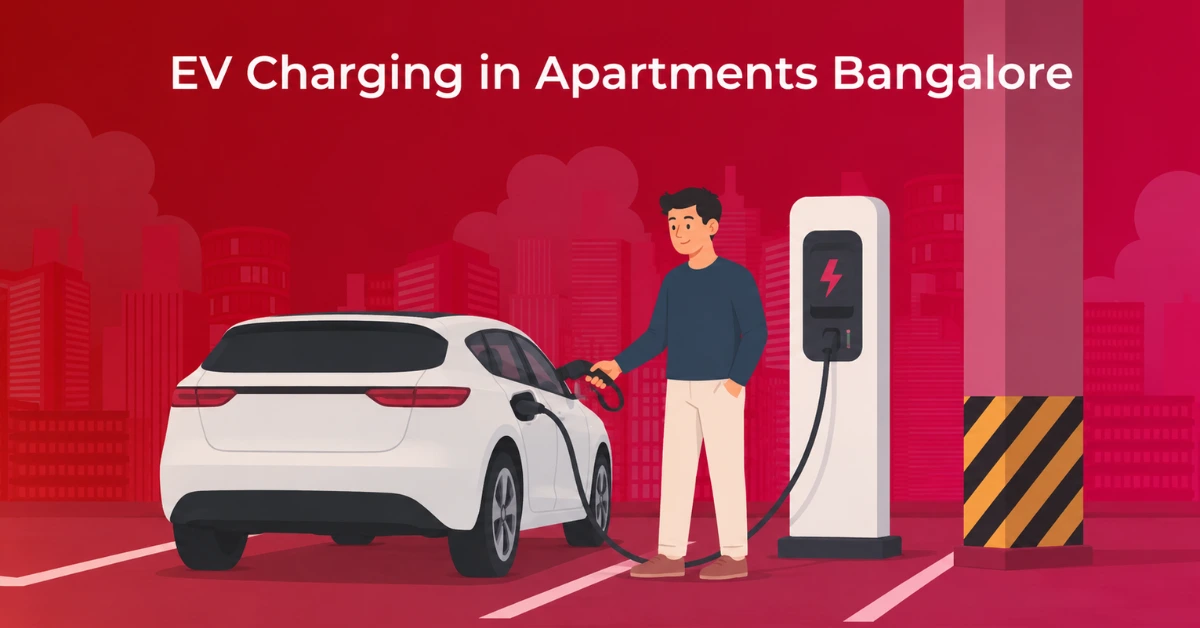


As more residents embrace electric vehicles, EV charging in apartments Bangalore is getting easier. RWA procedures, safety measures and BESCOM regulations can be followed by flat owners to install chargers in their allotted parking space. Depending on the building infrastructure, residents can select between an individual charger attached to their flat meter or a common community charging station managed by the flat association.

Why EV Charging Infrastructure Matters for Apartment Communities?
Electric vehicle ownership is growing rapidly across Indian cities, and apartment communities are beginning to adapt. For many residents, the biggest concern is not buying the vehicle but figuring out where and how to charge it every day.
In large residential complexes, charging infrastructure affects convenience, electrical safety, parking management, and future property value. Apartments that prepare early for EV adoption often find it easier to meet growing resident demand.
Benefits of planned EV charging infrastructure include:
- Convenient overnight charging
- Better property appeal for future buyers and tenants
- Reduced dependence on public charging stations
- Improved load management and safety monitoring
- Support for sustainable community initiatives
As more residents switch to electric mobility, EV charging in apartments Bangalore is becoming an important topic for RWAs, builders, facility managers, and homeowners alike.
Can You Install an EV Charger in Your Apartment Parking Space in Bangalore?
Generally, yes, residents can install an EV charger in their assigned parking space. But apartment parking spaces are part of a larger shared property arrangement. The parking slot may be assigned to a resident, but the wiring routes, common electrical areas and building infrastructure usually need approval by the association.
Before proceeding, residents should assess:
- Distance between the parking slot and the meter room
- Existing electrical capacity
- Wiring pathway feasibility
- Building safety requirements
- Association guidelines
For many flat owners, the easiest solution is a single charger tied to their existing electricity meter. This allows electricity usage to be billed directly to the vehicle owner.
As the adoption of EV charging in apartments Bangalore grows, many apartment communities are developing transparent installation policies that strike a balance between resident convenience and building safety.
EV Charging Rules and Regulations for Bangalore Apartments
Several regulations support the expansion of EV charging infrastructure in residential communities.
BESCOM EV Charging Provisions
BESCOM offers a dedicated EV charging tariff category known as LT-6(c). This tariff is designed specifically for EV charging and can make overnight charging more economical compared to conventional electricity usage patterns.
Another important point is that BESCOM does not require a separate No Objection Certificate for an individual charger installation in a designated parking space.
Karnataka Building Requirements
The Karnataka government has encouraged EV readiness in residential developments. New residential projects are expected to reserve a portion of parking spaces for EV charging infrastructure.
Safety Compliance Requirements
Apartment communities should follow Central Electricity Authority safety guidelines, including:
- Proper earthing
- Certified charging equipment
- Circuit protection systems
- RCCB and MCB installation
- Auto-cutoff safety features
- Fire-safe wiring practices
These measures help ensure that EV charging in apartments India remains safe and reliable as adoption increases.
Read also: EV Charging Housing Society Rules
What Approvals Are Required from Your Apartment Association?
Although BESCOM may not require additional approvals, apartment associations generally play an important role.
Since charger installation can involve common property areas, residents typically need permission from the managing committee or RWA. Here’s a common approval process:
1. Submit a Request
Provide details about:
- Parking slot number
- Charger specifications
- Proposed cable route
- Electrical load requirements
2. Conduct an Electrical Audit
The association may request an assessment of:
- Transformer capacity
- Existing electrical load
- Safety requirements
- Future scalability
3. Obtain Committee Approval
Many RWAs require a formal resolution before installation begins.
4. Install Sub-Metering if Needed
Some associations prefer separate sub-meters to track EV-specific consumption accurately.
A structured approval process helps reduce concerns about safety, wiring clutter, and future infrastructure demands.
Individual EV Chargers vs Shared Community Charging Stations
As apartment communities explore EV charging in apartments India, one key decision is choosing between individual chargers and shared charging facilities.
| Feature | Individual Charger | Shared Community Charger |
|---|---|---|
| Power Source | Personal flat meter or dedicated EV meter | Common area meter or dedicated EV infrastructure |
| Upfront Cost | Paid by the vehicle owner | Shared by association or vendor |
| Billing | Added to the resident's electricity bill | App-based or usage-based billing |
| Management | Individual responsibility | Centrally managed |
| Scalability | Limited | Easier for larger communities |
| RWA Acceptance | May require detailed approvals | Often preferred for uniform management |
| Suitable For | Dedicated parking owners | Large apartment complexes |
When Individual Chargers Work Best
Individual chargers are usually suitable when:
- Parking is close to the meter room
- Dedicated parking ownership exists
- Few EV users are present
When Shared Charging Works Best
Shared charging solutions are often ideal when:
- Multiple EV owners live in the community
- Parking areas are spread across multiple floors
- Long cable runs become expensive
- Future EV adoption is expected
For many modern communities, shared infrastructure provides a scalable solution for ev charging in apartments Bangalore.
Tenant vs Apartment Owner: What Changes?
Your role in the apartment community affects the installation process.
If You Are an Apartment Owner
Owners generally have more flexibility when requesting charger installation.
You can:
- Apply directly to the RWA
- Fund your own installation
- Participate in AGM discussions
- Propose community charging infrastructure
If You Are a Tenant
Tenants usually need written permission from the property owner before approaching the association.
Additional considerations include:
- Landlord approval
- Installation responsibilities
- Future removal costs
- Lease-related restrictions
For tenants, supporting a shared charging facility is often more practical than investing in a private setup.
How to Install an EV Charger in a Bangalore Apartment?
A structured approach can simplify the installation process.
Step 1: Assess Your Parking Location
Check:
- Distance from the electrical room
- Cable routing possibilities
- Accessibility for maintenance
If the parking slot is several levels away from the electrical room, a community charging model may be more practical.
Step 2: Evaluate Building Capacity
Request an electrical assessment to determine whether:
- Existing transformers can support additional load
- Distribution panels require upgrades
- Future expansion is possible
Step 3: Present the Proposal to the RWA
Address common concerns such as:
- Fire safety
- Electrical load management
- Visual impact of cabling
- Maintenance responsibilities
Step 4: Select Certified Equipment
Choose chargers with:
- Auto-cutoff functionality
- Overload protection
- Certified safety standards
- Smart monitoring capabilities
Step 5: Complete Installation
Ensure installation is performed by qualified professionals and complies with safety guidelines.
Step 6: Monitor Usage
Track charging consumption and electricity costs regularly.
Following these steps helps make ev charging in apartments Bangalore smoother for both residents and associations.
Read also: EV Charging Regulations for Housing Societies in India
Common Challenges of EV Charging in Bangalore Apartments and Their Solutions
Apartment communities often face practical challenges during EV charging implementation.
Limited Electrical Capacity
Solution: Conduct electrical audits and plan phased upgrades.
Long Cable Routes
Solution: Evaluate shared charging hubs instead of individual wiring.
RWA Concerns
Solution: Present safety plans, certified equipment details, and load assessments.
Billing Complexity
Solution: Use sub-metering or digital billing systems.
Future Demand Growth
Solution: Create an EV readiness roadmap that can scale as adoption increases.
Many of these challenges are common across ev charging in apartments India, making long-term planning essential.
Read also: EV Charging Station Problems in Housing Societies
Manage EV Charging Requests with NoBrokerHood
As electric vehicle ownership grows across India, many apartment communities are exploring ways to install charging infrastructure without creating operational or electrical challenges. The process often involves multiple steps, including site assessments, load evaluation, approvals, installation planning, and ongoing management.
To simplify this, NoBrokerHood has partnered with ElectricPe to offer EV charging solutions for apartment communities across India. The service covers the entire implementation journey, from initial site surveys and electrical assessments to certified charger installation and deployment.
What this means for apartment residents and RWAs:
- Professional assessment of charging requirements and building infrastructure
- Support with load management and installation planning
- Certified charger installation through authorised partners
- A more streamlined process for communities looking to adopt EV charging infrastructure
Government initiatives promote electric mobility, and more residents are switching to EVs. A structured charging solution can help apartment communities prepare for future demand while maintaining safety and operational efficiency.
All Solutions by NoBrokerHood:
