






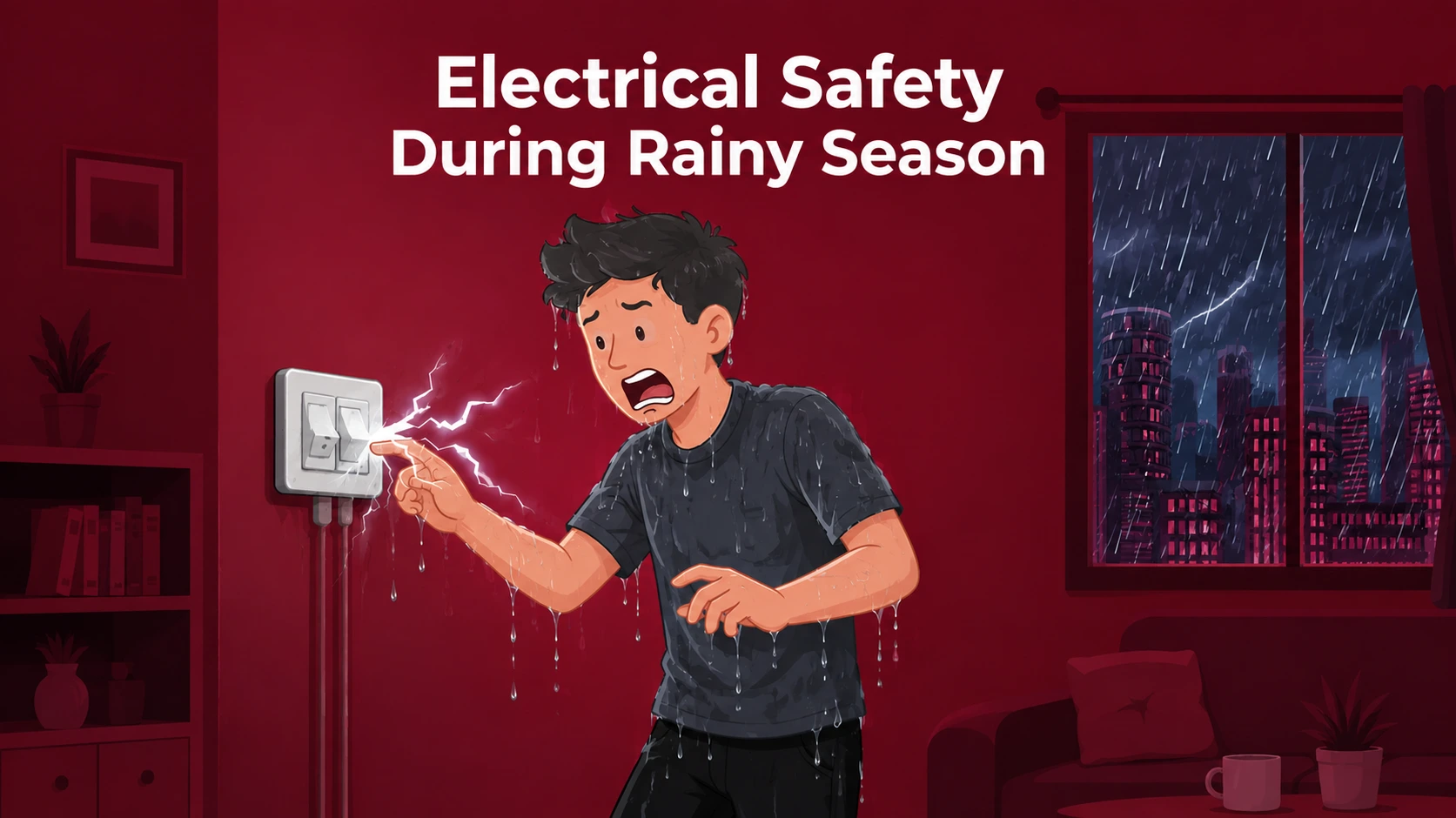


Most electrical dangers that arise during monsoon are preventable through regular inspection and proper daily practices. No matter whether you are staying in an independent home or in a gated community, taking care of electrical safety during rainy season will help you lower risks and avoid accidents. This blog discusses common electrical hazards, safety tips indoors and outdoors, important electrical checks, duties of the housing society, and a checklist for the monsoon season.

Why Electrical Safety During Rainy Season Becomes a Real Concern?
Monsoon offers a break from the summer heat, but it also brings a higher risk of electrical hazards. Persistent rain, high humidity and water seepage can cause damage to wiring, switchboards, electrical panels and outdoor fixtures. Electricity is dangerous when it comes into contact with moisture, and even the smallest fault can become dangerous, increasing the chances of electric shocks, short circuits and fires.
This makes electrical safety during rainy season a priority for gated communities. Residents share critical electrical infrastructure such as transformers, distribution panels, lifts, pumps and common-area lighting, so a single fault can interrupt critical services and endanger the safety of an entire community. Taking preventive measures before and during the monsoon helps reduce accidents, protect property, and ensure uninterrupted power across the society.
Read also: Make Your Home Monsoon-Ready
Common Electrical Hazards That Show Up Every Monsoon
Any electrician who's worked through a few monsoons will tell you the same handful of problems keep repeating. Knowing them ahead of time helps a lot with electrical safety during monsoon.
- Water seeping into switchboards through a cracked wall or a roof that's been leaking quietly for weeks
- Sockets pushed past their limit because a geyser, a heater and a water pump are all running at once
- Frayed or damaged wiring that has not been repaired or replaced
- Streetlights, electric poles, or outdoor electrical fixtures standing in waterlogged areas
- Power surges during thunderstorms that can damage appliances and electronic devices
All of these risks are the same every year; it's just made worse once humidity and standing water enter the picture. That is why electrical safety precautions during the rainy season should be treated as a routine part of home and society maintenance, not just after the first heavy spell of rain.
Read more: Rain Can be Romantic, but Monsoon has its Risks
Electrical Safety Precautions During Rainy Season: Indoor Practices
None of this needs a budget or a call to a contractor. Most electrical safety precautions during rainy season are just habits, and they take seconds once you get used to them.
- Dry your hands first: Wet hands on a switch or socket is how most home shocks happen, and it's the easiest one to avoid.
- Shut windows near plug points: Rain blowing in sideways is more common than people think, and it doesn't take much to soak a socket.
- Get appliances off the floor: Fridges, washing machines, extension boards, anything that sits low is at risk if water pools even slightly.
- Don't overload one socket: A geyser and a water pump sharing an extension cord is asking for trouble.
- Unplug what you're not using: Especially during a thunderstorm. Televisions, computers, microwaves- they're all vulnerable to surges.
- Keep a torch within reach: Power cuts during heavy rain are common enough that this shouldn't be an afterthought.
These aren't complicated steps. They're the small, boring routine that quietly prevents most of the accidents you hear about in society groups, and they cover the bulk of the electrical safety tips during rainy season people forget about until something trips.
Wiring, Devices and Routine Maintenance Checks
Daily habits only get you so far. A bit of actual upkeep before the rains, and again halfway through the season, is what keeps electrical safety in monsoon on solid ground rather than just on paper.
- Fit MCBs (Miniature Circuit Breakers) so overloads trip the circuit instead of the wiring
- Install a 30mA RCCB or ELCB. This is honestly one of the single most effective things you can do, since it cuts power the instant it senses a leak
- Have your earthing tested. A weak earth connection can't redirect fault current the way it's supposed to, and most people never think to check it
- Ask your electrician to look for frayed cords or loose joints and actually replace them, not just tape over the damage
- Seal roof leaks and damp walls near a switchboard before the rain, not after the ceiling starts dripping onto it
- Stick to ISI-marked wires and switches when replacing anything old. They cost a little more but handle humidity far better
Most residents put this off until something already looks wrong, but getting these checks done early is genuinely one of the more overlooked electrical safety precautions in monsoon.
Electrical Safety Tips During Rainy Season for Outdoor and Common Areas
Outdoors is where people tend to switch off, which is the wrong instinct. These electrical safety tips during rainy season apply just as much to a society compound as to your own balcony or terrace.
- Give poles, transformers and streetlights a wide berth if the ground around them looks even slightly waterlogged
- Don't walk through a flooded street or driveway. You genuinely cannot tell if there's a live wire sitting under that water
- Garden lights, outdoor sockets and pump connections should all be weatherproof, not just covered with a plastic bag
- Branches touching overhead wires are a fire risk waiting to happen once the wind picks up; get them trimmed before the season starts
- If you spot sparking or exposed wiring near a meter room or common panel, inform the maintenance staff immediately
Indoor habits and outdoor habits aren't really separate things. Electrical safety in monsoon only works when both get looked after at the same time.
Electrical Safety Precautions in Monsoon for Housing Societies
Housing societies have an added layer of responsibility during the monsoon. Electrical safety precautions in monsoon really only work when residents and the management committee pull in the same direction, since one leaking shaft or one unearthed panel can end up being everybody's problem.
What should the society management do?
- Get transformers, DG sets, and the main distribution boards serviced before the rains actually arrive, not during the first downpour
- Make sure panels and meters sit in enclosures that are actually waterproof and ventilated, not just boxed in
- Test and repair earthing across every tower, block by block if needed
- Seal cable entry points, shafts and meter rooms properly
- Put up simple warning signs near streetlights, poles and junction boxes so nobody wanders too close
What residents can do on their end?
- Report any leakage or exposed wiring near your flat the moment you spot it
- Skip the DIY fix and just call a licensed electrician; it's rarely worth the risk
- Keep extension cords off wet floors and away from windows
- Remind kids to stay away from switchboards and outdoor fittings when it's storming
Get both sides doing their part, and electrical safety during rainy season stops feeling like a checklist someone forgot about. Societies that share a short list of electrical safety precautions in monsoon at the start of the season usually deal with far fewer complaints once the rainy season begins.
Read also: Supreme Court Judgement on Water Leakage from Upper Floor Flat
Quick Checklist for Electrical Safety During Rainy Season
Save this one, or better yet, forward it to your society group as a quick reminder about electrical safety during monsoon before the next spell hits.
- Dry your hands before touching any switch or appliance
- Get appliances up off damp floors
- Have earthing tested and RCCBs or MCBs installed
- Swap out frayed cords and cables; don't tape them
- Seal roof leaks and damp walls near panels
- Keep clear of poles, transformers and waterlogged streets
- Unplug non-essential electronics when a storm rolls in
- Report faults to maintenance the same day you notice them
Stay Monsoon-Ready with NoBrokerHood
Electrical safety during the rainy season depends as much on regular maintenance as it does on safe everyday habits. Common areas like distribution panels, transformers, DG sets, water pumps, and outdoor lighting all need periodic inspections before the monsoon arrives.
NoBrokerHood supports this through its Preventive Plan Maintenance (PPM) feature, which helps managing committees organise routine maintenance for society assets. Instead of relying on manual reminders or spreadsheets, committees can schedule recurring inspections, assign maintenance tasks, and track whether servicing has been completed on time. The platform also supports reminders and escalation workflows for overdue tasks, making it easier to stay on top of essential maintenance activities.
How this helps improve electrical safety:
- Schedule pre-monsoon inspections for electrical assets.
- Assign maintenance tasks to the appropriate staff or service providers.
- Receive reminders for recurring servicing and safety checks.
- Track completed and pending maintenance activities from a central dashboard.
A planned maintenance routine helps societies identify potential electrical risks early, reducing the chances of unexpected failures during heavy rainfall.
All Solutions by NoBrokerHood:
