





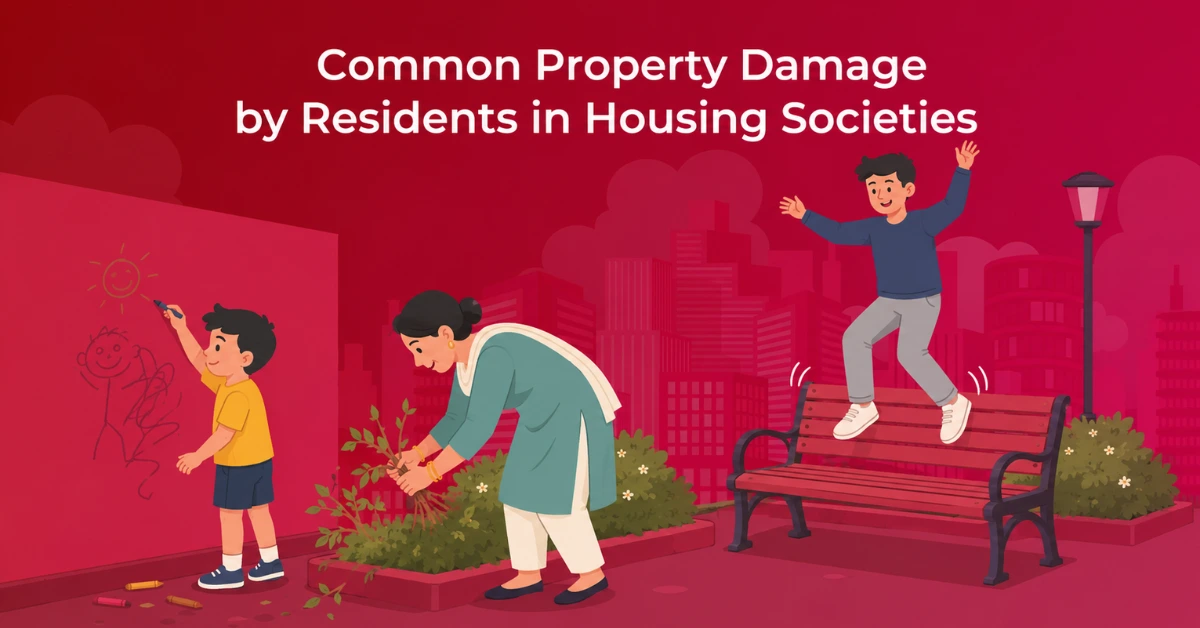


Shared amenities and common areas are among the biggest advantages of apartment and community living. Features like landscaped gardens, parking spaces, security systems, and other shared spaces improve convenience and quality of life for everyone. However, these shared facilities can also become vulnerable to damage. Damage may be caused by anyone during daily use, shifting, renovation, or maintenance work.

When common property gets damaged, several questions arise. Who is responsible? Who pays for repairs? Can the housing society impose penalties? Understanding how common property damage is handled can help residents and management committees resolve disputes fairly and prevent repeated incidents.
What Is Common Property Damage?
Common property damage refers to any physical damage caused to areas, infrastructure, equipment, or facilities that are jointly owned and maintained by all residents of a housing society or apartment complex.
These common spaces are funded through maintenance charges collected from residents, making their protection a collective responsibility.
Common examples of common property damage include:
- Lift damage during shifting or moving activities
- Scratches or dents on lobby walls
- Broken clubhouse furniture
- Damaged parking barriers or boom gates
- Garden destruction or landscaping damage
- CCTV camera or security equipment damage
- Water leakage affecting corridors or shared walls
Even minor damage can lead to costly repairs when left unattended.
Read also: What is Common Area in Apartments?
What Is It Called When Someone Damages Your Property?
When someone damages another person’s property, the act is generally referred to as property damage. Depending on the nature and intent, it may also be classified under different legal or civil terms.
Common terms include:
- Property damage — General term for physical harm to property
- Property vandalism — Intentional destruction or defacement
- Negligence-related damage — Damage caused due to carelessness
- Civil liability for property damage — Legal responsibility to compensate for losses
In housing societies, damage may involve:
- Individual property damage
- Common property damage
- Shared facility damage
The main difference lies in intent. Accidental damage is often handled differently from deliberate vandalism. Housing societies typically investigate the cause before deciding liability.
The 4 Major Classifications of Property Damage
Property damage can broadly be grouped into four major categories.
1. Accidental Property Damage
This type of damage occurs unintentionally and is often caused during normal activities.
Common causes include:
- Moving furniture
- Vehicle mishandling
- Maintenance accidents
- Equipment malfunction
Examples:
- Scratched lift interiors during shifting
- Broken lobby glass while moving appliances
2. Negligent Property Damage
Negligent damage occurs when a person fails to exercise reasonable care or take precautions.
Examples include:
- Water leakage caused by poor maintenance
- Renovation work damaging walls or plumbing
- Improper waste disposal is damaging shared facilities
Even if unintentional, negligence can still lead to financial liability.
Read also: Supreme Court Decision on Water Leakage from Upper Floor Flats
3. Intentional Property Damage
This involves deliberate destruction or misuse of property.
Examples include:
- Vandalising society's property
- Breaking CCTV cameras
- Damaging equipment during disputes
Intentional damage is often treated more seriously and may attract penalties or legal action.
4. Environmental or Structural Damage
Not all damage is caused by people. Some damage results from external environmental or structural factors.
Examples include:
- Flooding in common areas
- Storm-related damage
- Tree root damage to pathways
- Natural wear and tear
| Classification | Cause | Typical Examples |
| Accidental | Unintentional actions | Lift scratches, broken tiles |
| Negligent | Carelessness | Water leakage, renovation damage |
| Intentional | Deliberate actions | Vandalism, equipment destruction |
| Environmental | Natural causes | Flooding, weather-related damage |
Common Types of Property Damage in Housing Societies
Certain types of damage occur repeatedly in residential communities.
Lift Damage During Moving Activities
Lifts are among the most commonly damaged shared assets.
Typical issues include:
- Scratched panels
- Damaged buttons
- Broken flooring
- Dent marks from furniture
Parking Area Damage
Parking zones often sustain damage from vehicle movement.
Examples include:
- Vehicle collisions
- Barrier damage
- Broken parking sensors
- Damage to bollards
Corridor and Lobby Damage
Common circulation areas can get damaged during shifting or maintenance work.
Examples:
- Wall scratches
- Broken lights
- Chipped flooring
Clubhouse and Amenity Damage
Shared recreational facilities also require careful use.
Examples:
- Furniture breakage
- Gym equipment misuse
- Sports facility damage
Garden and Landscaping Damage
Outdoor spaces are often damaged by careless use.
Examples:
- Damaged plants
- Broken irrigation systems
- Misuse of lawns and green spaces
Damage to Common Property by Tenant
A common concern in apartment communities is damage to common property caused by tenants.
In most housing societies, the society’s legal relationship is with the flat owner, not the tenant.
This means:
- The owner remains responsible for tenant compliance
- The society may recover repair charges from the owner
- The owner can recover those costs from the tenant through the rental agreement
Examples include:
- Lift damage during tenant move-in
- Parking violations are causing damage
- Clubhouse damage caused by tenants or their guests
The best approach is proactive communication. Owners should ensure tenants understand all society rules before occupancy.
Who Pays for Common Property Damage?
Liability depends on who caused the damage.
Resident-Caused Damage
If a resident causes the damage, they are generally responsible for repair costs.
Tenant-Caused Damage
Societies usually bill the flat owner, who may recover the amount from the tenant.
Visitor-Caused Damage
Liability may fall on:
- The resident hosting the visitor
- The visitor directly, depending on circumstances
Contractor-Caused Damage
Contractors performing work inside flats may be held liable.
Many societies collect refundable rental security deposit before shifting or renovation to cover possible damages.
How Housing Societies Typically Handle Property Damage?
Most societies follow a structured process for dispute resolution.
Step 1: Incident Reporting
Damage is reported to the management committee or society office.
Step 2: Inspection
The damaged area is inspected to assess the extent and possible cause.
Step 3: Cost Estimation
Repair quotations are collected from vendors or service providers.
Step 4: Notice Issuance
The responsible party receives a formal notice.
Step 5: Recovery of Costs
Repair charges are recovered in accordance with the bylaws and resolutions.
Step 6: Repair Completion
The damaged property is repaired or replaced. A documented process improves fairness and transparency.
Can Societies Impose Penalties for Property Damage?
Yes, housing societies may impose penalties for property damage under certain conditions.
Penalties are generally valid when:
- Society bylaws permit them
- Charges are approved through proper governance
- Penalties are reasonable and documented
Societies should avoid:
- Arbitrary fines
- Selective enforcement
- Excessive penalties without evidence
The primary goal should be cost recovery and deterrence, and not revenue generation.
How Residents Can Prevent Common Property Damage?
Prevention is always better than dispute resolution.
During Moving Activities
- Use lift protection materials
- Book service lifts in advance
- Supervise movers carefully
During Renovations
- Register contractors
- Follow society guidelines
- Use protective coverings
For Daily Use
- Follow facility rules
- Report issues early
- Use amenities responsibly
For Tenants
- Understand society regulations
- Avoid unauthorized modifications
- Inform guests about the rules
Small precautions can prevent expensive repairs.
Why Documentation Matters in Property Damage Disputes?
Documentation plays an important role in resolving disputes fairly.
Important records include:
- Incident reports
- Photographs
- CCTV footage
- Repair invoices
- Resident communication records
Good documentation helps with:
- Faster dispute resolution
- Fair cost allocation
- Better transparency
- Reduced conflicts
Without proper records, assigning responsibility becomes difficult.
How NoBrokerHood Helps Societies Manage Property Damage Efficiently?
Property damage disputes often become complicated because incidents are reported verbally, evidence gets lost, and communication remains scattered.
NoBrokerHood is a society management system that helps housing societies to manage such incidents more transparently and efficiently.
For the Management Committee
Visitor and Gate Management
Track visitors, movers, contractors, and service personnel entering the premises.
Helpdesk
Log damage complaints digitally with timestamps and updates.
Incident Documentation
Maintain complete records of damage reports and resolutions.
Notice Board
Share rules related to common property usage and liability.
Accounting and Billing
Raise repair charges transparently and track payments.
Document Management
Store bylaws, resolutions, and policies related to damage recovery.
For Residents and Tenants
Complaint Tracking
Residents can report common property damage through the app.
Transparency
Access communication and status updates related to incidents.
Digital Records
View notices, invoices, and repair details in one place.
Faster Resolution
Ensure grievances are formally tracked and addressed.
Managing common property becomes significantly easier when every incident is recorded, documented, and resolved through a central platform.
All Solutions by NoBrokerHood:
