





The visitor parking rules and regulations in apartments in India are usually derived from three sources. These include: the municipal building bylaws, RERA, and the visitor parking rules that the RWA or managing committee of a particular society make. Normally, most societies allow 5%-10% of their parking capacity for guests while recording the visiting vehicles at the main entrance. The apartment visitor parking rules will work only if all the residents follow the same parking rules, so this guide covers what applies, which penalties are fair and how to enforce them without conflicts.

What are the Visitor Parking Rules and Regulations in Apartments?
These six rules appear in nearly every set of society bylaws.
- Reserved share: Municipal rules ask developers to set aside 5% to 10% of total parking for visitors.
- Common property: Visitor slots belong to everyone. The Resident Welfare Associations cannot sell them or turn them into paid, permanent slots for residents.
- Time limits: Most societies allow 4 to 8 hours at a stretch, or apply a set overnight rule. Multi-day stays need approval from the security desk or the RWA.
- Entry log: The guard notes the vehicle number, the flat being visited, and the in and out times.
- No resident use: Second cars, spare vehicles and commercial vehicles should not be parked in visitor parking spaces.
- Clear lanes: Fire exits, service gates, driveways and emergency access roads stay open at all times.
Why Visitor Parking Becomes a Problem in Indian Apartments?
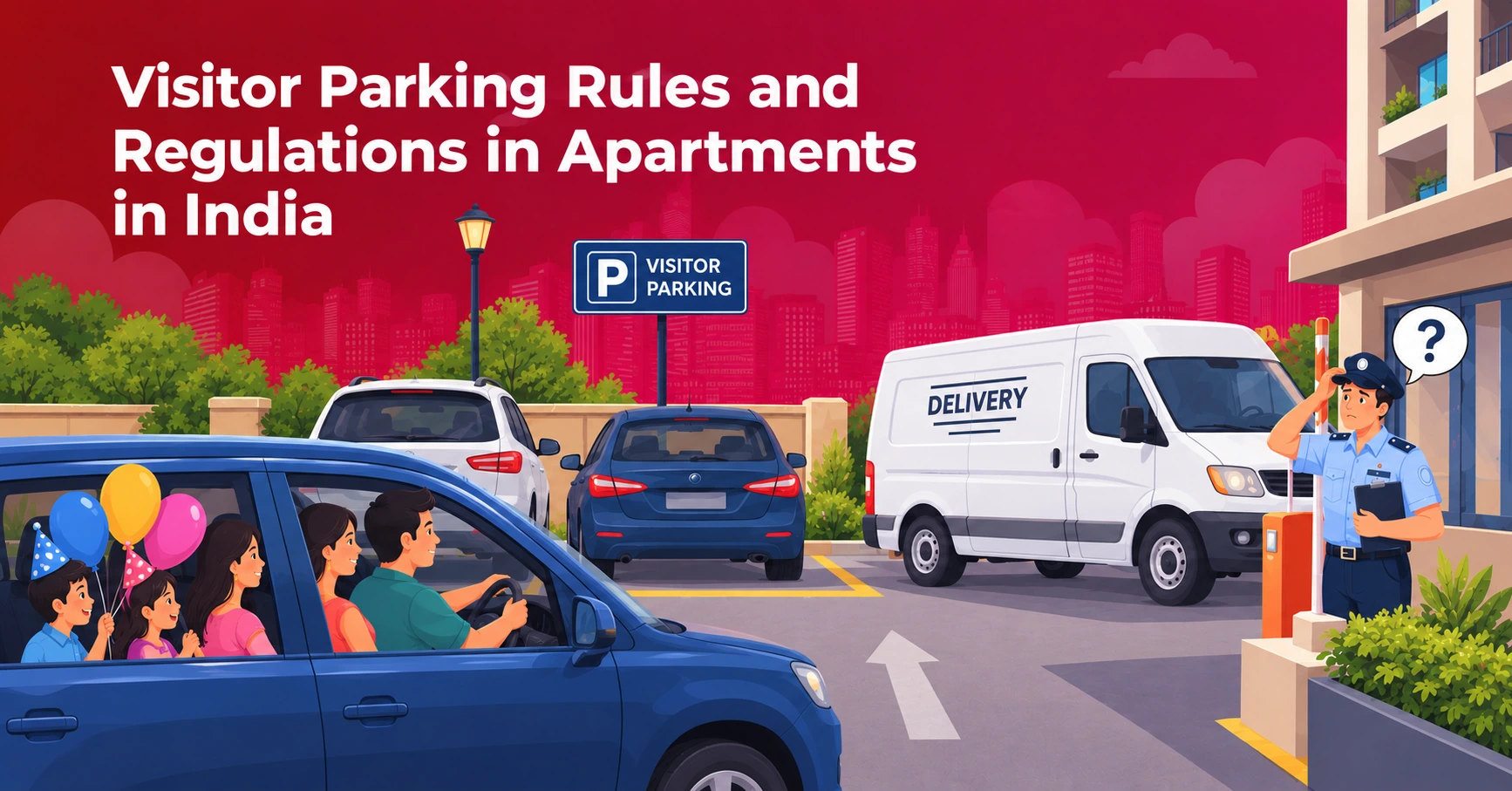
Picture a Sunday afternoon. Three families arrive for a birthday party. The visitor parking space already holds two cars that have been there since Friday, and a delivery van is stuck across the main lane. The guard has no idea whose cars they are.
These are very common situations in an apartment. Car ownership has grown faster than parking space in most Indian cities, so visitor parking slots are the first thing residents borrow. Clear visitor parking rules and regulations in apartments settle these cases early. A written rule gives the guard something to point to and takes the personal edge out of the conversation.
Which Laws and Bylaws Cover Visitor Parking?
The visitor parking rules and regulations in apartments sit on three layers: central law, state or city building rules, and your own registered society bylaws. Read all three before you draft a rule or challenge one.
RERA and the Supreme Court
Under RERA and a series of Supreme Court rulings, open and visitor parking areas count as common property. In Nahalchand Laloochand v. Panchali Cooperative Housing Society, the Court held that open and stilt parking spaces belong to the society as a whole. A builder or a committee cannot sell them as private property.
City and state rules
Local norms add the numbers. Mumbai’s BMC rules ask for at least 5% of parking space to go to visitors. Bengaluru apartments follow the apartment car parking rules in Bangalore (BBMP). In Tamil Nadu, the Combined Development and Building Rules require on-site parking for occupants and for business visitors.
Check your city’s current rules before you mention any percentage or time limit at a general body meeting.
What Apartment Visitor Parking Rules Do Most Societies Follow?
Beyond the legal minimums, committees add everyday rules that a guard can apply on the spot.
- Marked slots only: Guests park in marked visitor spots. Resident slots, stilt areas and private parking spaces are off limits.
- Registration and pass: Guests register at the gate and keep a temporary pass or sticker on the dashboard.
- Walkways and lift lobbies: No parking on pedestrian paths or near lift access, since both create safety risks.
- Speed and manners: Most societies fix a speed limit of 10 km/h inside the premises. Residents and guests must also keep noise low and avoid littering or leaking oil in the parking area.
Small Tip for Residents:
Send your guest’s vehicle number to the guard before they arrive. It takes a minute and saves your guest a wait at the gate.
What Penalties Can a Society Charge for Visitor Parking Violations?
Penalties are fair only when the visitor parking rules and regulations in apartments that your society has adopted say so. Unauthorised parking, blocked driveways and resident use of visitor slots can lead to fines, wheel clamping or towing at the owner’s expense.
A society can also charge a reasonable overnight or overstay fee, but only if the general body approves it as a bylaw. Societies can pair time limits with overstay charges, regular monitoring and firm enforcement. Arbitrary or very high visitor fees are generally illegal.
Write the amount down, share it with every resident and apply it to committee members too. One favour for a friend will undo the whole rule.
How Can an RWA Enforce Visitor Parking Rules in Apartments?
To enforce visitor parking rules and regulations in apartments, start with a plan residents can see.
- Mark the slots. Paint “Visitor” on each one and put a board at the entrance with the time limit.
- Pass the rules properly. Put them to the general body and add them to the bylaws so they hold up if someone objects.
- Write the apartment visitor parking rules in plain language. One page, in English and the local language, on the notice board and the community group.
- Brief the guards. They log the vehicle number, flat number and timings, and check for the pass or sticker.
- Read the log every month. Look for cars that stay past the limit or keep arriving under different flat numbers.
- Warn first, then fine. Keep a record of each warning so the fine is easy to justify.
Manage Visitor Parking in Apartments with NoBrokerHood Visitor Management System
Apartment Visitor parking management requires much more than just marking slots and applying time limitations. The security personnel need to know which flat the visitor is supposed to go to, and residents require an option to validate expected visitors. Recording the entry information can be useful for societies when investigating complaints of unauthorised parking or violation of time restrictions.
NoBrokerHood visitor management system assists the society in managing gate entry via visitor approval, resident notification and entry logs. Thus, it makes the process of visitor verification easier and allows the security service to keep track of vehicle movement inside the society.
Features include:
- Visitor Approval: Residents can approve or decline visitors' entry via the app, allowing guards to verify the visitation in advance.
- Resident Notification: Notifying the resident about the arrival of their guest at the gate for a quick response.
- Entry Logs: Keeping logs of visitor entry/exit for future reference.
- Overstay Notifications: Alerting residents and guards when a visitor's parking time expires.
- Temporary Parking Permits: Issuing permits for visitors with a defined parking duration.
- Vehicle Info: Entering all necessary visitor and vehicle info at the gate to facilitate entry.
Thus, using visitor approval and organising the entry logs helps to manage access at the gates and handle parking complaints.
