BBMP Solid Waste Management
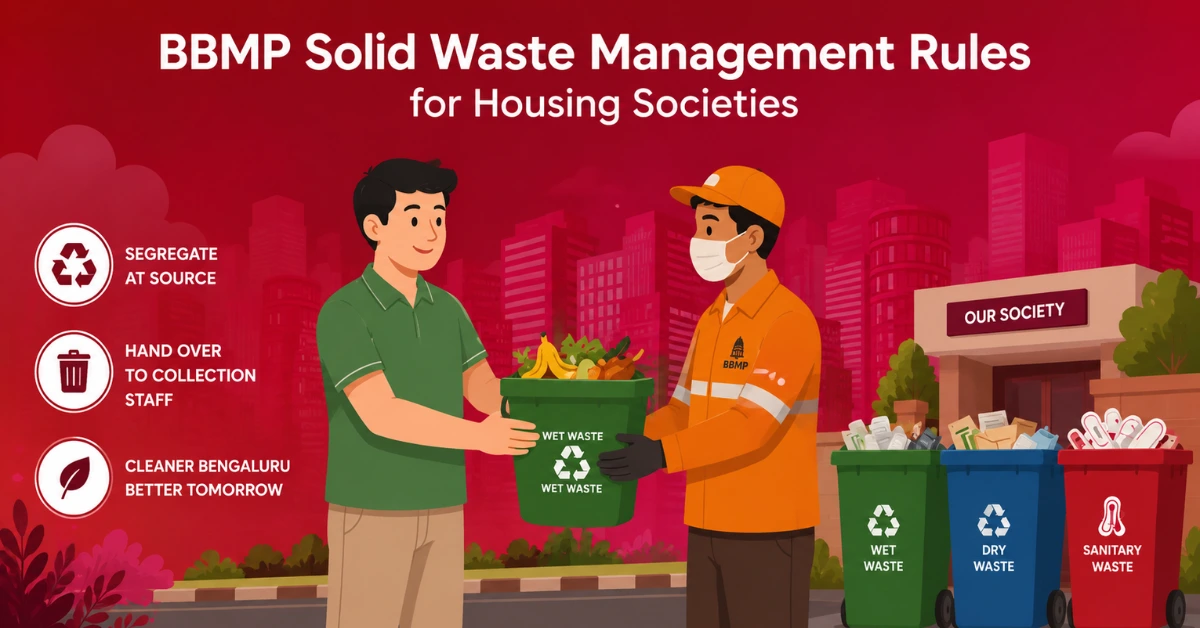
Residents in Bengaluru usually experience issues such as delayed waste collection, confusing guidelines for waste segregation, high waste management expenses, and penalties for violations. On the other hand, housing societies should also follow the newly revised BBMP solid waste management guidelines, yet maintain low maintenance costs. This guide explains the BBMP solid waste management rules, segregation process, BBMP waste segregation, and useful advice for housing societies about effective waste management.
BBMP Solid Waste Management Rules for Housing Societies
The latest BBMP solid waste management rules focus heavily on source segregation and decentralised waste processing. Bengaluru generates a massive amount of garbage every day, which is why apartment communities now play an important role in reducing landfill pressure.
The current BBMP solid waste management rules emphasise source segregation and decentralisation of waste processing. Since the city of Bengaluru produces an enormous quantity of garbage daily, the contribution of housing societies is of particular importance in decreasing the burden on landfills.
Waste Types According to BBMP Solid Waste Management Guidelines
| Waste Category | Examples |
|---|---|
| Wet Waste | Food waste, vegetable peels, flowers, and organic kitchen waste |
| Dry Waste | Plastic, paper, cardboard, glass, metal |
| Sanitary Waste | Diapers, sanitary napkins, and medical waste |
| Hazardous Waste | Batteries, bulbs, chemicals, e-waste |
Mixed waste can be rejected during collection. Repeated violations may also attract penalties.
Apartment complexes with large occupancy levels are classified as Bulk Waste Generators (BWGs). These communities are expected to either process wet waste within the premises or hand it over to authorised vendors approved by the city authorities. The goal behind the solid waste management BBMP policies is simple. Waste should be treated closer to where it is generated instead of depending completely on large dumping yards.
Read also: Waste Management in Indian Residential Societies
BBMP Garbage Collection Rules Every Bengaluru Resident Should Know
One of the biggest concerns for residents is understanding garbage collection timings and pickup rules. Knowing the BBMP collection schedule and segregation requirements can help avoid missed pickups, penalties, and unnecessary conflicts with waste collection staff. Collection schedules may vary slightly across wards and apartment communities, but residents are generally expected to follow standard segregation and disposal guidelines issued by BBMP.
- Wet waste is generally collected daily
- Dry waste is collected once or twice a week
- Sanitary waste must be wrapped separately before disposal
- Hazardous waste requires special disposal methods
Residents are expected to hand over segregated waste directly to the BBMP auto-tippers or collection teams. Dry waste should always remain clean and dry. Food-stained plastic, wet paper, or mixed recyclables reduce recycling efficiency and create handling problems at Dry Waste Collection Centres (DWCCs).
The city also follows a decentralised approach through:
- Ward-level DWCCs
- Composting units
- Bio-methanisation plants
- Leaf litter processing centres
This decentralised model is an important part of solid waste management BBMP operations because it reduces transportation load and landfill dependency. If garbage collection becomes irregular, residents can contact:
- BBMP Helpline: 1533
- Civic Support Number: 080-22660000
- WhatsApp Complaint Support: 9448197197
- Namma Bengaluru Sahaya App 2.0
Timely reporting helps prevent black spots and illegal dumping near residential areas.
How Apartment Complexes Can Comply With BBMP Solid Waste Management Rules?
Many Resident Welfare Associations are still trying to understand how to practically follow the updated BBMP solid waste management rules without increasing operational stress. For apartment societies, compliance usually starts with a few basic steps.
Create a Simple Segregation System
Every floor or tower should have clear signage explaining:
- What goes into wet waste
- What belongs in dry waste
- How sanitary waste should be packed
Visual instructions work better than long circulars.
Train Residents and Staff
Housekeeping teams, security staff, and residents should all follow the same process. Many societies fail because residents segregate correctly, but housekeeping later mixes the waste.
Evaluate Wet Waste Processing Options
Large communities often explore:
- Composting pits
- Organic waste converters
- Bio-digesters
- Authorised waste processing vendors
In-house composting may not always be practical due to limited space inside apartment premises. In such cases, societies may partner with empanelled agencies.
Monitor Daily Waste Generation
Tracking waste output helps RWAs estimate costs, vendor requirements, and future infrastructure needs.
Many communities are also reviewing long-term sustainability measures because solid waste management BBMP compliance can increase maintenance costs if not planned properly.
Wet Waste Management Rules for Bulk Waste Generators in Bengaluru
Bulk Waste Generators are a major focus area under the updated BBMP solid waste management framework. Apartment complexes with more than 100 flats or properties generating large volumes of waste are expected to handle wet waste responsibly.
The authorities encourage BWGs to process biodegradable waste at the source through:
- Composting systems
- Organic waste converters
- Bio-gas units
- Authorised processing agencies
If societies fail to comply, they may face additional service fees or penalties.
Many apartment associations now conduct internal waste audits to understand:
- Daily wet waste generation
- Composting feasibility
- Vendor handling capacity
- Resident participation levels
Wet waste management becomes difficult when segregation quality is poor. Even a small amount of plastic mixed with organic waste can affect composting quality. For this reason, resident awareness campaigns are becoming a regular part of solid waste management BBMP implementation in large apartment communities. Some societies also provide separate kitchen bins to encourage proper garbage segregation from the beginning.
BBMP User Fees for Solid Waste Management
The city has introduced user fees to improve collection and processing systems under the BBMP solid waste management regulations. These charges are generally linked to property size and waste generation levels.
Approximate Residential Fee Structure
| Built-Up Area | Monthly Fee |
|---|---|
| Up to 600 sq ft | ₹10 |
| 600 to 1,000 sq ft | ₹50 |
| 1,000 to 2,000 sq ft | ₹100 |
| 2,000 to 3,000 sq ft | ₹150 |
| 3,000 to 4,000 sq ft | ₹200 |
| Above 4,000 sq ft | ₹400 |
For Bulk Waste Generators, the cost may increase depending on:
- Waste volume
- Processing method
- Vendor agreements
- Transportation requirements
Societies that fail to arrange compliant waste processing may also be required to pay additional SWM charges. This is why many RWAs are carefully comparing vendor contracts and evaluating cost-effective waste handling models. Property tax rebates linked to waste compliance may also depend on meeting segregation and processing deadlines.
Common SWM Compliance Challenges Faced by Housing Societies
Even societies that want to follow the rules often face practical challenges. One major issue is inconsistent segregation by residents. A few households mixing waste can affect the entire collection process. Another challenge is space limitation. Many older apartment complexes do not have dedicated areas for composting or waste processing equipment.
Housing societies also struggle with:
- Vendor coordination
- Rising waste management expenses
- Resident resistance to new rules
- Irregular collection timing
- Lack of awareness among tenants
In some communities, the maintenance charges may increase after the introduction of compliant waste management systems. But deferring compliance can create bigger problems down the road, such as penalties and operational disruptions under the BBMP solid waste management regulations. Open communication with residents is a common feature of societies that transition well. Short awareness drives, WhatsApp reminders and monthly updates often help improve participation levels. Resident cooperation remains one of the biggest success factors in solid waste management BBMP implementation.
How Housing Societies Can Improve Solid Waste Management Practices?
Small operational changes can make waste management much easier for apartment communities.
Use Clearly Labelled Bins
Residents are more likely to segregate correctly when bins are easy to identify.
Conduct Monthly Awareness Sessions
Short sessions help residents stay updated on collection schedules and compliance rules.
Track Vendor Performance
Societies should regularly monitor:
- Collection frequency
- Segregation handling
- Processing compliance
- Documentation records
Encourage Compost Usage
Communities that produce compost can use it for:
- Gardens
- Landscaped areas
- Tree maintenance
Create Resident Accountability
Some apartment associations now issue written segregation guidelines during move-ins for both owners and tenants.
These simple practices support better BBMP solid waste management compliance while also keeping residential areas cleaner and healthier.
Read also: Advantages and Disadvantages of Composting
How NoBrokerHood Supports Better Community Waste Management?
One of the biggest challenges in following the BBMP solid waste management rules is maintaining consistent segregation across all households. In many apartment communities, residents may forget collection schedules, mix waste categories, or miss updated disposal instructions shared by the RWA.
NoBrokerHood is a society management app that helps to simplify this through its community communication system. Apartment associations can send regular reminders about segregation rules, dry waste pickup days, composting updates, and BBMP compliance notices directly to residents.
How this supports better waste management practices:
- Residents receive timely reminders about waste segregation rules
- RWAs can share BBMP collection schedules and updates instantly
- Communities can circulate visual segregation guides more easily
- Important notices remain accessible instead of getting lost in chats or printed circulars
This creates better coordination between residents, housekeeping staff, and management committees, helping apartment communities maintain cleaner and more organised waste handling practices.
All Solutions by NoBrokerHood:
FAQs
Large apartment complexes classified as Bulk Waste Generators are generally expected to process wet waste within the premises or work with authorised waste processing agencies approved by city authorities.
The user fee is a waste collection and processing charge collected based on property size and waste generation. Bulk waste generators may have additional compliance-related charges.
Wet waste is usually collected daily, while dry waste is commonly collected once or twice a week, depending on the ward and local collection schedule.
Residents can report missed pickups or illegal dumping through the BBMP helpline, WhatsApp support number, or the Namma Bengaluru Sahaya App 2.0.
Complaints can be registered through. Helpline number: 1533, BBMP support line: 080-22660000, WhatsApp number: 9448197197
Many societies create designated collection timing windows or centralised waste collection points so residents can hand over segregated waste before leaving for work.