Cooperative Housing Society Disputes: Rules and Resolutions
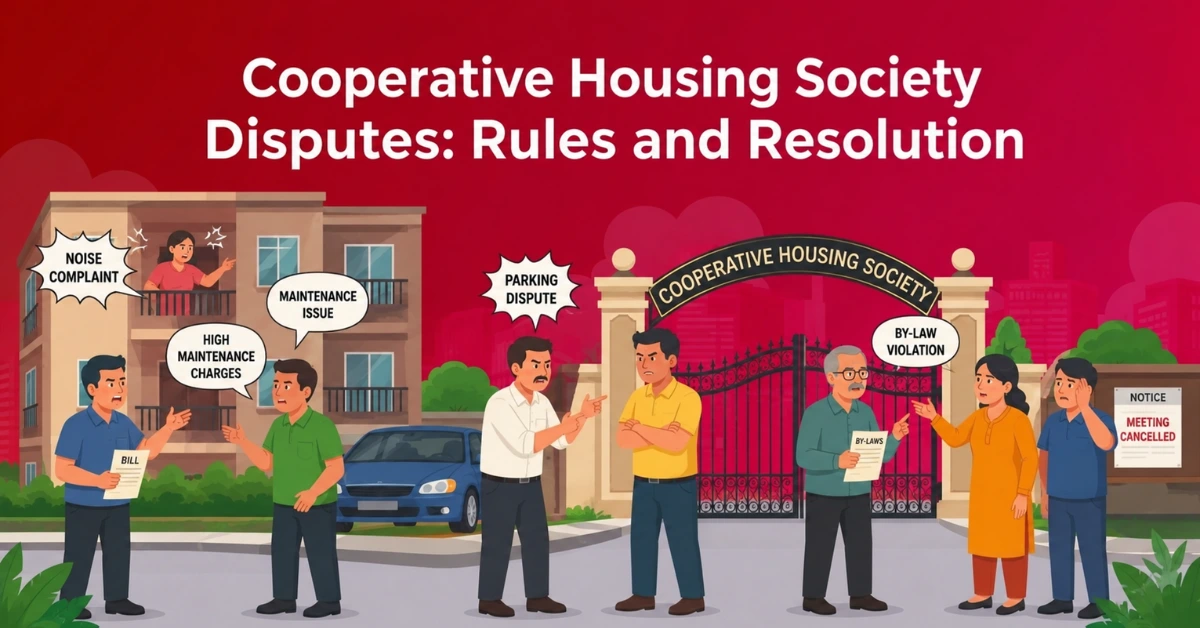
Living in a housing society often brings small conflicts that can grow into bigger problems. Many residents face confusion around rules, payments, or committee decisions. Cooperative housing society disputes usually arise due to unclear communication, bylaw violations, or a lack of transparency. The good news is that these disputes follow a clear resolution process in India. From internal complaints to legal channels, there are structured ways to resolve issues fairly and maintain harmony in the community.
What are the Rules for Cooperative Housing Society Dispute Resolution?
Cooperative housing society dispute resolution rules refer to the guidelines and processes used to handle disagreements between residents, managing committees, or tenants within a housing society. These disputes usually involve maintenance charges, parking allocation, use of common areas, or decisions taken by the management.
Such situations are common in Indian housing societies where many families share the same space and rules. When bylaws are not followed properly or communication is unclear, conflicts can arise. Understanding cooperative housing society dispute rules helps residents address issues in a structured way and maintain a peaceful living environment.
Common Causes of Disputes in Housing Societies
Most cooperative housing society disputes do not begin as serious conflicts. They often start with small, everyday situations that slowly build up when not addressed on time. Here are some real-life scenarios that reflect the most common causes:
Maintenance Issues
In many societies, a few residents delay maintenance payments while others pay regularly. This creates frustration, especially when essential services like lift repair or security are affected. In some cases, residents question sudden increases in charges without proper explanation, leading to mistrust.
Read also: Non Payment of Society Maintenance Charges
Unauthorized Renovations
A common situation is when a resident starts drilling or breaking walls without informing the committee. Neighbours may complain about noise or worry about structural safety. In older buildings, even minor changes can raise concerns and lead to disputes.
Parking Conflicts
Parking is one of the most frequent issues in Indian societies. For example, a resident may start using an extra parking spot for a second car, or a visitor vehicle may block someone else’s space. These small incidents can quickly turn into repeated arguments.
Usage of Common Areas
Shared spaces like terraces, corridors, and gardens often become a point of disagreement. One family may host gatherings late at night, while others expect quiet hours. Similarly, children playing in parking areas or pets in common zones can irritate others. What feels normal to one family may be a disturbance to another.
Management Transparency
Sometimes the issue is not the rule, but the lack of clarity. Residents feel left out of important decisions. For instance, if the committee approves a large expense without sharing details, members may question where the money is going. Lack of clear communication often leads to bigger disputes.
Tenant-Related Issues
Conflicts also arise when tenants are not properly registered or do not follow society rules. For example, frequent tenant changes or complaints about behaviour can create friction between owners and the managing committee.
Water Supply Inequality
In many apartment complexes, especially during summer, water distribution becomes uneven. Residents on higher floors may face shortages, while others receive regular supplies. This imbalance often leads to complaints and blame among neighbours.
These situations may seem minor at first, but without proper communication and timely action, they can grow into larger cooperative housing society disputes that affect the entire community.
Types of Cooperative Housing Society Disputes
Understanding the type of dispute helps in choosing the right solution. Common types include:
- Maintenance and Financial Disputes: Non-payment or disagreement over charges.
- Parking Allocation Disputes: Unauthorised parking or unfair allotment.
- Committee and Election Disputes: Issues related to elections or decision-making authority.
- Redevelopment Disputes: Conflicts over builder selection or project terms.
- Nuisance Complaints: Noise, pets, or improper use of common areas.
- Bylaw Violations: Any action that goes against society’s rules.
Each of these falls under cooperative housing society disputes and requires a structured approach for resolution.
Legal Framework Governing Cooperative Housing Society Disputes in India
In India, cooperative housing society dispute rules are governed by state-specific laws, society bylaws, and consumer protection rules.
1. State Cooperative Societies Act
Laws like the Maharashtra Co-operative Societies Act, 1960 and the Delhi Cooperative Societies Act, 2003, define how societies function and how disputes are resolved through the Registrar or Cooperative Court.
2. Model Bylaws
These act as the society’s rulebook. They cover rules related to maintenance, parking and common areas usage, and governance. Any violation can lead to disputes.
3. Registrar of Cooperative Societies
The first legal authority residents can approach if the society does not resolve complaints internally.
4. Cooperative Courts
Special courts that handle serious society-related disputes faster than regular civil courts.
5. Consumer Protection Act
Applies when there is a service issue like a water shortage or a lift maintenance failure.
Important Note:
Rules vary by state, so always refer to your state’s Cooperative Societies Act and your society’s registered bylaws before taking action.
Step-by-Step Process to Resolve Cooperative Housing Society Disputes
Resolving cooperative housing society disputes usually follows a simple path, starting within the society and moving to legal options only if needed.
Step 1: Raise the issue within the society
Start by submitting a written complaint to the Secretary or Chairman. Most committees are expected to respond within 15 days, as per standard bylaws.
Step 2: Discussion by the managing committee
The committee typically reviews the issue in their next meeting. Many disputes get sorted here through discussion and mutual agreement.
Step 3: Send a formal notice if needed
If there is no response or action, you can send a legal notice to highlight the seriousness of the issue.
Step 4: Approach the Registrar of Cooperative Societies
If the matter is still unresolved, you can file a complaint with the Deputy Registrar of Cooperative Societies. This is the first formal authority for handling such disputes.
Step 5: Take it to the Cooperative Court
For more serious or legal matters, cases can be filed in a Cooperative Court, which specifically handles society-related disputes.
Step 6: Consider the Consumer Court for service issues
If your complaint is about poor services like water supply or lift maintenance, you can approach the Consumer Commission.
Step 7: Try mediation for quicker resolution
Many residents prefer mediation as it helps resolve issues faster and with less stress.
Following this process ensures fair handling of cooperative housing society disputes.
Rights of Society Members During Disputes
Residents have important rights when dealing with cooperative housing society rules disputes:
- Right to Information: Members can inspect financial records and documents.
- Right to Transparency: Committees must provide details of expenses and decisions.
- Right to Challenge Decisions: Any unfair resolution can be legally challenged.
- Right to Fair Treatment: All members must be treated equally.
- Right to File Complaints: Members can approach authorities if internal resolution fails.
- Penalty for Non-Compliance: Denying records can lead to penalties up to ₹25,000.
Knowing these rights empowers residents to act responsibly.
Read also: Apartment Resident Rights
Practical Tips to Prevent Disputes in Housing Societies
Prevention is always better than resolution. Here are simple ways to avoid cooperative housing society disputes:
- Keep communication clear and documented
- Follow society bylaws strictly
- Attend society meetings regularly
- Pay maintenance charges on time
- Avoid unauthorised changes to your home
- Respect common spaces and neighbours
- Encourage transparency in management
Small actions can prevent bigger conflicts.
Simplify Complaint Management in Housing Societies with NoBrokerHood
Many cooperative housing society disputes don’t start as major issues. They begin when complaints are ignored, delayed, or lost in informal conversations. This is where NoBrokerHood makes a real difference.
Instead of relying on calls or WhatsApp messages, residents can raise complaints through a structured ticket system. Every issue, whether it is about maintenance, parking, or common areas, gets properly recorded.
What changes with this approach?
- Every complaint is logged and cannot be missed
- The committee can assign and track responsibility
- Residents can see real-time updates on their issue
- No more confusion about whether something was reported or not
This creates a sense of clarity on both sides. Residents feel heard, and committees can manage requests without chaos. Over time, this simple system helps reduce misunderstandings and prevents small concerns from turning into bigger cooperative housing society disputes.
All Solutions by NoBrokerHood:
FAQs
Most disputes involve maintenance charges, parking issues, and unauthorised renovations. These are everyday concerns that arise due to shared living spaces and unclear communication.
As per the standard bylaws, the managing committee should respond within 15 days. If no action is taken, residents can escalate the matter legally.
It is better to raise the issue with the society committee first. If unresolved, you can approach the Registrar or the Cooperative Court, depending on the situation.
Members have the right to inspect records. Refusal can lead to penalties and legal action against the managing committee.
No, rules vary by state. Each state has its own Cooperative Societies Act, along with model bylaws that societies follow.
Yes, mediation helps resolve issues faster without legal complications. It is often the most practical and peaceful solution.