



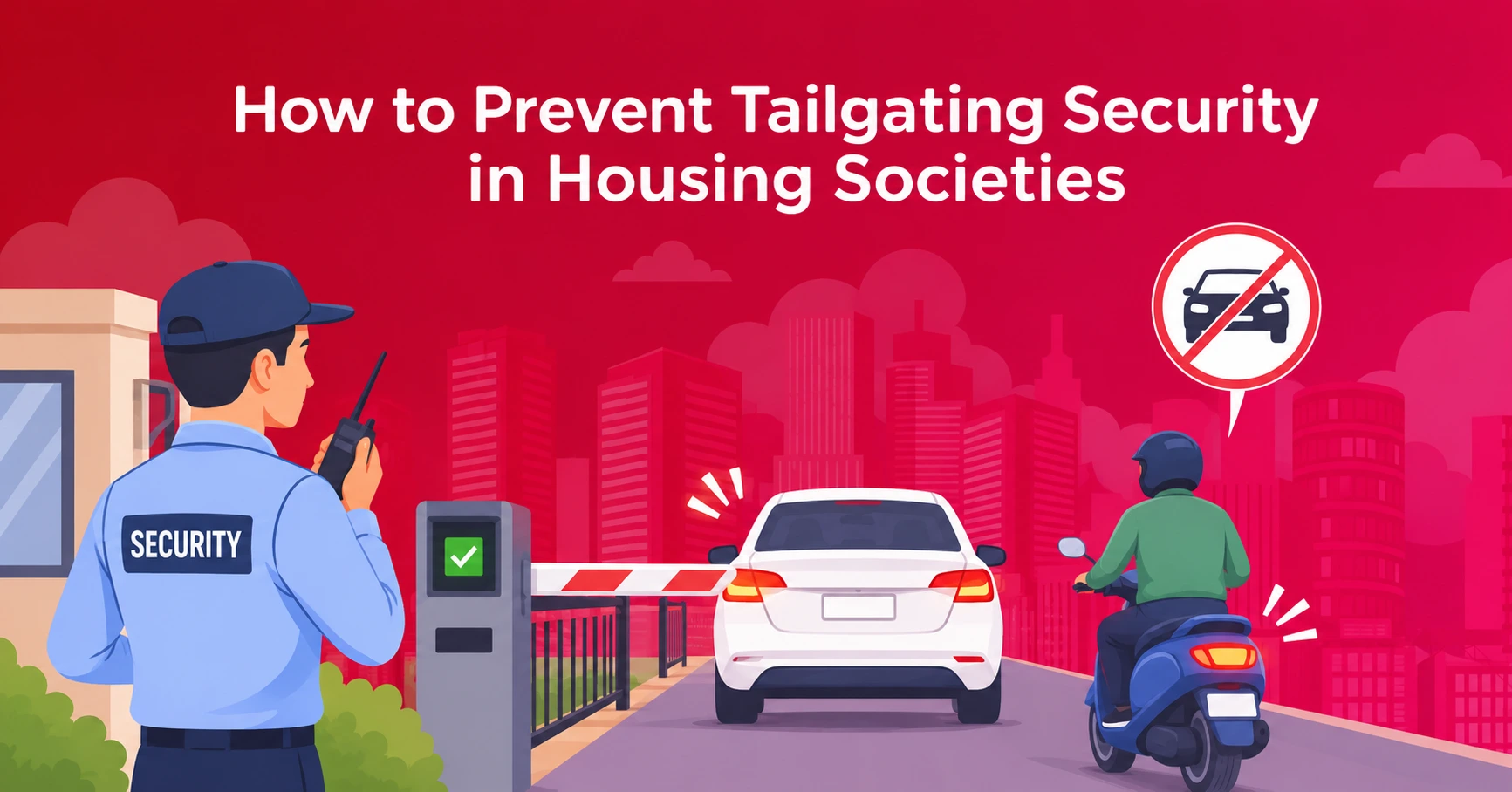


Tailgating can expose a housing society to security gaps, even when access control systems and guards are in place. Preventing it requires a combination of better entry procedures, suitable security technology and cooperation from residents. This guide covers practical ways to stop unauthorised entry at vehicle gates, tower lobbies and staircases, along with resident safety habits and a checklist to help the managing committee strengthen security across the premises.

What Is Tailgating in a Housing Society?
Tailgating is when an unauthorised person or vehicle follows closely behind someone with legitimate access. It can happen at the main gate, a tower lobby, a parking area, a clubhouse or a parcel room.
Example of Tailgating Security Lapses in Indian Societies
A real example of tailgating security failure is mostly these three:
- The bumper-to-bumper car: A resident’s car triggers the boom barrier. A second car or a delivery bike follows so closely that it passes before the barrier drops. The guard assumes both belong together.
- The hands-full courier: Someone holding stacked boxes waits near the lobby door. A resident scans their fob and holds the door open for them without asking for a visitor entry.
- The “forgot my fob” excuse: A stranger follows a resident into the lift and says they forgot their fob. Most people feel too awkward to ask for proof.
None of these needs special skills. They only need a moment of hesitation from someone else.
What Security Risks Does Tailgating Create for Your Society?
A society that does not control entry well faces risks that affect everyone:
- Theft from parking areas, parcel rooms and corridors
- Safety concerns for children, senior citizens and people who live alone
- Misuse of amenities such as the gym, pool and clubhouse
- Loss of trust in the security the community pays for
Knowing how to prevent tailgating security issues protects both property and peace of mind.
How to Prevent Tailgating Security Risks at the Main Gate?
The main gate is the first and most important layer. Most breaches start here.
Fix the Vehicle Entry
- Use fast-closing boom barriers: Set the closing timer so the barrier drops right after one vehicle passes.
- Add RFID tags or number plate recognition: Gates should open only for registered resident and visitor vehicles.
- Install loop detectors: Sensors in the road can spot a second vehicle after a single scan and trigger an alert to the guard.
- Consider bollards or road spikes: These suit societies where vehicle security is a major concern.
Verify Every Visitor
- Pre-approve guests: Ask residents to share a QR code or OTP before the visitor arrives.
- Call or notify the resident: Guards should get a clear yes from the flat owner through the app or intercom.
- Keep guards alert during rush hours: Mornings and evenings are when vehicles get waved through. A quick visual check of every car takes seconds.
How to Prevent Tailgating Inside Apartment Buildings?
Once someone passes the gate, the lobby is the next checkpoint. To prevent tailgating inside towers, these steps work well:
- Service door closers and magnetic locks regularly. A door that does not latch properly gives anyone free entry.
- Use turnstiles or optical gates in high-density blocks. They allow exactly one person per scan.
- Move to face or fingerprint scanners. Key fobs can be lent or lost, while biometrics verify the person.
- Fit overhead sensors. They can sound an alarm when two people pass on one scan.
- Place CCTV cameras directly above main doors. Cameras with people-counting features can flag anyone walking too close to another person.
How Can Residents Help Prevent Tailgating?
Technology only works when people follow the rules. Most tailgating succeeds because residents do not want to seem unfriendly. The fix is to make the polite response the expected one. A simple line works well: “Sorry, society rules say everyone scans their own fob.” Said with a smile, it removes the awkwardness. Here are a few habits that help a community stay consistent:
- Put up clear signs: Short messages such as “One Scan, One Person” or “Wait for the Gate to Close” remind everyone at the moment it matters.
- Make reporting easy: Residents should be able to alert the apartment security guards or committee in seconds.
- Share reminders regularly: Notice boards, WhatsApp groups and society management apps are good places for short safety tips.
- Train guards: Staff should know they have full backing to stop anyone, including a familiar face without a valid entry.
Read also: Best Visitor Gate Pass Management System
Tailgating Prevention Checklist for Managing Committees
If you are unsure where to begin, try this order:
- Walk through your gate and lobby at peak hours and note where people slip in.
- Fix the closing speed of boom barriers and door closers.
- Make pre-approved visitor entry compulsory for everyone.
- Put up signs at every entry point.
- Hold a short session for guards and residents on the “no hold-the-door” rule.
- Review entry logs and incidents monthly.
Prevent Tailgating in Housing Societies with NoBrokerHood Visitor Management System
Preventing unauthorised entry requires coordination between residents and security guards at every access point. NoBrokerHood offers visitor management and security management systems that help societies verify visitors, monitor entry activity and strengthen gate security.
Key features include:
- Digital Visitor Verification: Guards can capture visitor details, photographs and ID information before allowing entry.
- OTP and QR-Based Entry: Residents can pre-approve visitors through OTPs or QR codes, making entry verification easier.
- Gatekeeper Approval: Residents receive visitor requests and can approve or deny access through the app.
- Entry Logs: Maintain digital records of visitor entries and exits for future reference.
- Guard Patrol Monitoring: QR-based patrols and GPS tracking help committees monitor security rounds across the premises.
- SOS Alerts: Residents can raise emergency alerts through the app for quicker security assistance.
- Blacklist Management: Flag restricted visitors and help guards identify them during entry checks.
These features help security teams verify access, monitor visitor movement and maintain better control over entry points, reducing opportunities for tailgating.
