





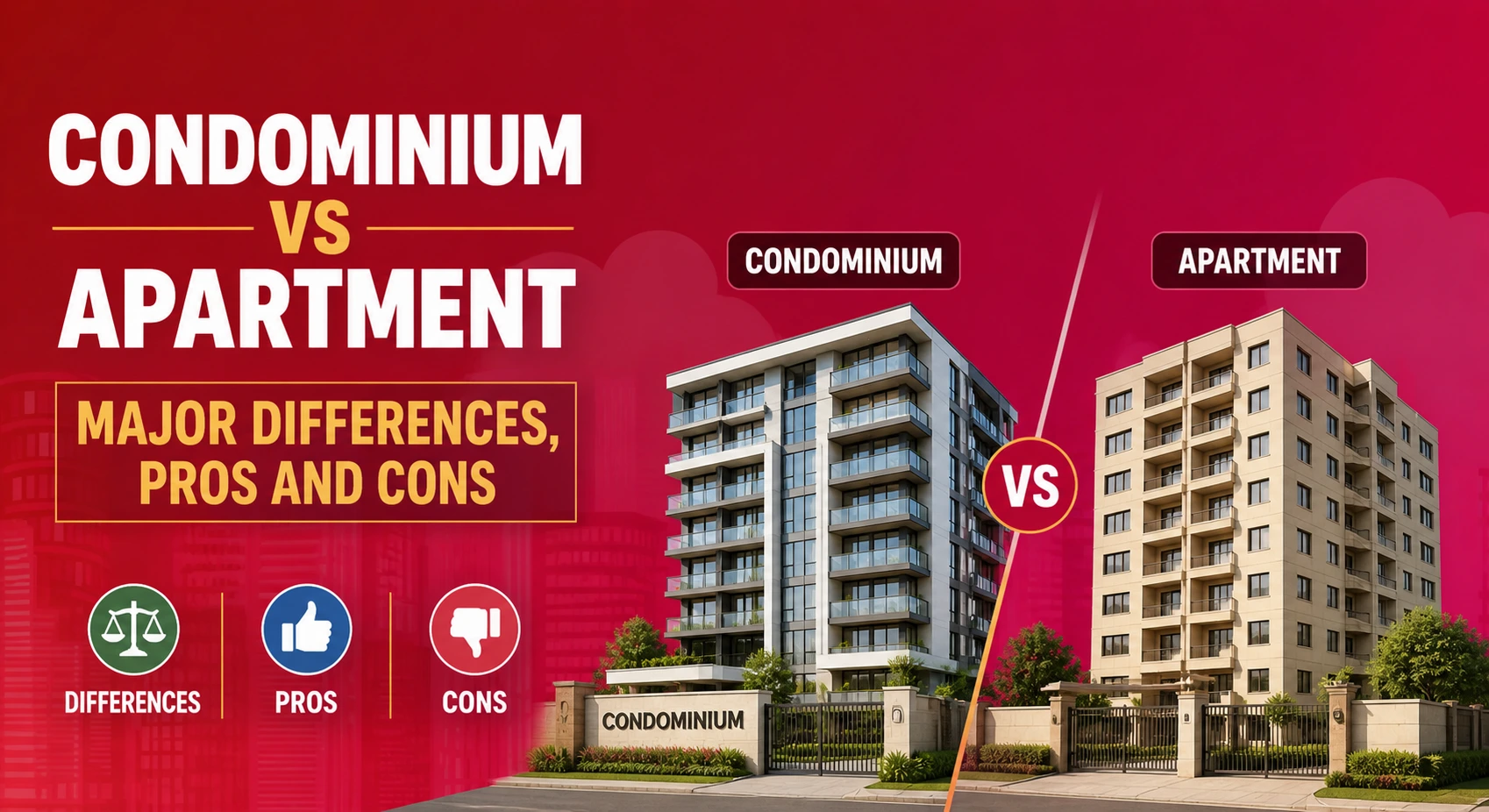


The Indian real estate market, especially Mumbai, has seen amazing growth over the past few years, and the most recent launch is an excellent example of this growth as 1,100 luxury units in a premium condominium complex priced at ₹7 crore each sold out a mere three days after launch!

This demonstrates the strong demand for high-end condominium houses in the city. A typical condominium in India, especially in Mumbai’s spans 600-1,000 sq ft cost between ₹90 lakh to ₹1.5 crore. Also Make your society living safe and peaceful with NoBrokerHood Society Management Software.
What is a Condominium?
The Condominium meaning refers to individually owned units. Buyers get both the interior space and a share in common areas. Condominium property represents individual ownership within a larger shared structure and common areas.
What is an Apartment?
An apartment is a private housing space which is situated inside a bigger structure containing several units owned either by a single landlord, property developer, or an organization that manages the premises. In contrast to owning the real estate, the occupants take up the role of being tenants and pay rent on a monthly basis in exchange for living in the space through a signed contract. Under this form of accommodation, the owner of the real estate owns the entire structure fully and manages all repairs.
Read also: What Is a Common Area in Apartments?
Condominium vs Apartment - Ownership and Tenure
1. Ownership Structure:
Condominiums are individually owned units, while apartments are owned by a single entity and rented out.
2. Legal Ownership:
Condo owners hold legal title to their unit (owning the “air space”), whereas apartment residents are tenants without ownership rights.
3. Common Areas:
Condo owners share ownership of common spaces like hallways, elevators, and amenities; apartment tenants do not own these areas.
4. Management:
Apartment residents deal with a property management company, while condo residents usually interact with individual unit owners.
5. Decision - Making:
Condo owners participate in decisions through a condominium association; apartment tenants have limited say.
6. Customization Rights:
Condo owners can modify their units more freely, whereas apartment tenants must follow housing rules and have restricted customization options.
| Differences | Condominium | Apartment |
| Owner | Individual unit owners | Single entity/corporation |
| Property Rights | Full ownership of unit interior | Rental rights only |
| Common Area Control | Shared ownership | Managed by property company |
| Customization Freedom | High (within HOA rules) | Limited |
Condominium vs Apartment - Management and Maintenance
Living in a condominium property vs apartment creates different experiences when it comes to maintenance. Property owners or management companies take care of all maintenance in apartment complexes. They use their own staff or on-call services. You just need to report problems through online portals or maintenance hotlines to get them fixed quickly.
Condos work differently with maintenance. You’re responsible for all repairs and maintenance that occur within your unit. The condominium owner’s association (COA) manages the common areas. They hire condominium property management companies to manage common areas such as exercise rooms, swimming pools, and clubhouse facilities.
Here’s how maintenance responsibilities are divided:
| Area | Apartment | Condominium |
| Interior Repairs | Property Management | Unit Owner |
| Common Areas | Building Management | COA |
| Emergency Services | 24/7 Maintenance staff | Individuals who are respective contractors |
| Response Time | Usually Same-day | May vary by owner |
The COA collects monthly assessment fees to accommodate cost-sharing for maintenance and save for future repairs. Special assessment charges may apply for major upgrades if sufficient funds do not already exist in savings. Apartment residents get repairs quickly and without hassle. Condos subject owners to assume responsibility for repairs to their unit or work with the COA for owners to maintain the common areas throughout the proper development.
Management in apartments maintain standards for all tenants. This means that tenant owners are typically unable to violate the management standards for their repairs and changes. Condo owners have more liberties for interior maintenance but are subject to the management of the common areas through the COA.
Also Read: Society Maintenance Charges
Condominium vs Apartment - Financial Considerations
The financial aspects of a condominium house vs apartment living show clear differences in costs and future impact. We noticed that upfront costs differ by a lot - apartment rentals usually need a security deposit of one month’s rent. Condo purchases only require significant down payments typically consisting of 3% to 25% of the property’s value. Monthly expenses will work differently. Apartment renters can count and isolate their monthly payment as a portion of their budget at a static rent amount and with predictable utility costs associated with it. On the other hand, condo owners must keep track and account for other monthly financial responsibilities, including tab basement costs, property taxes, insurance, mortgage payments, and maintenance.
| Expense Type | Condo | Apartment |
| Monthly Payment | Mortgage EMI | Rent |
| Insurance | Required | Optional Renter’s Insurance |
| Maintenance | Interior Repairs | Included in Rent |
| Property Tax | Responsibility of Owner | Not Applicable |
| HOA Fees | ₹14,344 Average/Month | Not Applicable |
Owning a condominium unit provides extra financial benefits in terms of equity building and tax benefits. Property owners can claim tax deductions on mortgage interest and build substantial equity in their property over time. Condos tend to appreciate in value and provide investment returns that apartment rentals can’t match.
Insurance needs are quite different between the two options. Condo owners need two types of coverage - a master policy for common areas and individual unit insurance. Apartment renters usually only need simple renter’s insurance, which costs between ₹1,012 to ₹3,965 monthly in major Indian cities.
Condominium vs Apartment - Regulations
What are the rules or regulations in Condominiums or Apartments? Daily life in condominiums and apartments is governed at the base level by rules or regulations. The condominium vs. apartment governance differs quite a bit with regard to rules and their enforcement.
Condominiums are governed by Homeowner Associations, whose rules and regulations arise from declarations. Declarations describe how residents may use their unit, govern common elements, and allow for a board to be chosen. From these declarations, HOAs set controls on changes to property, noise limits, and even decoration within their units.
Apartment buildings utilize property managers which define rules in general for all units. The following will give you an idea of the administrative rules and regulations between condominium complex and apartment setup:
| Circumstances | Condo Rules | Apartment Rules |
| Interior Changes | Generally flexible within unreasonable restrictions set by HOA | Some limited changes are possible, but HOA must agree |
| Pet Policy | Varies, issued by association | Established by Property Manager |
| Noise Pollution | Quiet hours specified | Quiet hours common |
| Inside Renovation Times | Mon-Fri (7AM-7PM), Sat (9AM-7PM) | Building specific schedule |
The rules for noise pollution in the buildings are severe and often only permitted on weekdays during regular hours. Most buildings have strict quiet hours usually on evenings and weekends. Most noise pollution policies do not have great formal documentation. Like the noise policies, pet policies need timely documentation- while distinguishing between allowed types of animals, weight limits for animals, and cleanup obligations.
The enforcement of rules differs between these housing arrangements. Resident associations can penalize residents or file when there are violations. Apartment complexes view rule breaking as a lease violation and can end the tenancy. Resident associations are required to make “grandfather clauses” with their new rules to protect existing residents in case rules change in the future.
Also Read: Co-operative Housing Society Rules and Regulations
Condominium vs Apartment - Amenities and Services
When comparing the condominium vs apartment experience, the differences were stark, especially amenities and services. For example, condominium owners are able to customize their homes (granite counter-tops, hardwood flooring) to fit their values and priorities.
Both styles do have their own unique perks. In condominium complexes you can expect premium amenities such as concierge service, garage parkade spots, secure bike spots, and private outdoor spaces; The more luxury you buy into the more access you will have additional luxuries. High-end condominiums would provide spa access, rooftop entertainment areas, gardens, etc., all included with your condo fees.
| Amenity Type | Condominium | Apartment |
| Basic Amenities | Parks, pools, gyms, common clubhouses | Laundry, entrance to basic gym, few common features |
| Premium Amenities | Concierge, valet parking, access to tennis courts | Limited premium options |
| Internal Features | Creator finish/fit, a unique space | Standard fixtures and fittings with limited impact by the occupant |
Apartment complexes provide their amenities uniformly to all tenants and provide chiefly utilitarian amenities like laundry rooms and some basic fitness equipment.While it is true that apartment buildings offer amenities - like pools or recreation areas - it is generally true that they typically lack the amount of amenities available in condo complexes.
Condominiums provide better security services; for example, they will have gate systems, doormen, and extensive camera surveillance networks. Moreover, the maintenance of the physical facilities is different as well; condo associations maintain facilities through membership fees (HOA fees), and therefore residents can use amenity facilities without the worry of direct maintenance.
Condominium vs Apartment - Pros and Cons
Based on all that has been presented, buyers should understand a condominium unit vs apartment pros and cons before making a decision. Condominiums provide a distinctive range of advantages that appeal to both long-term residents and investors alike.
Condominiums also cost less than other types of housing; the median costs which showed that condominiums sold for ₹28,23,698, while houses sold for ₹33,12,776. Condominiums are located close to major shopping centers and public transit stations. The disadvantages to condo ownership includes monthly HOA fees of ₹14,344, as well as the tougher lending regulations and guidelines
| Aspect | Condo Advantages | Apartment Advantages |
| Financial | Equity Build-Up | Lower Initial Investment |
| Location | Best-in-Class | Clean Access to City Centre |
| Flexibility | Customization Rights | Easy to Move |
| Maintenance | Mutual Responsibilities | Full Service |
Apartments excel in flexibility for those with mobility (or short-term) needs. Landlords take care of repairs and maintenance. There are downsides too – being attached to a crawling, squeaky neighbor, no equity gains from your monthly rental payments.
Cities in India are witnessing many first-time buyers using a condominium unit as a springboard prior to larger dwelling purchases . The higher entry cost might pay off in rental income and appreciation. Special assessments hit surprises at unexpected times regarding major repairs.
Condominium vs Cooperative Society
The condominium vs cooperative society debate is also becoming more relevant. In a condominium, owners own their individual units; in a cooperative, residents own shares in a corporation that owns the property. This makes houses in condominium communities much more flexible and financially attractive for individuals to own.
Managing Your Condominium or Apartment with NoBrokerHood
Whether you live in a condominium or an apartment, day-to-day society management can get complicated fast. NoBrokerHood simplifies this for both residents and managing committees.
For condominium owners, who often deal with shared maintenance decisions, ownership disputes, and by-law compliance, NoBrokerHood provides a transparent platform to log complaints, track maintenance requests, and manage visitor access, all in one place.
For apartment residents, who rely on their managing committee for most decisions, NoBrokerHood keeps communication clear with digital notice boards, utility bill payments, and real-time visitor management.
Key features that work for both:
| Feature | Condominium | Apartment |
| Visitor Management | Yes | Yes |
| Maintenance Tracking | Yes | Yes |
| Society Accounting | Yes | Yes |
| Owner Communication | Yes | Yes |
| Complaint Management | Yes | Yes |
All Solutions by NoBrokerHood
